 Bug FAQ
Spotted Longhorn Beetle
Rutpela maculata · Order: Coleoptera · Family: Cerambycidae
Source: Wikipedia
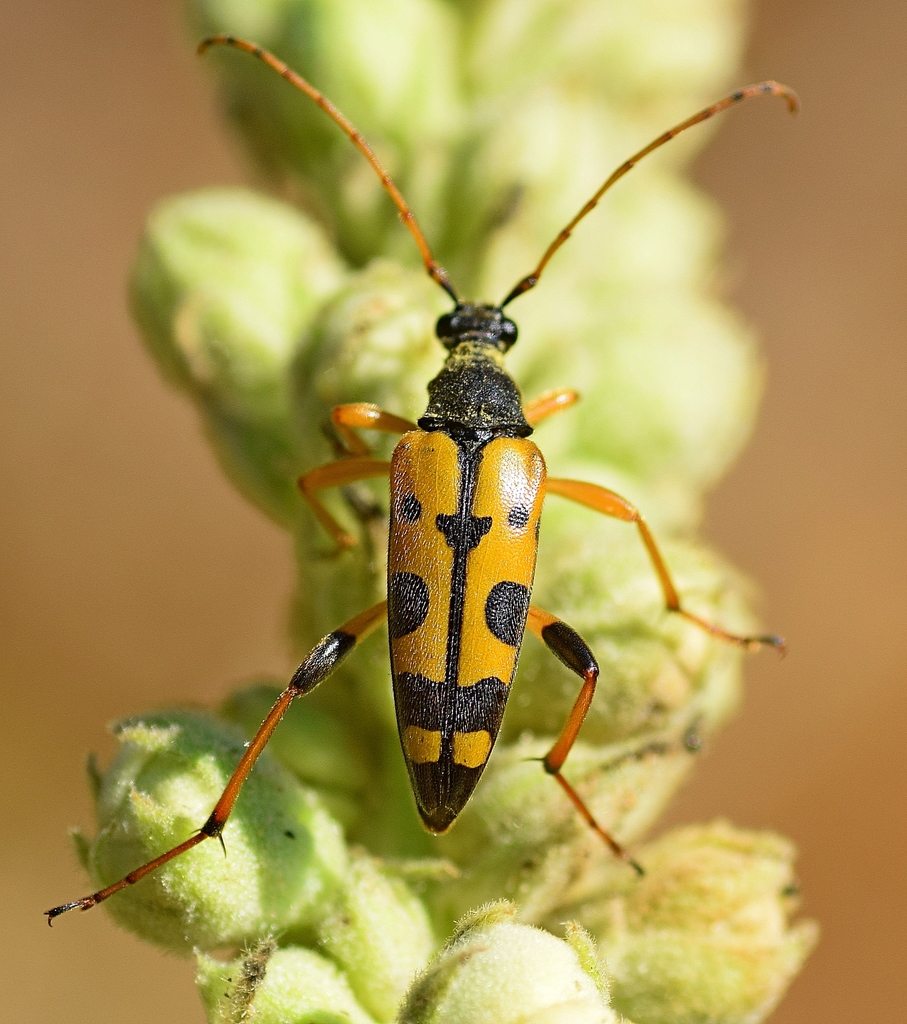
Adults are 13 to 20 mm long and look like yellowish wasps with black spots and stripes. They visit flowers for pollen and nectar, while the larvae live inside and eat wood of various trees. The beetle is common across most of Europe and nearby regions and is seen from May to August.
Source: Wikipedia
How to recognize it
The head and pronotum are dark brown; the wing covers are yellowish with black dots and stripes that mimic wasps.
Source: Wikipedia
Size
Adults grow to 13 to 20 mm (0.5 to 0.8 in) in length.
Source: Wikipedia
Is it a pest in the house?
Larvae bore into and feed on the wood of many trees, which can weaken or damage the trees.
Source: Wikipedia
What it eats
Adults commonly visit flowers, especially Apiaceae, to feed on pollen and nectar. Larvae are wood-eaters that feed on many deciduous trees, especially hazel, beech, chestnut, and hop-hornbeam, as well as oak, hornbeam, willow, alder, poplar and birch.
Source: Wikipedia
Life cycle
The species needs two to three years to complete its life cycle, most of which is spent as a larva in wood. Adult beetles live only two to four weeks.
Source: Wikipedia
When you see it
Adults can be seen from May through August.
Source: Wikipedia
Where it comes from
It is widespread in most of Europe, the eastern Palearctic, and the Near East, including countries such as France, Germany, Italy, the UK, and Turkey.
Source: Wikipedia
Questions people ask
Can they damage my garden trees?
Yes, the larvae feed on the wood of many garden and forest trees, which can cause damage.
Source: Wikipedia
Same family (Cerambycidae)
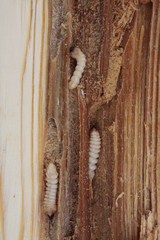 House LonghornHylotrupes bajulusCan damage your home
 Asian Longhorned BeetleAnoplophora glabripennisDamages trees, gardens or crops
 Red Milkweed BeetleTetraopes tetrophthalmus
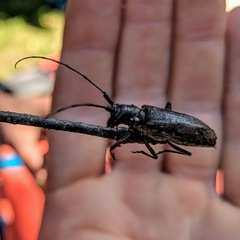 White-spotted SawyerMonochamus scutellatusCan damage your home
 Red Pine Longhorn BeetleStictoleptura rubra
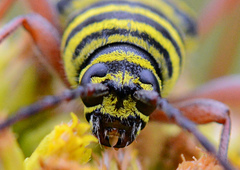 Locust BorerMegacyllene robiniae
Sources
- Wikipedia: https://en.wikipedia.org/wiki/Rutpela_maculata
Look it up elsewhere: GBIF · iNaturalist · BugGuide · Wikipedia
Text written 2026-10-22 from the sources above and checked sentence by sentence against them. Data fetched 2026-10-22.