 Bug FAQ
Yellow-spotted Stink Bug
Erthesina fullo · Order: Hemiptera · Family: Pentatomidae
Source: Wikipedia
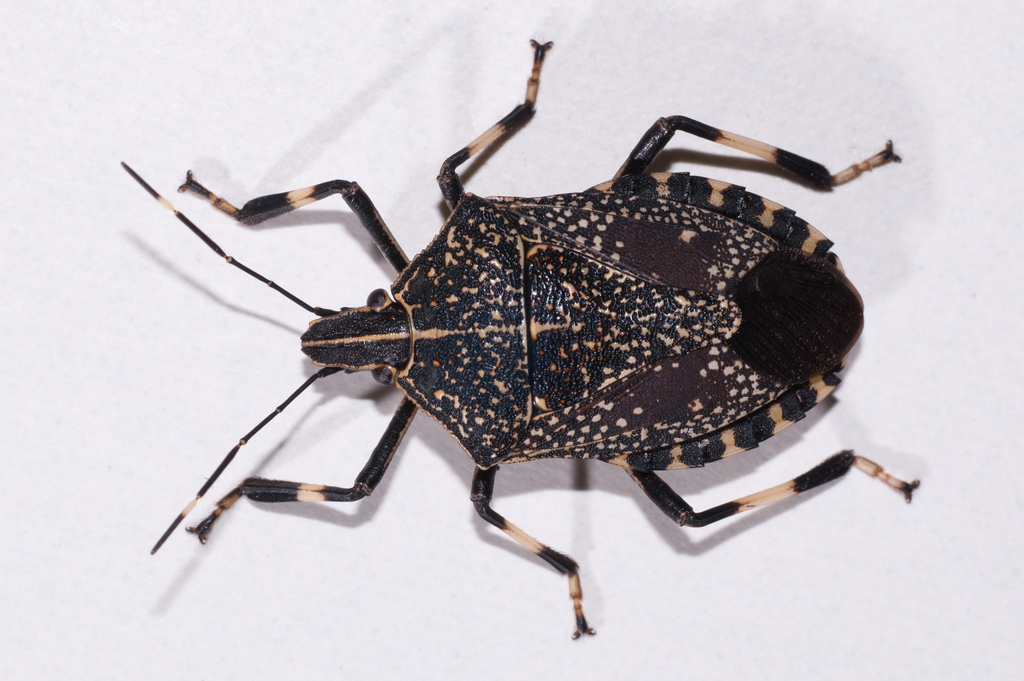
The yellow-spotted stink bug is a stink-bug species in the Pentatomidae family. It is native to much of Asia, including China, Japan, Myanmar, Vietnam, India, Bangladesh, Indonesia and the Philippines. It eats a wide range of plants and is a serious pest of many fruit crops such as apples, cherries, pears and kiwifruit.
Source: Wikipedia
What it eats
It feeds on many host plants, especially economically important fruits like apples, cherries, pears and kiwifruit.
Source: Wikipedia
Where it is found in the US
Recorded in 2 of 51 states and DC. Most records: Illinois, Oregon.
Darker = more records. Counts are museum and citizen-science records, not population size.
Source: GBIF
More photos
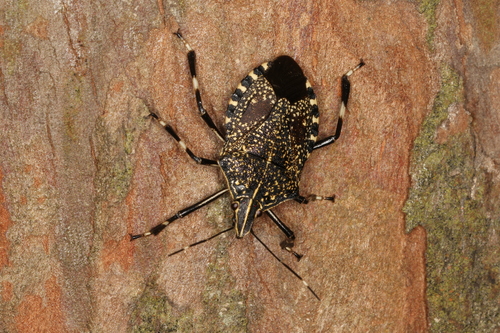
Questions people ask
Does the yellow-spotted stink bug damage crops?
Yes, it feeds on a wide variety of fruit trees and can cause serious damage to apples, cherries, pears and kiwifruit.
Source: Wikipedia
Where is the yellow-spotted stink bug from?
It is native to many parts of Asia, including China, Japan, Myanmar, Vietnam, India, Bangladesh, Indonesia and the Philippines.
Source: Wikipedia
Same family (Pentatomidae)
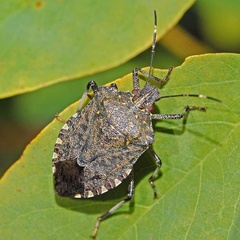 Brown Marmorated Stink BugHalyomorpha halysDamages trees, gardens or crops
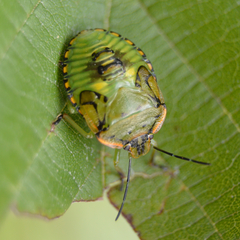 Green Stink BugChinavia hilarisDamages trees, gardens or crops
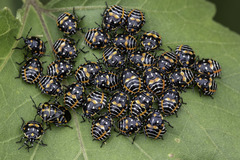 Harlequin BugMurgantia histrionicaDamages trees, gardens or crops
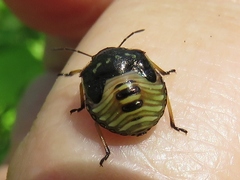 Brown Stink BugEuschistus servusDamages trees, gardens or crops
 Green Shield BugPalomena prasina
 European Striped Shield BugGraphosoma italicum
Sources
- Wikipedia: https://en.wikipedia.org/wiki/Erthesina_fullo
Look it up elsewhere: GBIF · iNaturalist · BugGuide · Wikipedia
Text written 2026-10-22 from the sources above and checked sentence by sentence against them. Data fetched 2026-10-22.