 Bug FAQ
Green Stink Bug
Chinavia hilaris · Order: Hemiptera · Family: Pentatomidae
Source: Wikipedia
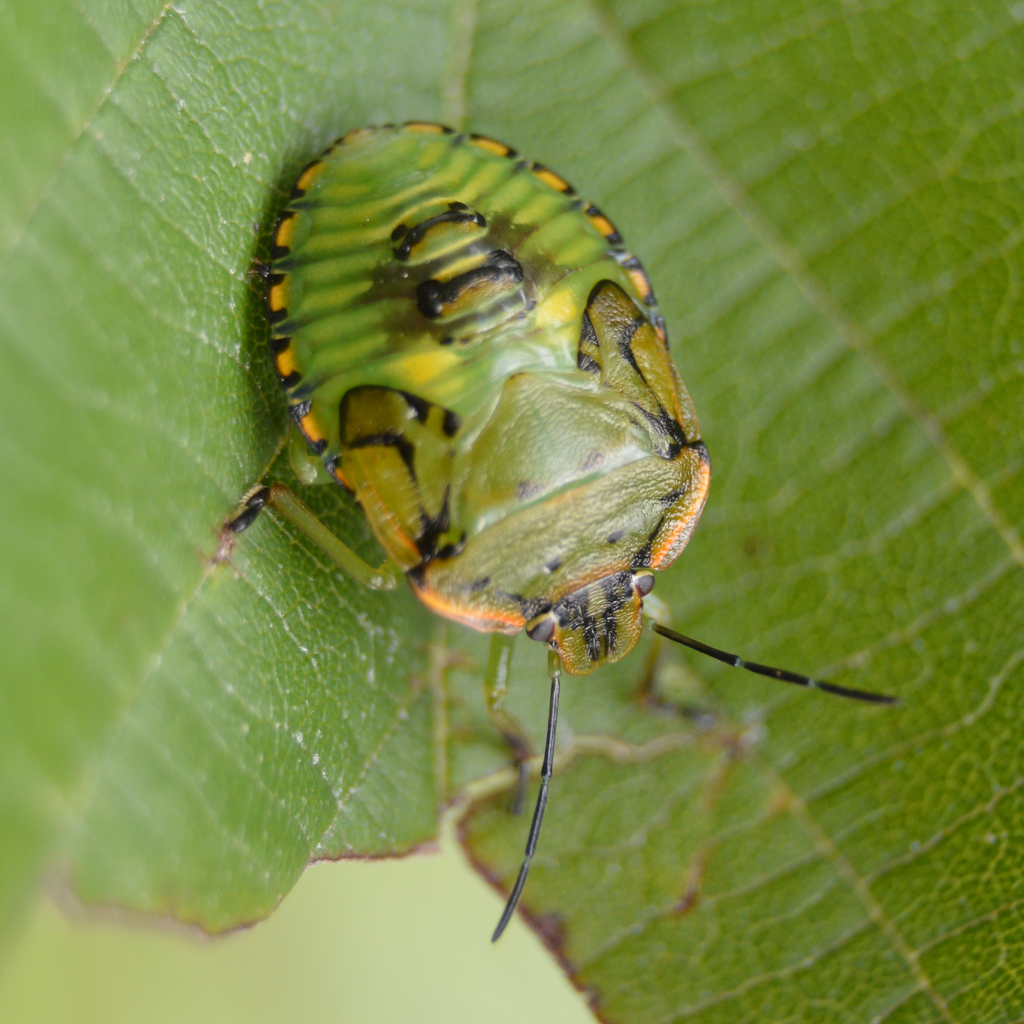
The green stink bug is a large, bright-green shield-shaped insect about 13 to 18 mm long with narrow yellow, orange or reddish edges. It feeds on the juices of many plants and becomes a serious pest of seed-bearing crops, splitting plant tissue with its needle-like mouthparts.
Source: Wikipedia
How to recognize it
Its bright green color with narrow colored edges and black on the three outermost antennal segments set it apart from similar bugs.
Source: Wikipedia
Size
Adults measure between 13 and 18 mm in length and have an elongate, oval shield shape.
Source: Wikipedia
Is it a pest in the house?
The species is considered an economically important pest in the United States because its feeding splits plant tissue and reduces crop yields.
Source: Wikipedia
How to get rid of it
Natural enemies include the tachinid fly Trichopoda pennipes and various parasitic wasps.
Source: Wikipedia
Where it lives
You’ll find it in orchards, gardens, woodlands and crop fields across North America.
Source: Wikipedia
What it eats
Both nymphs and adults pierce plant tissues with needle-like mouthparts to suck juices from a wide variety of plants. Adults especially target developing seeds of crops such as tomato, bean, pea, cotton, soybean and eggplant, and will also feed on stems and foliage when seeds are unavailable.
Source: Wikipedia
Life cycle
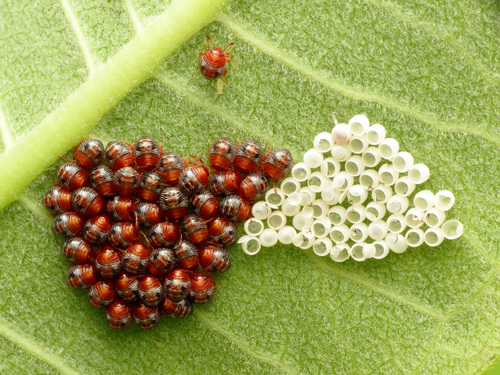
In warm conditions two to three generations develop over the summer, and new nymphs appear in late October to early November.
Source: Wikipedia
When you see it
Feeding activity runs from May until the first frost.
Source: Wikipedia
Lookalikes
It can be told apart from Nezara viridula by the black coloration on the three outermost antennal segments.
Source: Wikipedia
Where it is found in the US
Recorded in 49 of 51 states and DC. Most records: Texas, Pennsylvania, Ohio, Virginia, New York, Maryland, Massachusetts, Illinois.
Darker = more records. Counts are museum and citizen-science records, not population size.
Source: GBIF
Status: native in North America; native in United States; native in Canada. Source: iNaturalist
Months it is reported in the US
Source: GBIF
More photos
Questions people ask
How can I tell a green stink bug apart from similar bugs?
Look for a bright-green shield shape with narrow yellow, orange or reddish edges and check that the three outermost antennal segments are black.
Source: Wikipedia
What crops does the green stink bug damage?
It feeds on developing seeds of tomatoes, beans, peas, cotton, soybeans and eggplant, and can also chew stems and foliage.
Source: Wikipedia
When are green stink bugs most active?
They feed from May until frost and produce new nymphs in late October to early November.
Source: Wikipedia
Same family (Pentatomidae)
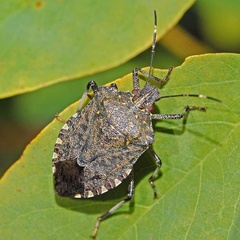 Brown Marmorated Stink BugHalyomorpha halysDamages trees, gardens or crops
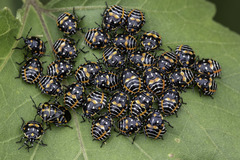 Harlequin BugMurgantia histrionicaDamages trees, gardens or crops
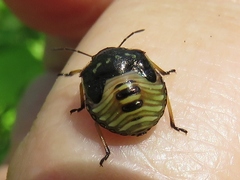 Brown Stink BugEuschistus servusDamages trees, gardens or crops
 Green Shield BugPalomena prasina
 European Striped Shield BugGraphosoma italicum
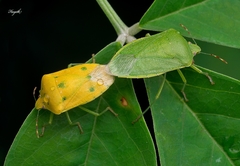 Southern Green Stink BugNezara viridula
Sources
- Wikipedia: https://en.wikipedia.org/wiki/Green_stink_bug
Look it up elsewhere: GBIF · iNaturalist · BugGuide · Wikipedia
Text written 2026-10-23 from the sources above and checked sentence by sentence against them. Data fetched 2026-10-22.