 Bug FAQ
Harlequin Bug
Murgantia histrionica · Order: Hemiptera · Family: Pentatomidae
Also called: Fire Bug, Harlequin Cabbage Bug
Source: Wikipedia
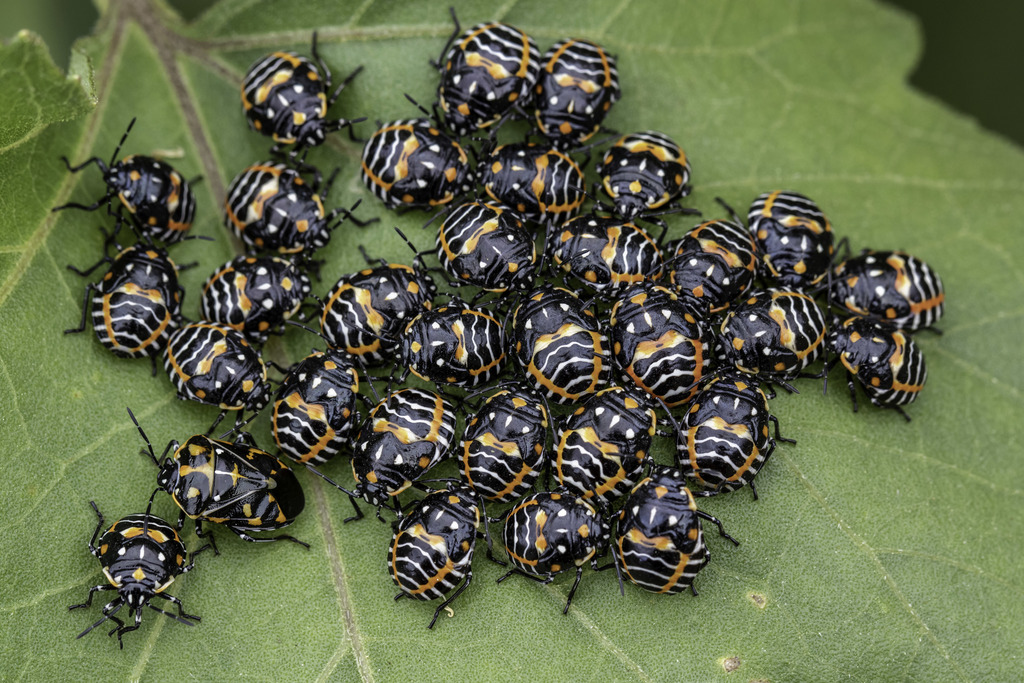
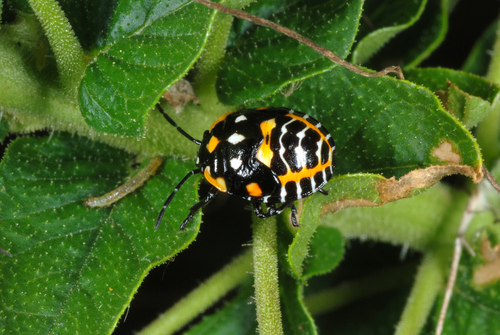
The harlequin bug feeds on cabbage, broccoli, kale and other Brassicaceae, causing damage to those plants. It is common in warm parts of North America and the tropics, especially where these crops are grown. You can control it by hand-picking the insects and destroying their striped egg clusters.
Source: Wikipedia
How to get rid of it
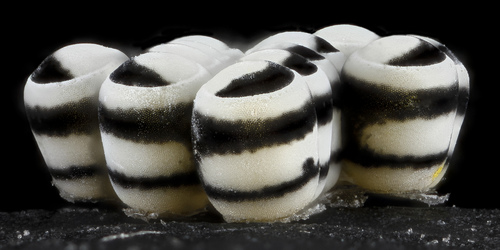
Remove insects by hand and drop them in soapy water; locate and destroy the black-and-white striped egg clusters of about twelve eggs each.
Source: Wikipedia
Where it lives
Found in warm regions of North America and the tropics where cabbage and ornamental cleome are grown.
Source: Wikipedia
Life cycle
In the tropics it can have three to six generations per year; farther north only one generation, with adults overwintering in crop residues or field edges.
Source: Wikipedia
When you see it
Nymphs are active during the summer.
Source: Wikipedia
Where it comes from
Occurs throughout tropical and warm parts of the United States.
Source: Wikipedia
Where it is found in the US
Recorded in 42 of 51 states and DC. Most records: California, Texas, Virginia, Pennsylvania, Maryland, Colorado, North Carolina, New Mexico.
Darker = more records. Counts are museum and citizen-science records, not population size.
Source: GBIF
Status: introduced in Canada; introduced in United States. Source: iNaturalist
Months it is reported in the US
Source: GBIF
More photos


Questions people ask
How can I get rid of them in my garden?
Pick the bugs off plants and destroy their egg clusters; you can drown the insects in soapy water.
Source: Wikipedia
Same family (Pentatomidae)
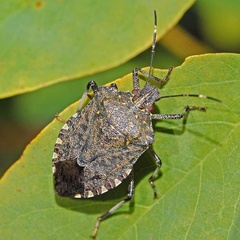 Brown Marmorated Stink BugHalyomorpha halysDamages trees, gardens or crops
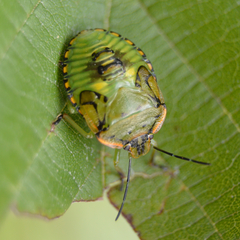 Green Stink BugChinavia hilarisDamages trees, gardens or crops
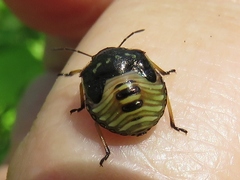 Brown Stink BugEuschistus servusDamages trees, gardens or crops
 Green Shield BugPalomena prasina
 European Striped Shield BugGraphosoma italicum
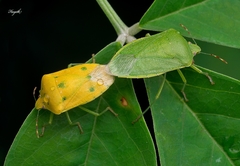 Southern Green Stink BugNezara viridula
Sources
- Wikipedia: https://en.wikipedia.org/wiki/Harlequin_cabbage_bug
Look it up elsewhere: GBIF · iNaturalist · BugGuide · ITIS · Wikipedia
Text written 2026-10-22 from the sources above and checked sentence by sentence against them. Data fetched 2026-10-22.