 Bug FAQ
Wounded Leafhopper
Erasmoneura vulnerata · Order: Hemiptera · Family: Cicadellidae
Also called: The wounded leafhopper
Source: Wikipedia
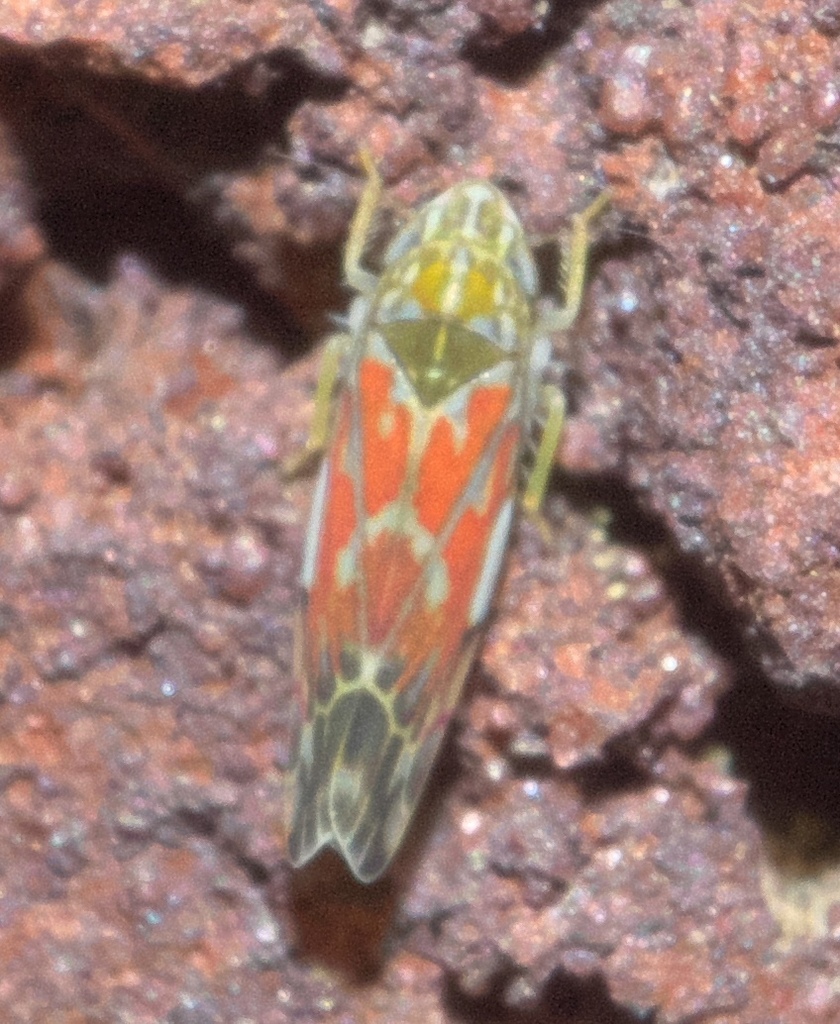
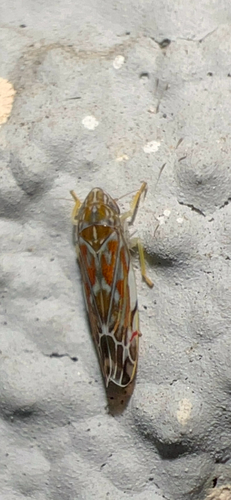
Adults are tiny, about 2.7-3.2 mm long, with a yellow stripe down the back and, in summer, bluish patches on the forewings. They live on grape foliage in vineyards and feed on leaf cells, creating white speckled spots that can reduce plant health.
Source: Wikipedia
How to recognize it
The body has a longitudinal yellow stripe; summer adults also show bluish patches on their forewings.
Source: Wikipedia
Size
Adults measure roughly 2.7 to 3.2 mm in length.
Source: Wikipedia
How to get rid of it
Kaolin clay can deter feeding; organic growers may also use pyrethrins or sulfur, while conventional options include acetamiprid and flupyradifurone.
Source: Wikipedia
Where it lives
Found on grape leaves in vineyards; in winter they hide under plant debris or in woody areas.
Source: Wikipedia
What it eats
Both nymphs and adults feed on leaf parenchyma, producing speckled white lesions on the leaf surface.
Source: Wikipedia
Life cycle
Develops through five nymphal instars and can produce two generations per year in its native range, with up to three in Europe.
Source: Wikipedia
When you see it
Adults leave overwintering sites and move into vineyards around April, coinciding with bud break.
Source: Wikipedia
Where it comes from
Native to North America, occurring throughout Canada, the United States, and Mexico.
Source: Wikipedia
Lookalikes
Members of the subfamily Typhlocybinae, to which this leafhopper belongs, have no significant positive economic importance.
Source: Wikipedia
Where it is found in the US
Recorded in 39 of 51 states and DC. Most records: Illinois, Virginia, Mississippi, Texas, Missouri, Louisiana, North Carolina, Ohio.
Darker = more records. Counts are museum and citizen-science records, not population size.
Source: GBIF
Months it is reported in the US
Source: GBIF
More photos
Questions people ask
How can I identify the wounded leafhopper?
Look for a tiny (2.7-3.2 mm) leafhopper with a yellow stripe down its back; summer adults have bluish patches on the forewings.
Source: Wikipedia
What damage does it cause to grape vines?
It feeds on leaf cells, creating speckled white lesions that can weaken vines and reduce fruit quality.
Source: Wikipedia
When do they appear in the vineyard?
Adults move into vineyards around April, when grape buds break, and remain active through the growing season.
Source: Wikipedia
How can I control wounded leafhopper populations?
Apply kaolin clay to deter feeding, or use organic options like pyrethrins or sulfur; conventional insecticides such as acetamiprid or flupyradifurone are also effective.
Source: Wikipedia
Same family (Cicadellidae)
 Red-banded LeafhopperGraphocephala coccineaDamages trees, gardens or crops
 Coppery LeafhopperJikradia olitoria
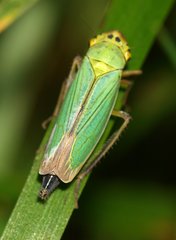 Green LeafhopperCicadella viridis
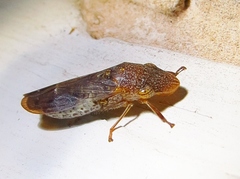 Glassy-winged SharpshooterHomalodisca vitripennisCan spread germs or disease
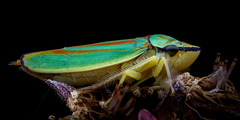 Rhododendron LeafhopperGraphocephala fennahiDamages trees, gardens or crops
 Japanese LeafhopperOrientus ishidaeCan spread germs or disease
Sources
- Wikipedia: https://en.wikipedia.org/wiki/Erasmoneura_vulnerata
Look it up elsewhere: GBIF · iNaturalist · BugGuide · Wikipedia
Text written 2026-10-23 from the sources above and checked sentence by sentence against them. Data fetched 2026-10-23.