 Bug FAQ
Rhododendron Leafhopper
Graphocephala fennahi · Order: Hemiptera · Family: Cicadellidae
Source: Wikipedia
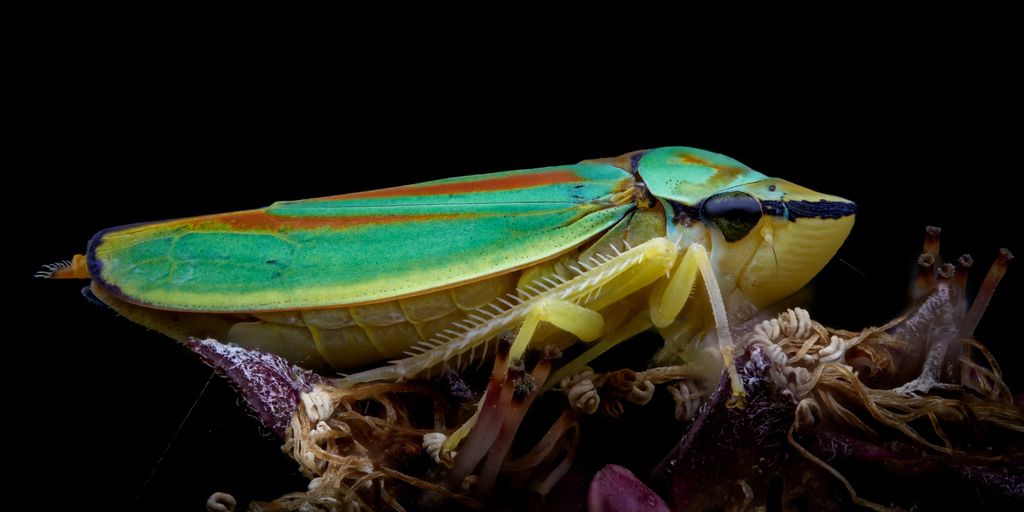
Adults are about 0.35 in long, with green wings that have purple tips and two orange stripes, plus yellow heads, undersides and legs and a purple stripe across the top of the head. They live in grassy, brushy and mixed hardwood areas where rhododendrons or azaleas grow, including gardens and parks. One generation appears each year from late spring through November; eggs are flat, oval and laid inside leaf tissue.
Source: Wikipedia
How to recognize it
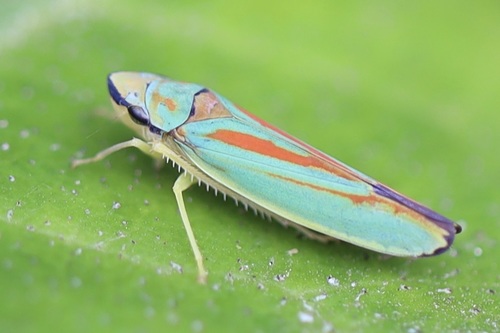
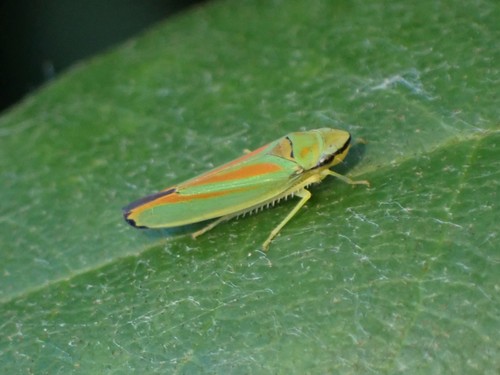
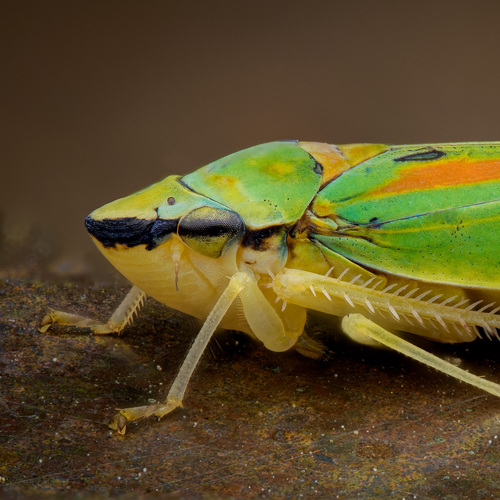
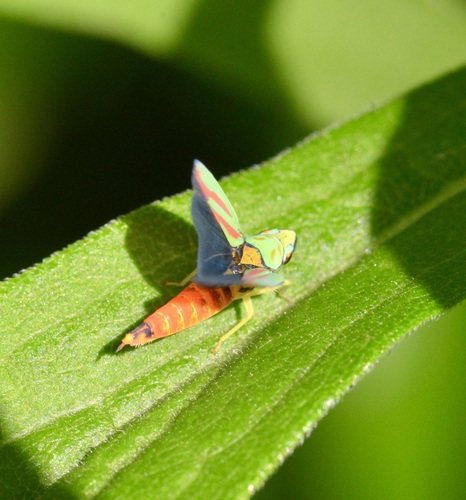
Green wings with purple tips each show two orange stripes; the head, underside and legs are yellow with a purple stripe over the eyes.
Source: Wikipedia
Size
Males measure 7.4 to 8.8 mm and females 8.2 to 9 mm, roughly 0.35 in long.
Source: Wikipedia
How to get rid of it
Attract lady beetles, spiders and birds to eat the leafhoppers. Cover plants with fine netting that lets light and water through but blocks the insects.
Source: Wikipedia
Where it lives
Found in grassy lands, brushy spots and mixed hardwood forests, especially where rhododendrons grow. Also common in gardens and parks with rhododendrons or azaleas.
Source: Wikipedia
What it eats
Feeds by sucking sap from rhododendron plants. Uses a proboscis to draw plant fluids.
Source: Wikipedia
Life cycle
Adults appear in late spring and die by November, giving one generation per year. Eggs are flat, oval and deposited inside leaf tissue.
Source: Wikipedia
When you see it
Active from May through November.
Source: Wikipedia
Where it comes from
Likely occurs throughout the United States and southern Canada.
Source: Wikipedia
Lookalikes
Related to cicadas, spittlebugs and treehoppers.
Source: Wikipedia
Where it is found in the US
Recorded in 29 of 51 states and DC. Most records: Massachusetts, Washington, North Carolina, New York, Pennsylvania, Oregon, Maine, Ohio.
Darker = more records. Counts are museum and citizen-science records, not population size.
Source: GBIF
Months it is reported in the US
Source: GBIF
More photos
Questions people ask
Can they damage my garden plants?
Yes, by sucking sap they can weaken rhododendron and azalea plants.
Source: Wikipedia
When will I see them in my garden?
They show up from late spring (May) and remain until November.
Source: Wikipedia
How can I keep them away?
Use row covers over the plants and encourage natural predators like lady beetles and birds.
Source: Wikipedia
Same family (Cicadellidae)
 Red-banded LeafhopperGraphocephala coccineaDamages trees, gardens or crops
 Coppery LeafhopperJikradia olitoria
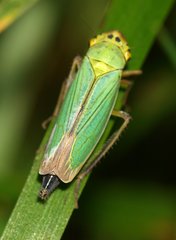 Green LeafhopperCicadella viridis
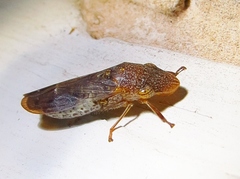 Glassy-winged SharpshooterHomalodisca vitripennisCan spread germs or disease
 Japanese LeafhopperOrientus ishidaeCan spread germs or disease
 Potato LeafhopperEmpoasca fabaeDamages trees, gardens or crops
Sources
- Wikipedia: https://en.wikipedia.org/wiki/Graphocephala_fennahi
Look it up elsewhere: GBIF · iNaturalist · BugGuide · Wikipedia
Text written 2026-10-22 from the sources above and checked sentence by sentence against them. Data fetched 2026-10-22.