 Bug FAQ
Green Leafhopper
Cicadella viridis · Order: Hemiptera · Family: Cicadellidae
Also called: Green Hazelnut Leafhopper, Leafhopper
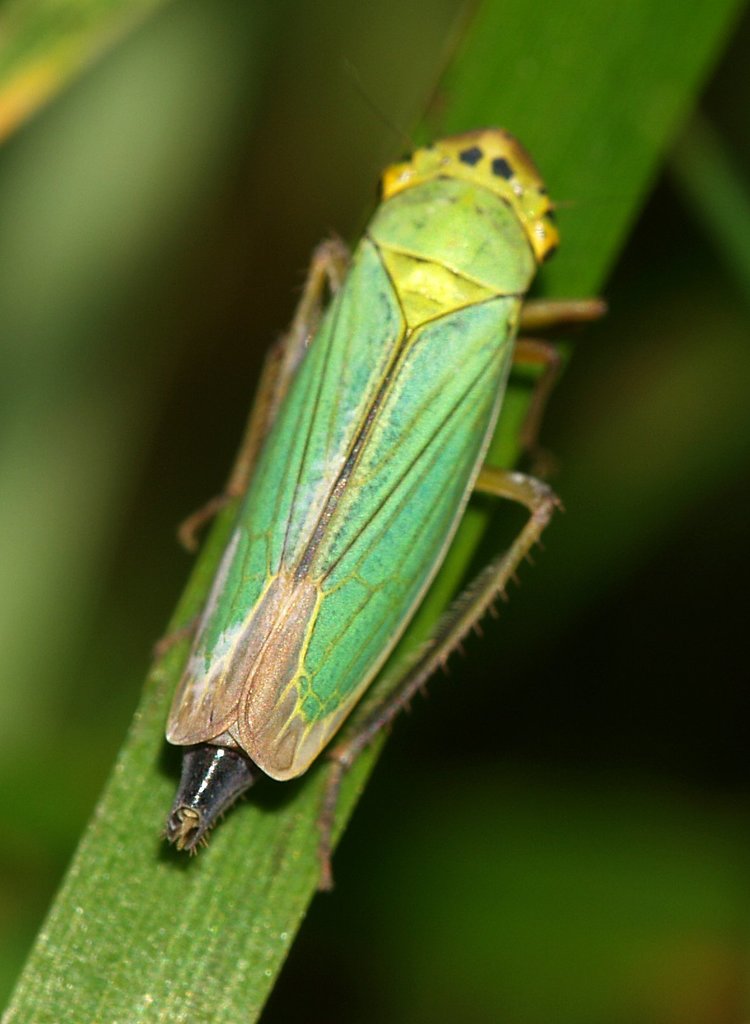
Adult green leafhoppers are 5.7 to 9 mm long, with males smaller than females. They live in wet grassy places such as bogs, meadows and marsh edges, but can also be found in drier spots. You’ll most often see them from July through October, and they feed on the sap of many herbaceous plants.
Source: Wikipedia
How to recognize it
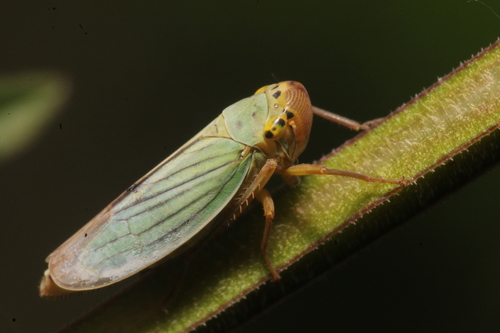
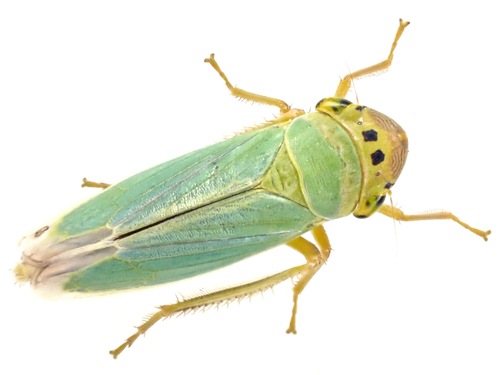
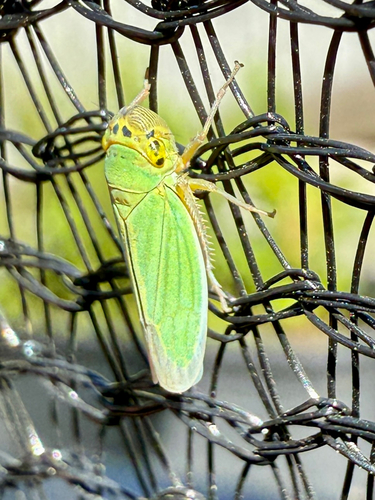
Males have a turquoise-green forewing, while females show a blue-green wing; both have a green-yellow pronotum and scutellum, a pale yellow front head with two black spots, and a bluish-black abdomen. Nymphs are yellowish with two brown stripes running the length of their bodies.
Source: Wikipedia
Size
Males measure 5.7 to 7 mm, females 7.5 to 9 mm.
Source: Wikipedia
Where it lives
They inhabit rough grassy areas, peat bogs, mires, wet meadows, marshes and swamps, and sometimes drier habitats.
Source: Wikipedia
What it eats
They feed on the sap of many herbaceous plants, especially rushes, sedges, grasses, marsh bedstraw and various legumes.
Source: Wikipedia
Life cycle
Depending on climate they can have one to three generations per year. Females lay eggs from late August to early November; the species overwinters as eggs, nymphs appear in spring and become adults in June or July.
Source: Wikipedia
When you see it
Adults are most common from July to October.
Source: Wikipedia
Where it comes from
They occur across most of Europe, the eastern Palearctic, the Near East, the Nearctic, and the Indomalayan realms.
Source: Wikipedia
Lookalikes
Do not confuse this species with the rice-pest genus Nephotettix, also called “green leafhopper”.
Source: Wikipedia
Status: native in Canada. Source: iNaturalist
More photos
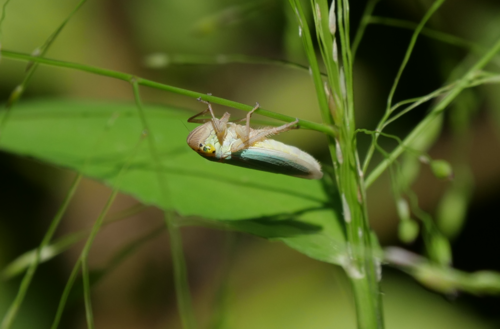
Questions people ask
When are green leafhoppers most likely to be seen?
You’ll usually find adults from July through October.
Source: Wikipedia
What plants do they feed on?
They suck sap from a variety of herbaceous plants such as rushes, sedges, grasses, marsh bedstraw and legumes.
Source: Wikipedia
Where do they live?
They prefer wet grassy habitats like bogs, mires, wet meadows and marsh edges, but can also occur in drier areas.
Source: Wikipedia
How can I tell male and female green leafhoppers apart?
Males have turquoise-green forewings, while females have blue-green forewings; both share a green-yellow pronotum and scutellum and a bluish-black abdomen.
Source: Wikipedia
Same family (Cicadellidae)
 Red-banded LeafhopperGraphocephala coccineaDamages trees, gardens or crops
 Coppery LeafhopperJikradia olitoria
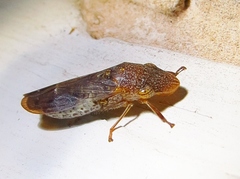 Glassy-winged SharpshooterHomalodisca vitripennisCan spread germs or disease
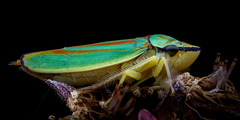 Rhododendron LeafhopperGraphocephala fennahiDamages trees, gardens or crops
 Japanese LeafhopperOrientus ishidaeCan spread germs or disease
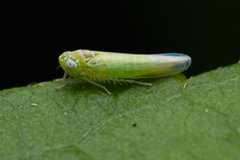 Potato LeafhopperEmpoasca fabaeDamages trees, gardens or crops
Sources
- Wikipedia: https://en.wikipedia.org/wiki/Cicadella_viridis
Look it up elsewhere: GBIF · iNaturalist · BugGuide · Wikipedia
Text written 2026-10-22 from the sources above and checked sentence by sentence against them. Data fetched 2026-10-22.