 Bug FAQ
Japanese Leafhopper
Orientus ishidae · Order: Hemiptera · Family: Cicadellidae
Also called: Leafhopper, mosaic leafhopper, The Japanese Leafhopper
Source: Wikipedia

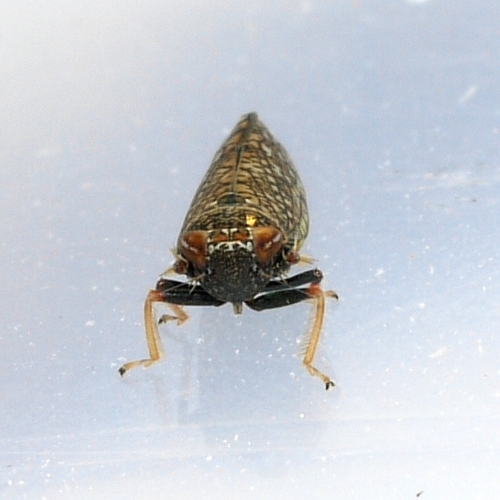
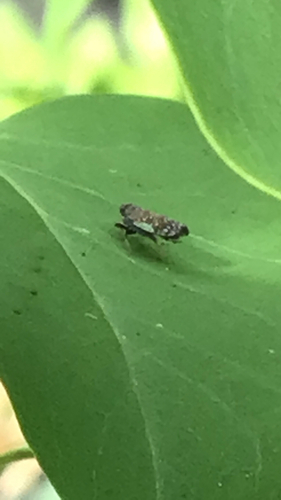
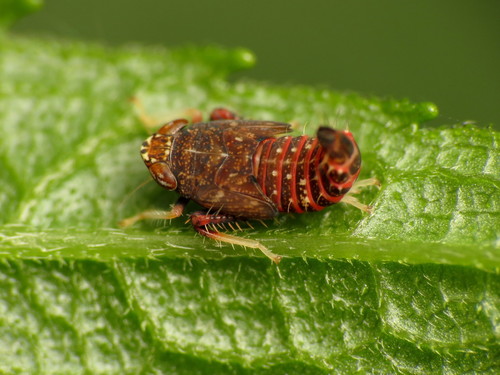
Adult Japanese leafhoppers are tiny insects about 5 mm long with a mottled wing pattern and an orange band between the eyes. They live on willows, hornbeams and many other deciduous trees, where they can cause serious leaf damage and spread a phytoplasma disease that affects vineyards. You’ll see the adults from June through October, and the nymphs are brightly coloured and raise their tails when disturbed.
Source: Wikipedia
How to recognize it
The forewings have a mosaic-like pattern and there is an orange band between the eyes. Nymphs are strongly coloured, but their exact pattern can vary.
Source: Wikipedia
Size
Adults measure between 4.5 and 6.5 mm in length.
Source: Wikipedia
Where it lives
They are found on willow, hornbeam and many other woody and deciduous trees.
Source: Wikipedia
What it eats
They feed on a variety of woody plants, especially willow and hornbeam.
Source: Wikipedia
Life cycle
Nymphs are brightly coloured and may raise their tails when threatened.
Source: Wikipedia
When you see it
Adults are active from June through October.
Source: Wikipedia
Where it comes from
The species originates from the East Palearctic region and is also present in the Nearctic and Oriental realms.
Source: Wikipedia
Where it is found in the US
Recorded in 33 of 51 states and DC. Most records: North Carolina, Virginia, Massachusetts, Maryland, New York, Washington, Pennsylvania, Delaware.
Darker = more records. Counts are museum and citizen-science records, not population size.
Source: GBIF
Status: introduced in North America; introduced in United States; introduced in Canada. Source: iNaturalist
Months it is reported in the US
Source: GBIF
More photos

Questions people ask
Can they damage my garden plants?
Yes, they can cause serious leaf damage on many trees and shrubs.
Source: Wikipedia
Do they spread any plant diseases?
They are known to transmit the phytoplasma that causes flavescence dorée in grapevines.
Source: Wikipedia
Same family (Cicadellidae)
 Red-banded LeafhopperGraphocephala coccineaDamages trees, gardens or crops
 Coppery LeafhopperJikradia olitoria
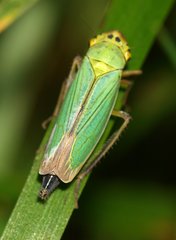 Green LeafhopperCicadella viridis
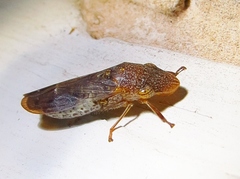 Glassy-winged SharpshooterHomalodisca vitripennisCan spread germs or disease
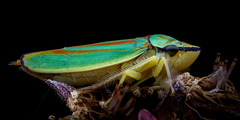 Rhododendron LeafhopperGraphocephala fennahiDamages trees, gardens or crops
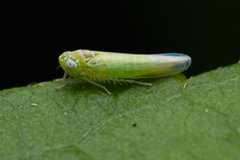 Potato LeafhopperEmpoasca fabaeDamages trees, gardens or crops
Sources
- Wikipedia: https://en.wikipedia.org/wiki/Orientus_ishidae
Look it up elsewhere: GBIF · iNaturalist · BugGuide · Wikipedia
Text written 2026-10-22 from the sources above and checked sentence by sentence against them. Data fetched 2026-10-22.