 Bug FAQ
Winsome Fly
Istocheta aldrichi · Order: Diptera · Family: Tachinidae
Also called: Parasitic wasp
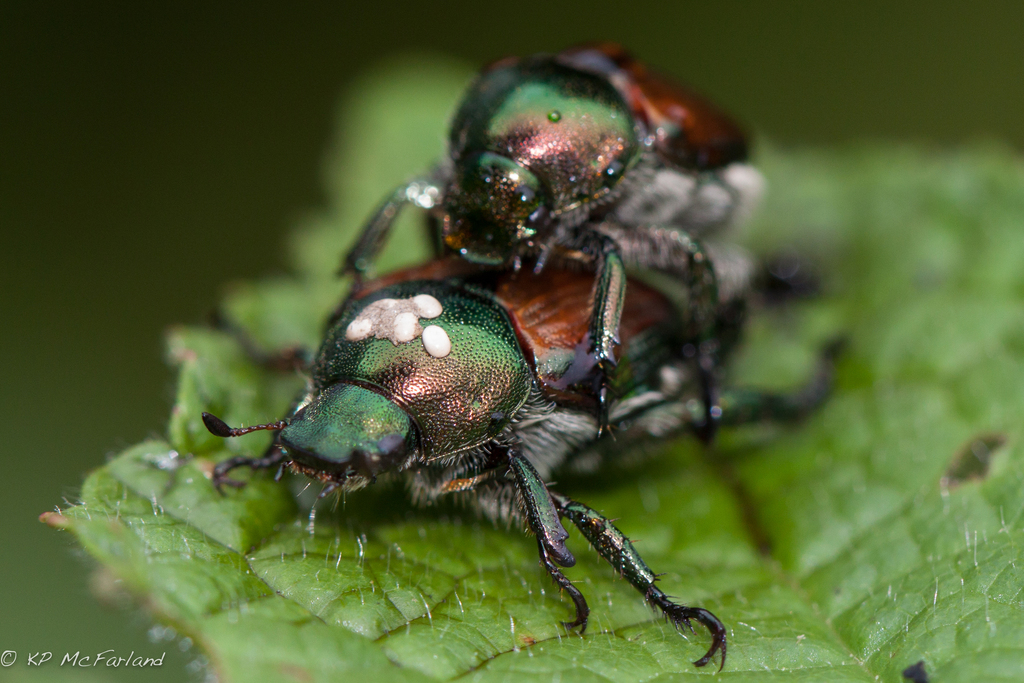
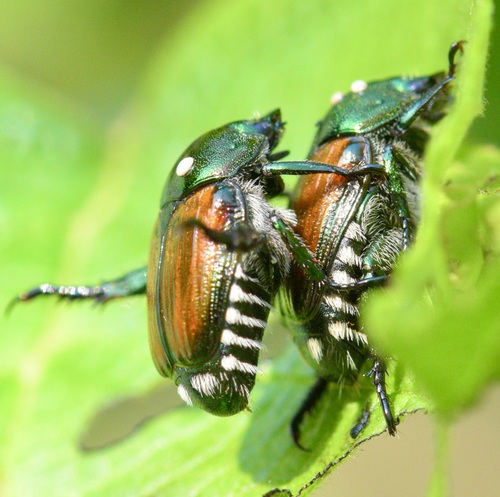
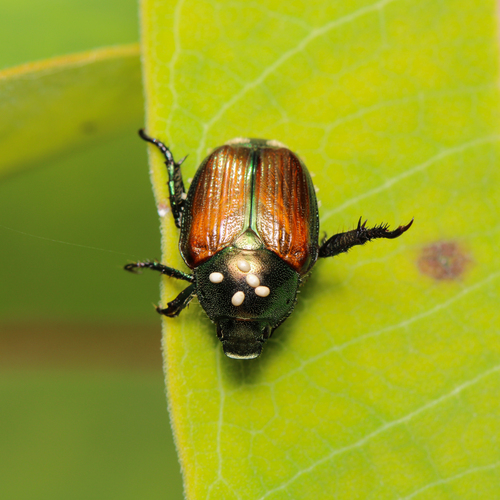
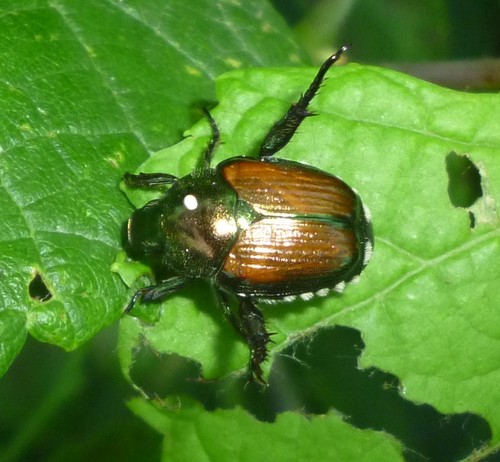
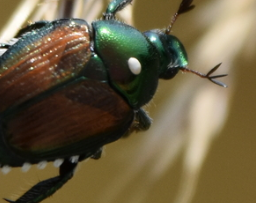
The winsome fly (Istocheta aldrichi) belongs to the Tachinidae family and is a small fly species. Its larvae develop inside Japanese beetles, hatching from eggs laid on the beetle’s pronotum and then pupating within the host.
Source: Wikipedia
Where it lives
It is highly specific to the Japanese beetle and likely does not attack other beetle species.
Source: Wikipedia
What it eats
Larvae hatch from eggs laid on a beetle’s pronotum and then pupate inside the host beetle.
Source: Wikipedia
Life cycle
After hatching on the beetle’s pronotum, the larvae develop and pupate inside the host beetle.
Source: Wikipedia
Where it comes from
The species originally comes from Japan. It is now found in Canada, the United States, Japan, the Korean Peninsula, Russia, and Taiwan.
Source: Wikipedia
Where it is found in the US
Recorded in 18 of 51 states and DC. Most records: Minnesota, New York, Vermont, Maine, Massachusetts, New Hampshire, Wisconsin, Connecticut.
Darker = more records. Counts are museum and citizen-science records, not population size.
Source: GBIF
Status: introduced in North America; introduced in Canada; introduced in United States. Source: iNaturalist
Months it is reported in the US
Source: GBIF
More photos
Questions people ask
What does the winsome fly look like?
It is a small fly that belongs to the Tachinidae family.
Source: Wikipedia
What does the winsome fly’s larva feed on?
The larvae develop inside Japanese beetles after hatching from eggs laid on the beetle’s pronotum.
Source: Wikipedia
Is the winsome fly a pest to gardens or crops?
It is highly specific to the Japanese beetle and does not appear to attack other beetle species.
Source: Wikipedia
Same family (Tachinidae)




Sources
- Wikipedia: https://en.wikipedia.org/wiki/Istocheta_aldrichi
Look it up elsewhere: GBIF · iNaturalist · BugGuide · ITIS · Wikipedia
Text written 2026-10-23 from the sources above and checked sentence by sentence against them. Data fetched 2026-10-22.