 Bug FAQ
Williston's bee fly
Poecilanthrax willistonii · Order: Diptera · Family: Bombyliidae
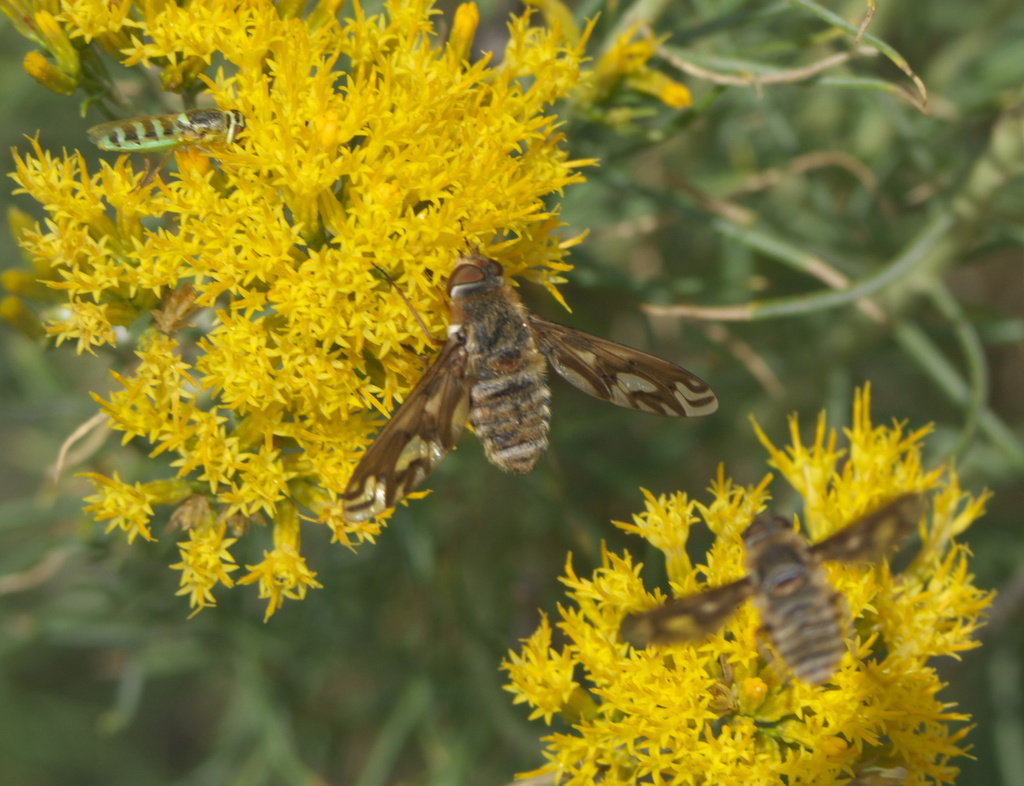
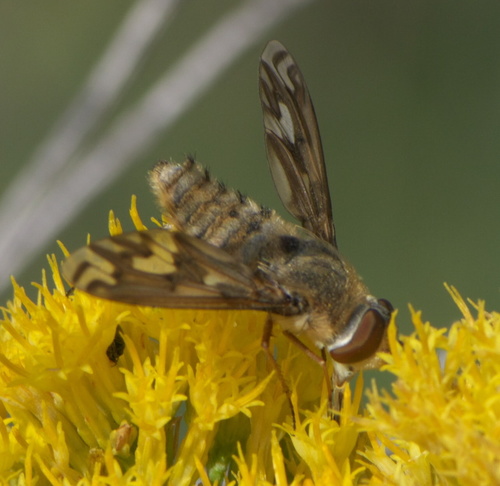
Williston's bee fly looks like a bee with orange-black bands on its abdomen, red eyes and swept-back wings. It lives on sand dunes where its larvae parasitize other insects such as grubs and caterpillars. Its range includes western Canada from British Columbia to Manitoba and extends south through the western United States into Baja California, Mexico.
Source: Wikipedia
Where it lives
It is found on sand dunes.
Source: Wikipedia
What it eats
The larvae are parasitoids that attack other insects, especially grubs and caterpillars.
Source: Wikipedia
Lookalikes
They look like bees, which helps them avoid predators, but they can be distinguished by their red eyes and swept-back wings.
Source: Wikipedia
Where it is found in the US
Recorded in 14 of 51 states and DC. Most records: Utah, Colorado, Nevada, New Mexico, Washington, Idaho, Wyoming, Montana.
Darker = more records. Counts are museum and citizen-science records, not population size.
Source: GBIF
Status: native in North America; native in Canada. Source: iNaturalist
Months it is reported in the US
Source: GBIF
More photos
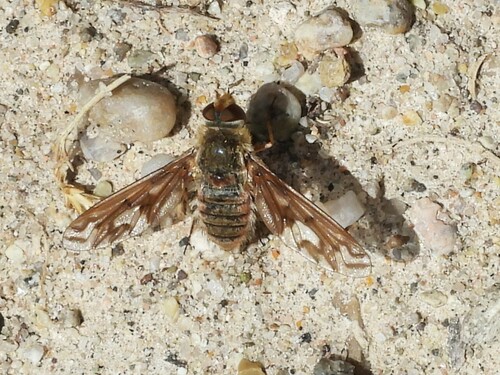
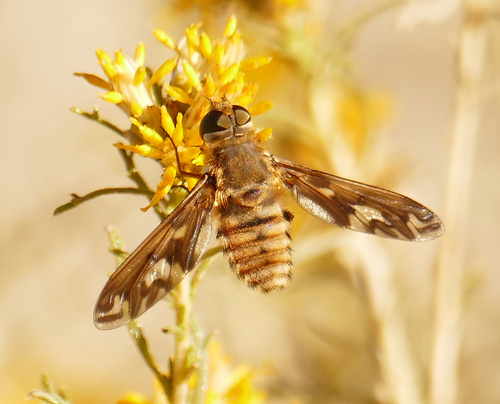
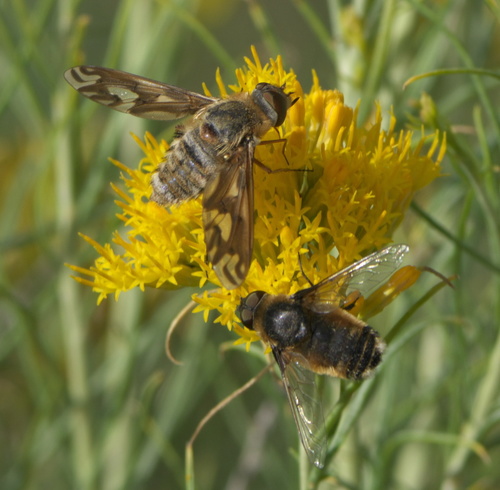
Questions people ask
What does Williston's bee fly look like?
It looks like a bee with orange-black bands on the abdomen, bright red eyes and long wings held out behind the body.
Source: Wikipedia
Where can I find this bee fly?
It lives on sand dunes across western Canada and the western United States down into Baja California, Mexico.
Source: Wikipedia
Same family (Bombyliidae)



Sources
- Wikipedia: https://en.wikipedia.org/wiki/Poecilanthrax_willistonii
Look it up elsewhere: GBIF · iNaturalist · BugGuide · ITIS · Wikipedia
Text written 2026-10-27 from the sources above and checked sentence by sentence against them. Data fetched 2026-10-27.