 Bug FAQ
Villa lateralis
Villa lateralis · Order: Diptera · Family: Bombyliidae
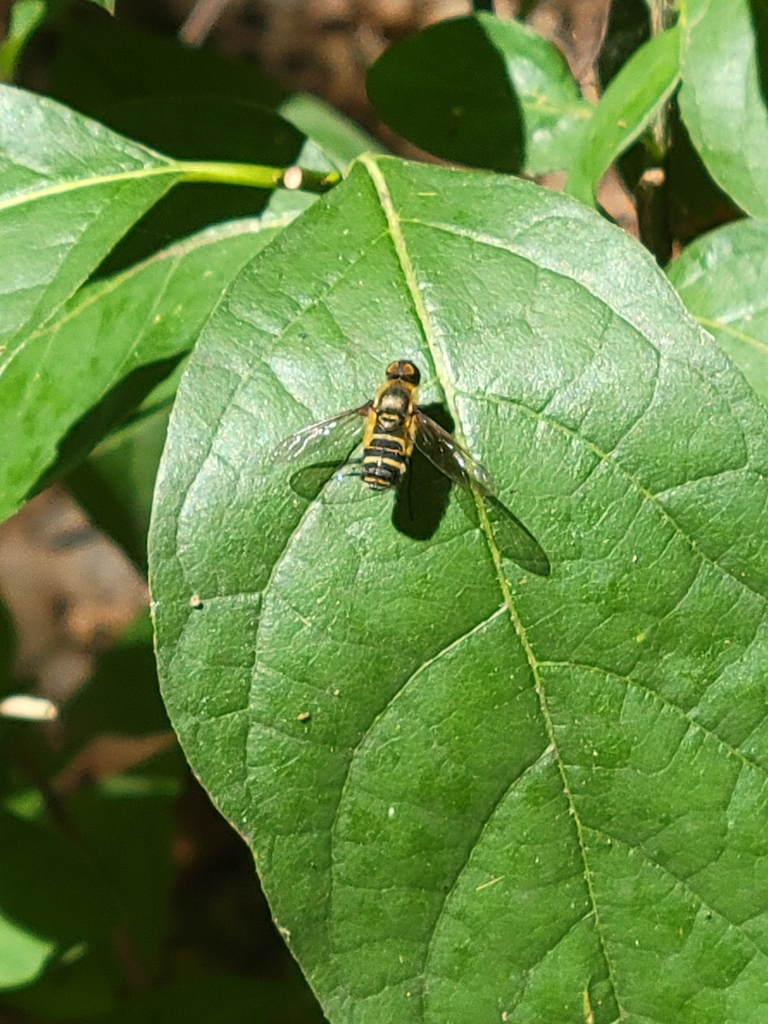
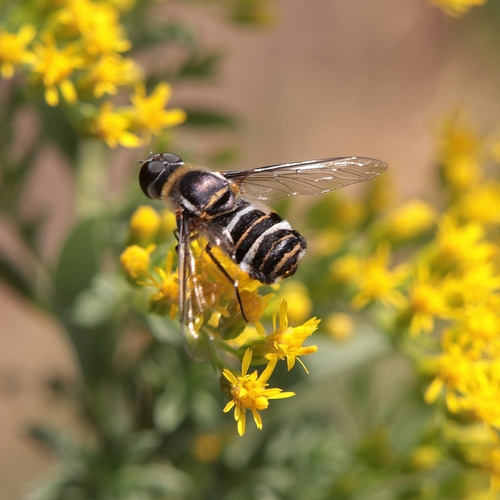
Villa lateralis has yellow hair along the sides of its thorax and yellow-black bands on the abdomen. Its face is greyish and some individuals show a faint yellow band at the base of the fourth abdominal segment and silvery tufts on the last segment. This species is most commonly found throughout North America and Central America.
Source: Wikipedia
How to recognize it
Yellow hair lines the sides of the thorax and the abdomen displays yellow and black banding. The face is greyish, and some bugs have a faint yellow band at the base of the fourth abdominal segment with silvery tufts on the terminal segment.
Source: Wikipedia
Where it comes from
Villa lateralis is native to North America and Central America.
Source: Wikipedia
Where it is found in the US
Recorded in 39 of 51 states and DC. Most records: California, Washington, Utah, Texas, Florida, Pennsylvania, Colorado, Ohio.
Darker = more records. Counts are museum and citizen-science records, not population size.
Source: GBIF
Status: native in North America; native in United States. Source: iNaturalist
Months it is reported in the US
Source: GBIF
More photos
Questions people ask
What does Villa lateralis look like?
It has yellow hair on the sides of the thorax, yellow-black bands on the abdomen, a greyish face, and sometimes a faint yellow band near the fourth abdominal segment with silvery tufts on the last segment.
Source: Wikipedia
Where is Villa lateralis found?
It is most commonly found across North America and Central America.
Source: Wikipedia
Same family (Bombyliidae)



Sources
- Wikipedia: https://en.wikipedia.org/wiki/Villa_lateralis
Look it up elsewhere: GBIF · iNaturalist · BugGuide · Wikipedia
Text written 2026-10-25 from the sources above and checked sentence by sentence against them. Data fetched 2026-10-25.