 Bug FAQ
Greater Bee Fly
Bombylius major · Order: Diptera · Family: Bombyliidae
Also called: Bee Fly, Dark-edged Bee-fly
Source: Wikipedia
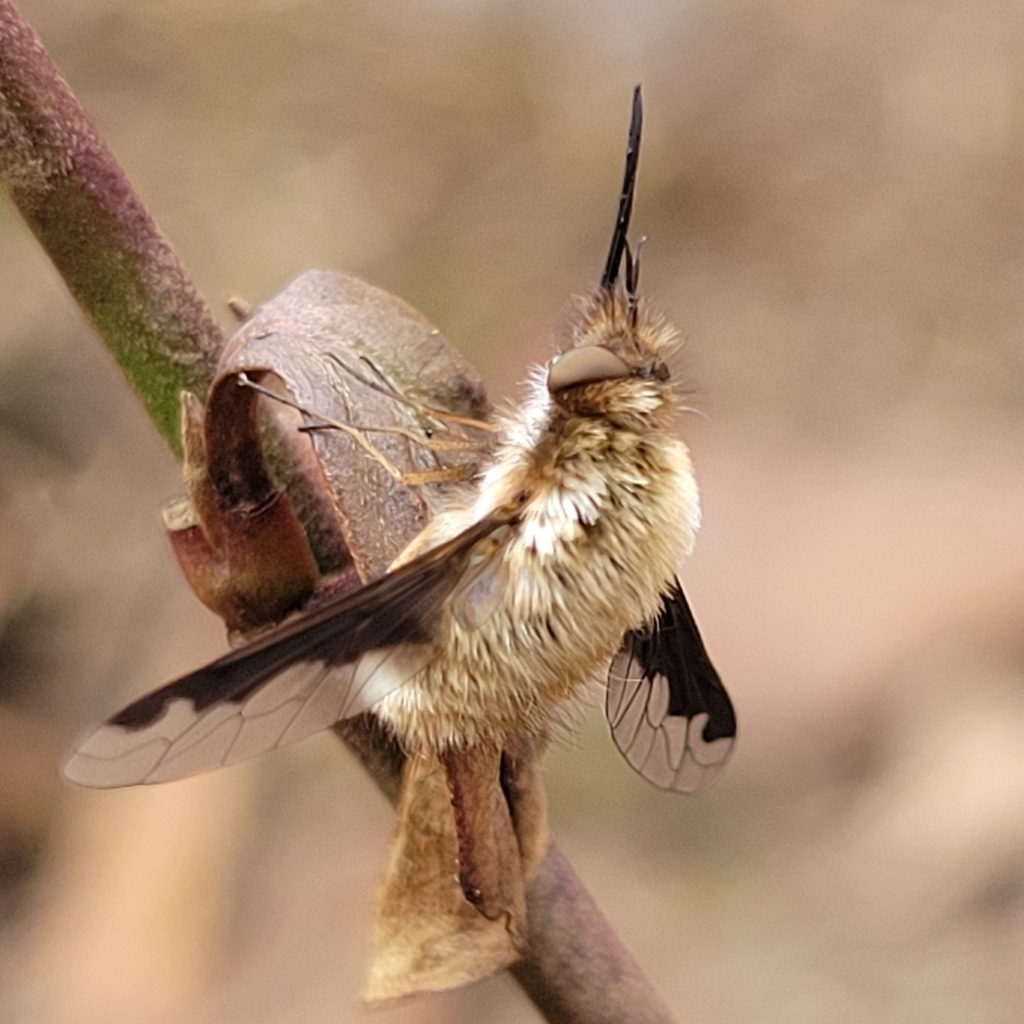
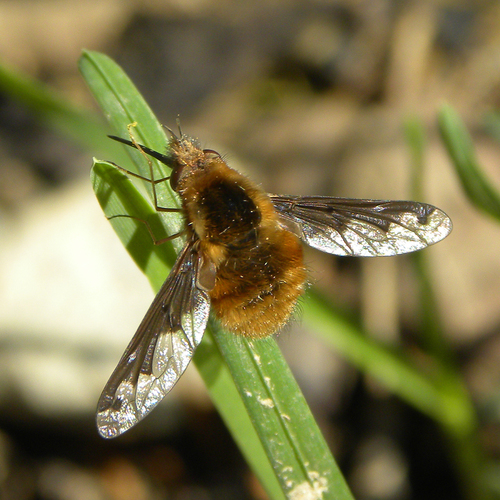
The Greater Bee Fly is a medium-sized fly about 6 to 12 mm long with a wing span of 8 to 14 mm. It has a dark body covered densely with lighter hairs, dark wing patches, and long hairy legs that hang while it flies. Adults feed on flower nectar and can act as pollinators or nectar robbers, while the larvae are parasitoids of solitary bees and wasps.
Source: Wikipedia
How to recognize it
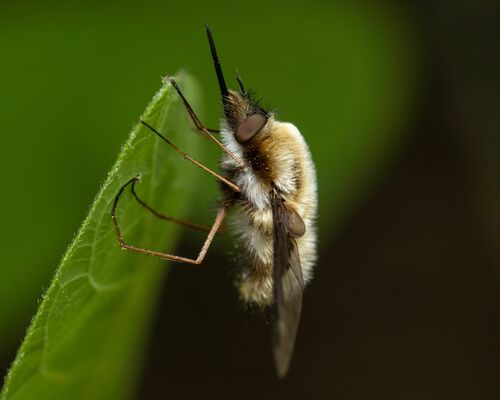
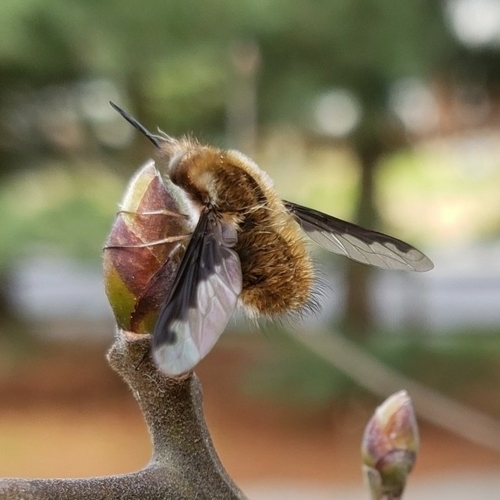
The fly’s body is dark but densely covered with lighter hairs. Its wings have dark patches on the front half and its legs are long and hairy, dangling in flight.
Source: Wikipedia
Size
Body length ranges from 6.3 to 12 mm. Wing span ranges from 8.4 to 14 mm.
Source: Wikipedia
Does it bite or sting?
The fly does not bite, sting, or transmit disease.
Source: Wikipedia
Where it lives
Seen from April to June in temperate parts of Europe, North America and parts of Asia. Occurs in many environments, from dry to moist areas.
Source: Wikipedia
What it eats
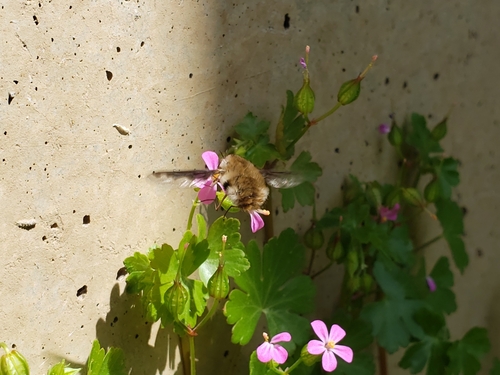
Adults visit many flowers for nectar, sometimes stealing it and sometimes pollinating.
Source: Wikipedia
Life cycle
Females lay eggs near the nests of solitary bees and wasps, especially digging bees like Andrena. The larvae are hypermetamorphic parasitoids that eat stored food and the young hosts.
Source: Wikipedia
When you see it
Most common in spring, appearing late March and abundant through May, sometimes into June.
Source: Wikipedia
Where it comes from
Found across the northern hemisphere in temperate Europe, North America and parts of Asia. Lives in a variety of habitats, from arid to moist.
Source: Wikipedia
Lookalikes
It resembles a bee, which is why it is called a bee fly. It is the most common species in the Bombylius genus.
Source: Wikipedia
Where it is found in the US
Recorded in 48 of 51 states and DC. Most records: California, Virginia, Ohio, Maryland, Pennsylvania, North Carolina, New York, Illinois.
Darker = more records. Counts are museum and citizen-science records, not population size.
Source: GBIF
Status: native in North America; native in Canada; native in United States. Source: iNaturalist
Months it is reported in the US
Source: GBIF
More photos
Questions people ask
When are Greater Bee Flies most likely to be seen?
They are most common in spring, from late March through May and sometimes into June.
Source: Wikipedia
What do adult Greater Bee Flies eat?
Adults feed on nectar from a variety of flowers, acting as pollinators or nectar robbers.
Source: Wikipedia
What is the larval food source of Greater Bee Flies?
The larvae are parasitoids that feed on the provisions and young of solitary bees and wasps.
Source: Wikipedia
Same family (Bombyliidae)



Sources
- Wikipedia: https://en.wikipedia.org/wiki/Bombylius_major
Look it up elsewhere: GBIF · iNaturalist · BugGuide · ITIS · Wikipedia
Text written 2026-10-23 from the sources above and checked sentence by sentence against them. Data fetched 2026-10-22.