 Bug FAQ
White-streaked Prominent
Ianassa lignicolor · Order: Lepidoptera · Family: Notodontidae
Also called: White-streaked Prominent Moth
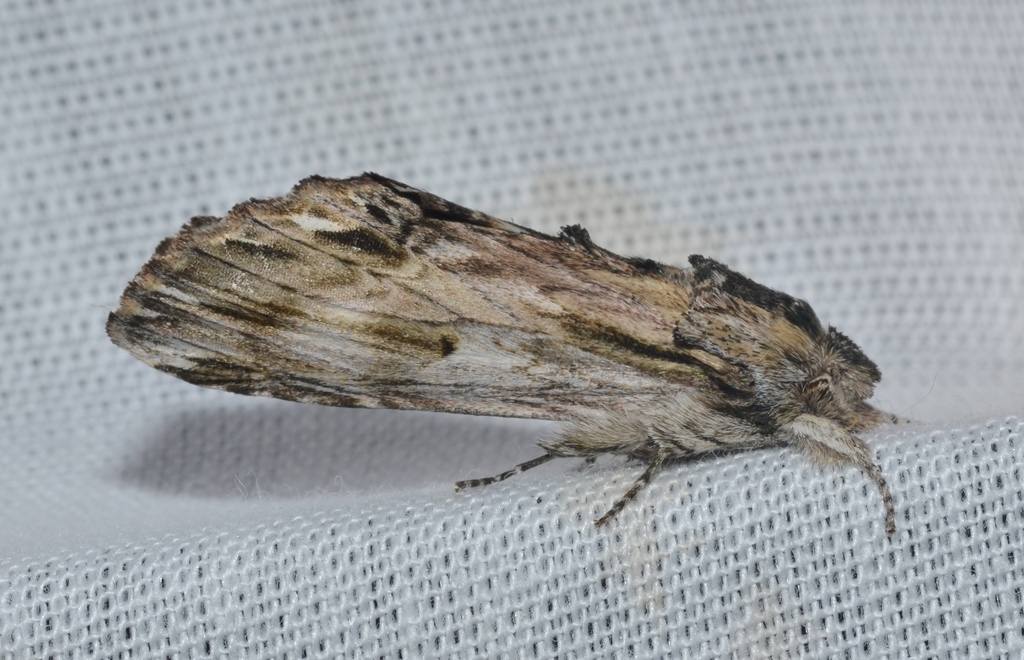
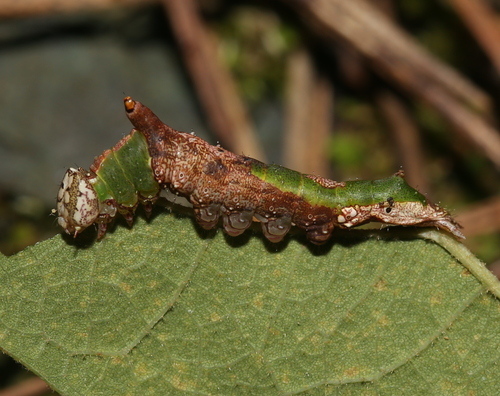
The white-streaked prominent moth has a wingspan of about 38 mm. It lives across many parts of North America, including several U.S. states and Canadian provinces. Its caterpillars feed on the leaves of beech, chestnut and oak trees.
Source: Wikipedia
How to recognize it
Oligocentria lignicolor is the scientific name for the white-streaked prominent moth, a member of the Notodontidae family.
Source: Wikipedia
Size
Adults have a wingspan of roughly 38 mm.
Source: Wikipedia
Where it lives
The species is found throughout North America.
Source: Wikipedia
What it eats
The larvae eat the foliage of beech, chestnut and oak trees.
Source: Wikipedia
Where it is found in the US
Recorded in 34 of 51 states and DC. Most records: Massachusetts, Michigan, Pennsylvania, Texas, Virginia, North Carolina, Alabama, Maryland.
Darker = more records. Counts are museum and citizen-science records, not population size.
Source: GBIF
Status: native in North America; native in United States; native in Canada. Source: iNaturalist
Months it is reported in the US
Source: GBIF
More photos
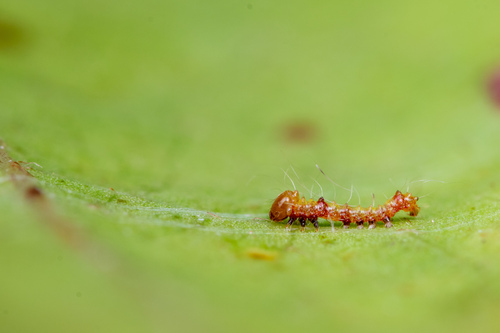
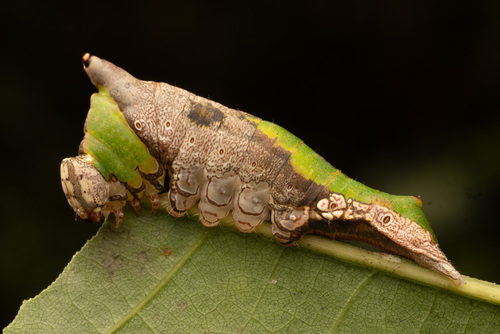
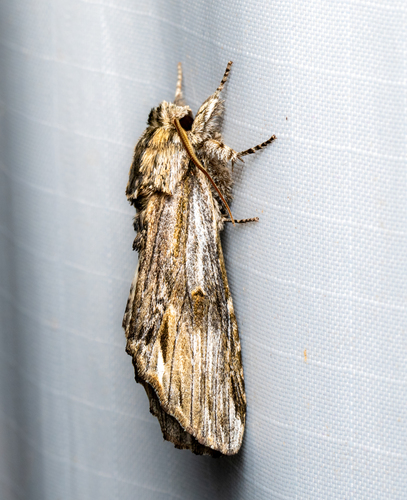
Questions people ask
What do the caterpillars of the white-streaked prominent eat?
They feed on the leaves of beech, chestnut and oak trees.
Source: Wikipedia
Where is this moth found in North America?
It occurs in many U.S. states and Canadian provinces, including places like Connecticut, Georgia, Illinois and Nova Scotia.
Source: Wikipedia
Same family (Notodontidae)
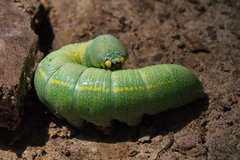 White-dotted ProminentNadata gibbosaDamages trees, gardens or crops
 Buff-tipPhalera bucephalaDamages trees, gardens or crops
 Common Gluphisia MothGluphisia septentrionis
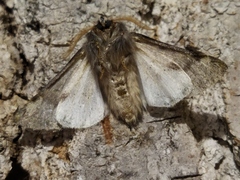 Pine Processionary-mothThaumetopoea pityocampaDamages trees, gardens or crops
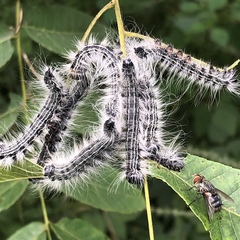 Walnut Caterpillar MothDatana integerrimaDamages trees, gardens or crops
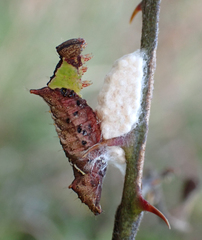 Unicorn ProminentCoelodasys unicornisDamages trees, gardens or crops
Sources
- Wikipedia: https://en.wikipedia.org/wiki/Oligocentria_lignicolor
Look it up elsewhere: GBIF · iNaturalist · BugGuide · ITIS · Wikipedia
Text written 2026-10-23 from the sources above and checked sentence by sentence against them. Data fetched 2026-10-23.