 Bug FAQ
Unicorn Prominent
Coelodasys unicornis · Order: Lepidoptera · Family: Notodontidae
Source: Wikipedia
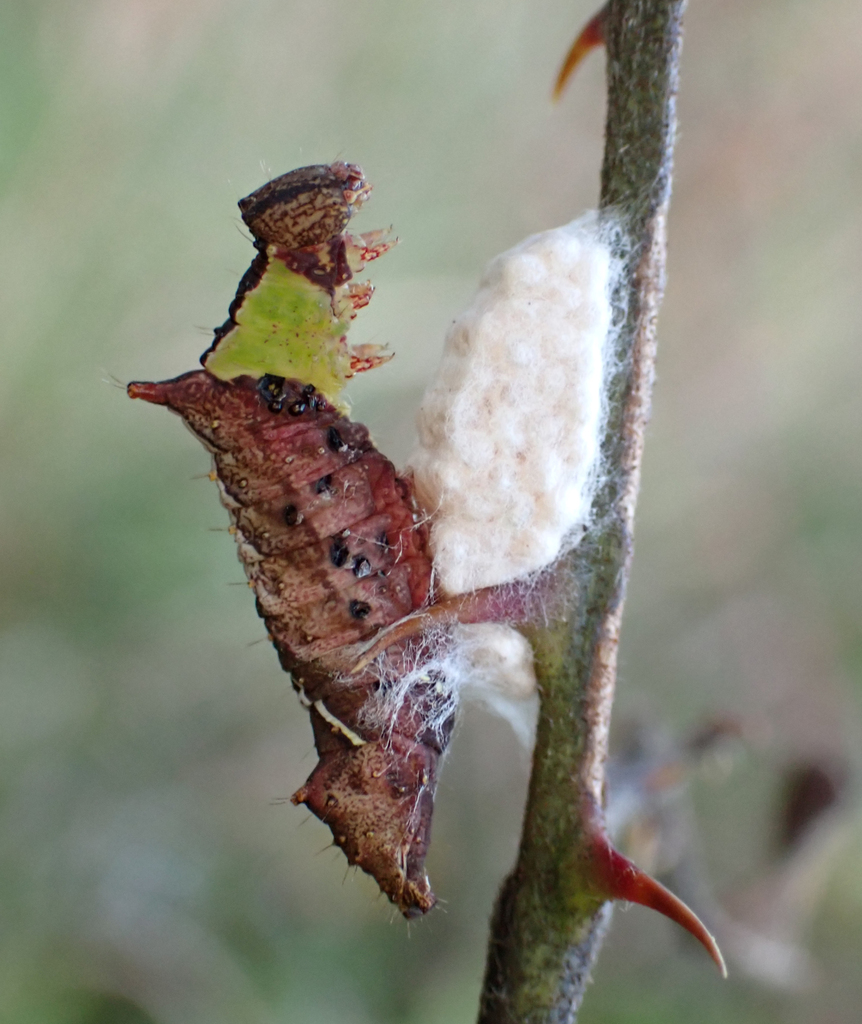
Coelodasys unicornis, also called the unicorn prominent moth, belongs to the Notodontidae family. Its wingspan measures about 24 to 35 mm. The caterpillars eat leaves of alders, apples, poplars, birches, elms, hawthorns, hickories and willows.
Source: Wikipedia
How to recognize it
Coelodasys unicornis is a moth in the Notodontidae family, known as the unicorn prominent or variegated prominent.
Source: Wikipedia
Size
The adult’s wingspan ranges from 24 to 35 mm.
Source: Wikipedia
Life cycle
There is one generation each year.
Source: Wikipedia
Lookalikes
It used to be placed in the genus Schizura but was moved to Coelodasys after a 2021 study.
Source: Wikipedia
Where it is found in the US
Recorded in 49 of 51 states and DC. Most records: Texas, Vermont, Massachusetts, Michigan, Alabama, California, New York, Pennsylvania.
Darker = more records. Counts are museum and citizen-science records, not population size.
Source: GBIF
Status: native in North America; native in United States; native in Canada. Source: iNaturalist
Months it is reported in the US
Source: GBIF
More photos
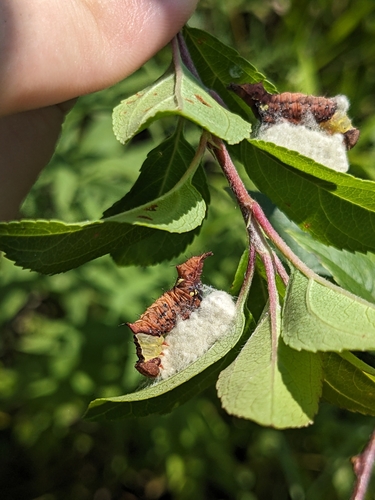
Questions people ask
Do the caterpillars damage trees or garden plants?
Yes, the larvae eat the foliage of many tree and shrub species, which can harm those plants.
Source: Wikipedia
How big is the unicorn prominent moth?
The adult’s wingspan is between 24 and 35 mm.
Source: Wikipedia
Same family (Notodontidae)
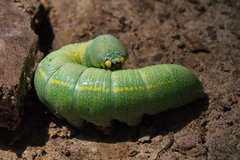 White-dotted ProminentNadata gibbosaDamages trees, gardens or crops
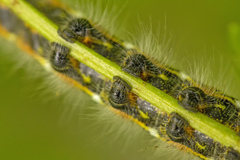 Buff-tipPhalera bucephalaDamages trees, gardens or crops
 Common Gluphisia MothGluphisia septentrionis
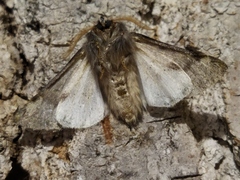 Pine Processionary-mothThaumetopoea pityocampaDamages trees, gardens or crops
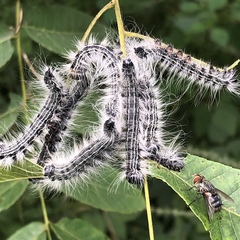 Walnut Caterpillar MothDatana integerrimaDamages trees, gardens or crops
 Angulose ProminentPeridea angulosaDamages trees, gardens or crops
Sources
- Wikipedia: https://en.wikipedia.org/wiki/Coelodasys_unicornis
Look it up elsewhere: GBIF · iNaturalist · BugGuide · ITIS · Wikipedia
Text written 2026-10-22 from the sources above and checked sentence by sentence against them. Data fetched 2026-10-22.