 Bug FAQ
Pine Processionary-moth
Thaumetopoea pityocampa · Order: Lepidoptera · Family: Notodontidae
Also called: Pine Processionary
Source: Wikipedia
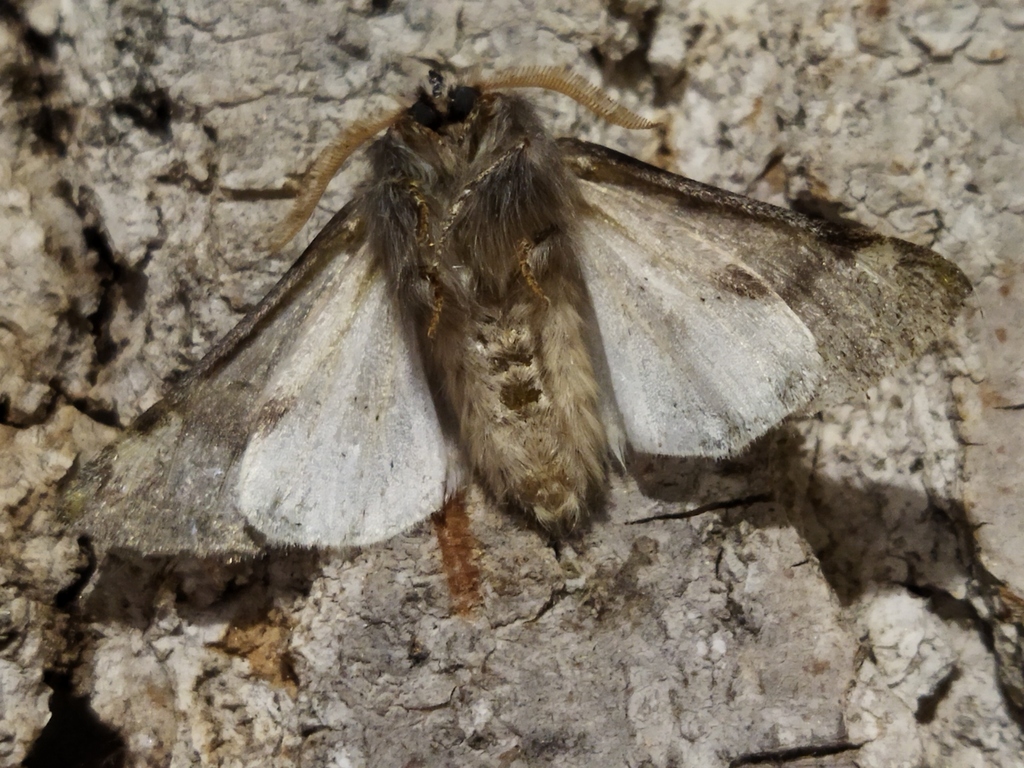
The caterpillars live in communal silk tents on pine trees and eat the needles, causing defoliation of conifer forests. Their urticating hairs contain thaumetopoein and can cause severe rashes and eye irritation in humans and animals.
Source: Wikipedia
How to recognize it
Adults are larger than oak processionary moths, have orange-brown hairy bodies with blue bands and a crescent marking on the wings.
Source: Wikipedia
Size
The adult moth is stout, furry and holds its wings like a tent over its body.
Source: Wikipedia
Is it a pest in the house?
Contact with the caterpillar hairs can cause harmful skin and eye reactions in people and other mammals.
Source: Wikipedia
How to get rid of it
Control methods include Bacillus thuringiensis for eggs and early larvae, diflubenzuron sprays from aircraft, oil-based insecticides injected into nests, and mechanical nest removal.
Source: Wikipedia
What it eats
Larvae feed on pine needles, sometimes also on cedar or larch, after leaving the nests at night.
Source: Wikipedia
Life cycle
Most individuals live one year, but some in high altitudes or northern areas may survive over two years. After hatching, larvae pass through five instars, building silk nests to survive winter.
Source: Wikipedia
When you see it
In early April the caterpillars leave their nests in procession, then pupate underground and emerge from May to August.
Source: Wikipedia
Lookalikes
It is larger than the oak processionary moth, has a distinct crescent wing marking and prefers coniferous forests, unlike the oak species.
Source: Wikipedia
Status: introduced in North America. Source: iNaturalist
Questions people ask
Do pine processionary caterpillars bite or sting?
Just touching the caterpillars' hairs can cause severe skin rashes and eye irritation, and in some people allergic reactions. The hairs affect pets and other mammals too.
Source: Wikipedia
What trees do they damage?
They mainly defoliate pine trees and can also affect cedar and larch.
Source: Wikipedia
How can I get rid of them?
Treatments include Bacillus thuringiensis for early stages, diflubenzuron sprays, oil injections into nests, or physically removing the nests.
Source: Wikipedia
Same family (Notodontidae)
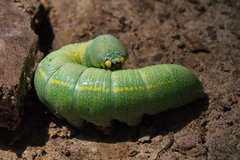 White-dotted ProminentNadata gibbosaDamages trees, gardens or crops
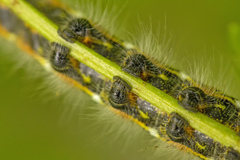 Buff-tipPhalera bucephalaDamages trees, gardens or crops
 Common Gluphisia MothGluphisia septentrionis
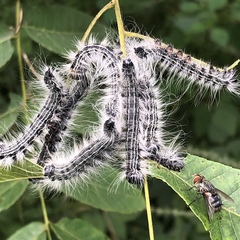 Walnut Caterpillar MothDatana integerrimaDamages trees, gardens or crops
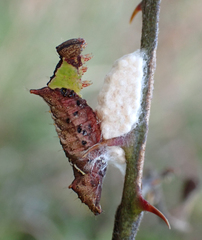 Unicorn ProminentCoelodasys unicornisDamages trees, gardens or crops
 Angulose ProminentPeridea angulosaDamages trees, gardens or crops
Sources
- Wikipedia: https://en.wikipedia.org/wiki/Pine_processionary
Look it up elsewhere: GBIF · iNaturalist · BugGuide · Wikipedia
Text written 2026-10-22 from the sources above and checked sentence by sentence against them. Data fetched 2026-10-22.