 Bug FAQ
Buff-tip
Phalera bucephala · Order: Lepidoptera · Family: Notodontidae
Source: Wikipedia
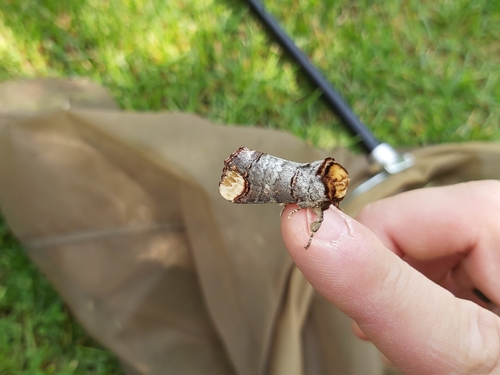
Adults have a wingspan of about 55 to 68 mm and rest looking like a broken twig because of their buff-coloured thorax and wing tip. They are found across most of Europe, North-East Africa, Asia Minor and into East Asia, overwintering as pupae. Moths fly at night in June and July and are attracted to light.
Source: Wikipedia
How to recognize it
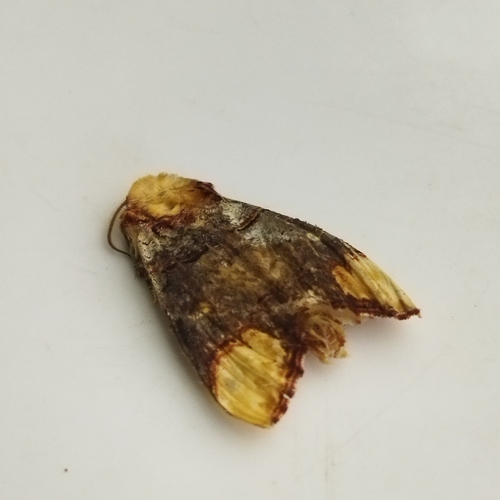
The forewings are grey with a large buff patch at the tip. The buff colour of the thorax helps the moth resemble a broken twig when it rests.
Source: Wikipedia
Size
Wingspan ranges from 55 to 68 mm (about 2.2 to 2.7 in).
Source: Wikipedia
Is it a pest in the house?
Historically it was called a pest because it fed on apple trees in Lithuania in the early 1900s. Outbreaks increase where environmental nitrogen levels are high.
Source: Wikipedia
How to get rid of it
Historically it was noted as a pest on apple trees in Lithuania. High nitrogen environments can trigger outbreaks.
Source: Wikipedia
Where it lives
It occurs throughout Europe (except the Arctic and Greece), in North-East Africa, Asia Minor, Siberia and East Asia. The species overwinters as a pupa.
Source: Wikipedia
What it eats
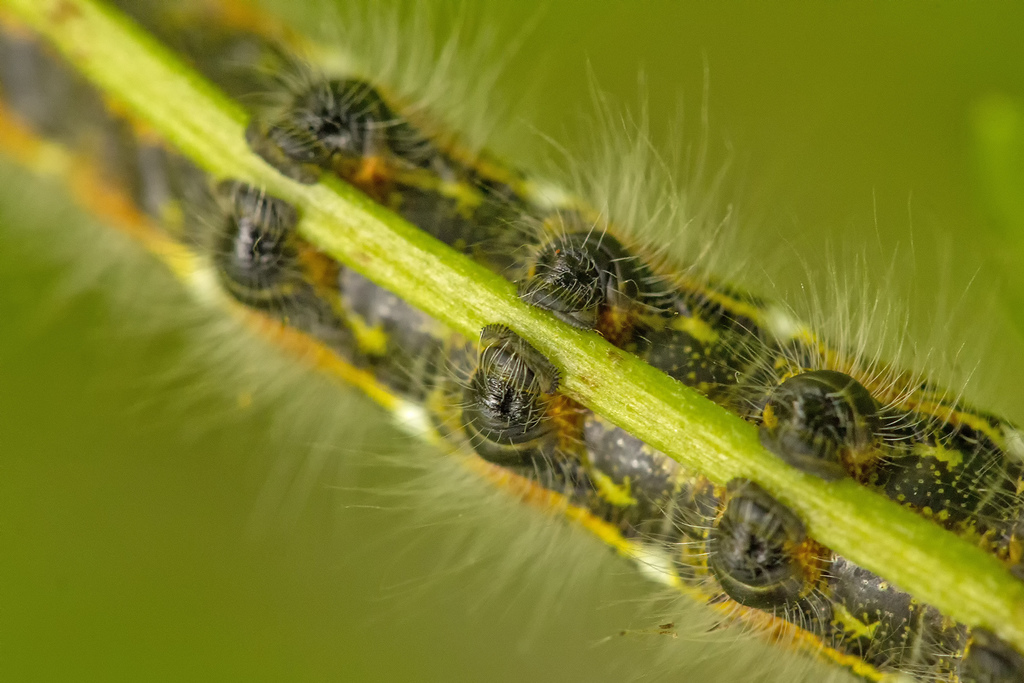
Older larvae are black with white and yellow lines and feed on many trees and shrubs.
Source: Wikipedia
Life cycle
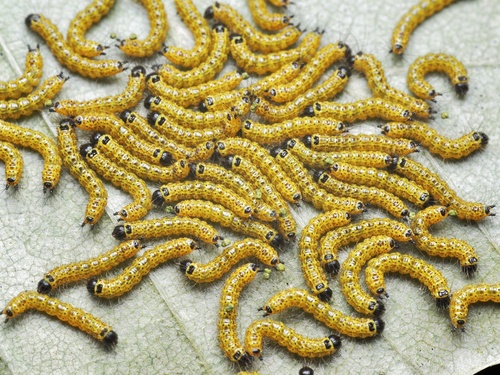
The species overwinters as a pupa. Caterpillars are active June to October on willow, poplar, birch, lime and oak.
Source: Wikipedia
When you see it
Adults fly at night in June and July and are attracted to light. In central Europe they are abundant in May and June; a second generation appears in July and August in the south.
Source: Wikipedia
Where it comes from
Its native range includes Europe, Asia to eastern Siberia, North-East Africa and the Middle East.
Source: Wikipedia
Lookalikes
It can be confused with the similar species bucephaloides, which has a larger apical patch and more prominent discal spot. The East-Asian subspecies infulgens has uniformly whitish-grey forewings and a narrower hindwing.
Source: Wikipedia
More photos
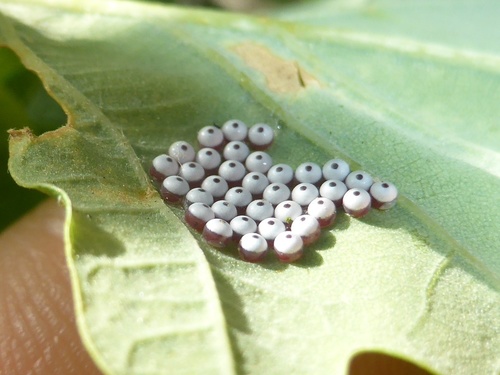
Questions people ask
How can I identify a buff-tip moth?
Look for a grey forewing with a large buff patch at the tip and a buff-coloured thorax that makes the resting moth look like a broken twig.
Source: Wikipedia
When are buff-tip moths active?
Adults fly at night in June and July and are attracted to light; larvae are present from June to October on various trees.
Source: Wikipedia
Does the buff-tip moth damage my garden?
Its caterpillars feed on the leaves of many trees and shrubs, including apple, willow, poplar, birch, lime and oak, and can cause noticeable defoliation.
Source: Wikipedia
What conditions lead to buff-tip moth outbreaks?
Outbreaks are more common in areas with high environmental nitrogen levels.
Source: Wikipedia
Same family (Notodontidae)
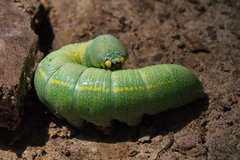 White-dotted ProminentNadata gibbosaDamages trees, gardens or crops
 Common Gluphisia MothGluphisia septentrionis
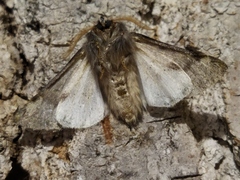 Pine Processionary-mothThaumetopoea pityocampaDamages trees, gardens or crops
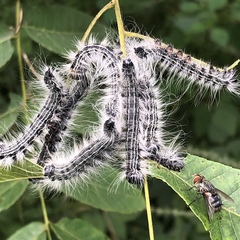 Walnut Caterpillar MothDatana integerrimaDamages trees, gardens or crops
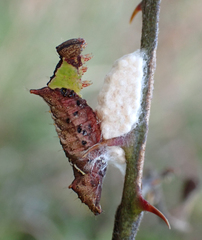 Unicorn ProminentCoelodasys unicornisDamages trees, gardens or crops
 Angulose ProminentPeridea angulosaDamages trees, gardens or crops
Sources
- Wikipedia: https://en.wikipedia.org/wiki/Buff-tip
Look it up elsewhere: GBIF · iNaturalist · BugGuide · Wikipedia
Text written 2026-10-22 from the sources above and checked sentence by sentence against them. Data fetched 2026-10-22.