 Bug FAQ
White-legged Snake Millipede
Tachypodoiulus niger · Order: Julida · Family: Julidae
Also called: black millipede, black snake millipede, white-legged black millipede, white-legged millipede
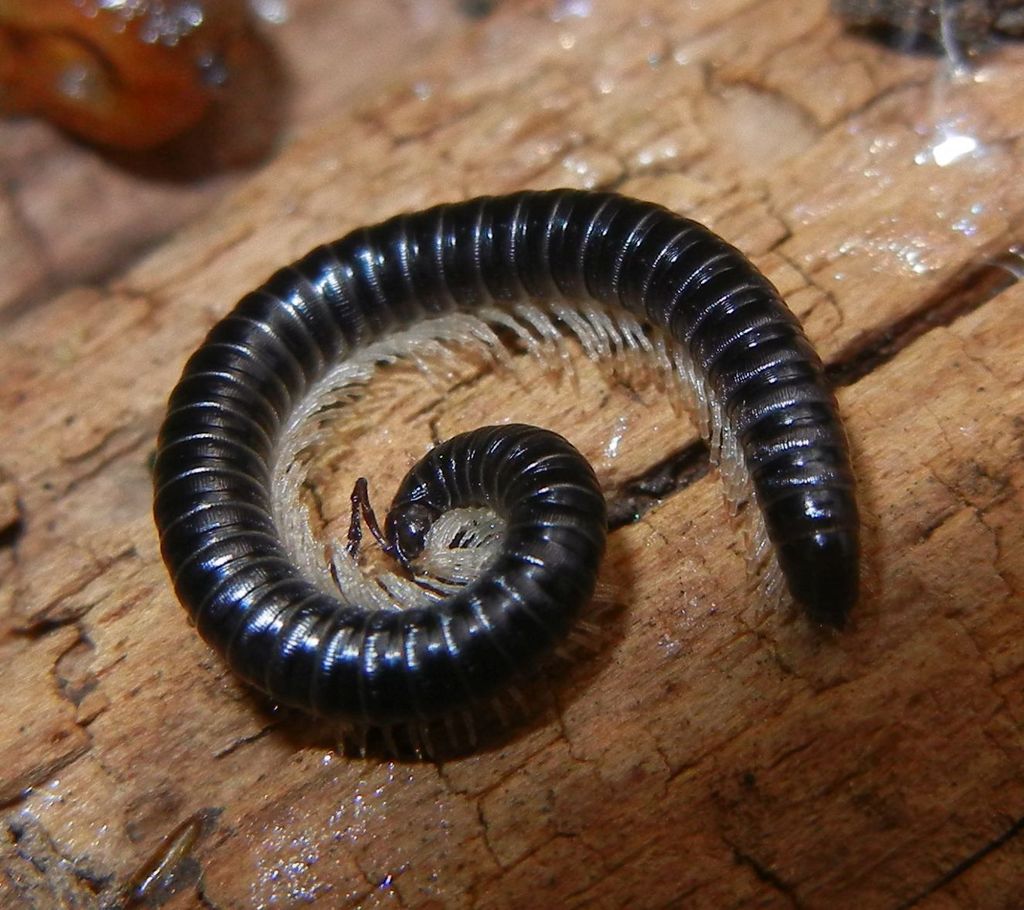
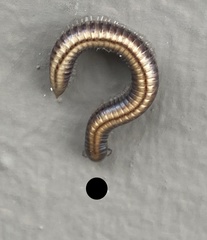
The white-legged snake millipede has a shiny black, roughly cylindrical body with about 100 pairs of white legs across 41 to 56 segments.
Source: Wikipedia
Size
Adults have 41 to 56 body segments and about 100 pairs of legs.
Source: Wikipedia
Where it lives
It is found in leaf litter, under bark and in moss.
Source: Wikipedia
Where it comes from
Its range includes Ireland, Britain, Spain, France, the Benelux countries, Germany, Switzerland, Austria and the Czech Republic.
Source: Wikipedia
Lookalikes
It looks very similar to Cylindroiulus londinensis and can only be reliably separated by examining the shape of the telson.
Source: Wikipedia
More photos
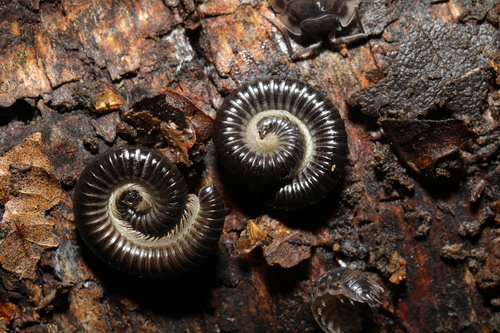
Questions people ask
When are white-legged snake millipedes active?
They are most active from shortly after sunset until just before sunrise, and in summer they may also be active in the afternoon.
Source: Wikipedia
Same family (Julidae)

Sources
- Wikipedia: https://en.wikipedia.org/wiki/Tachypodoiulus_niger
Look it up elsewhere: GBIF · iNaturalist · BugGuide · Wikipedia
Text written 2026-10-23 from the sources above and checked sentence by sentence against them. Data fetched 2026-10-22.