 Bug FAQ
Striped Millipede
Ommatoiulus sabulosus · Order: Julida · Family: Julidae
Also called: sand millepede
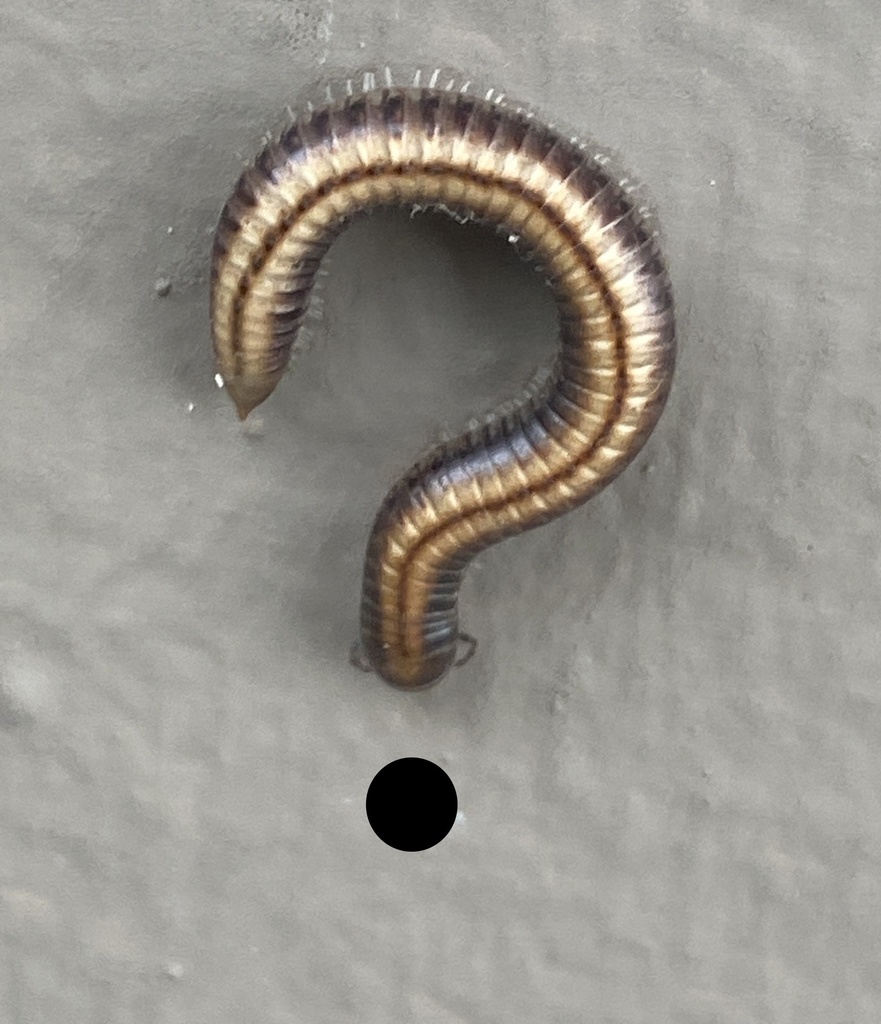
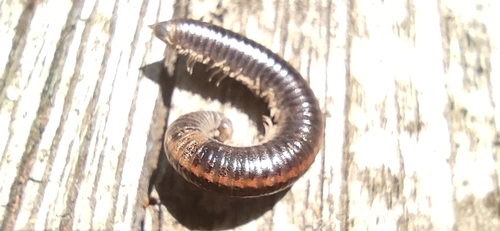
The striped millipede gets its name from two bright longitudinal bands on its back. It lives in open habitats such as meadows, fields, roadside edges, sandy soils and forest leaf-litter, from sea level up to 2800 m. It is a common scavenger, feeding on dead plant material and producing humus that benefits plant growth.
Source: Wikipedia
How to recognize it
It is called the striped millipede because it has two bright lengthwise bands on its back.
Source: Wikipedia
Where it lives
It lives in many open places like meadows, fields, road edges, sandy soils and forest leaf litter. It can be found from sea level up to 2800 m altitude.
Source: Wikipedia
What it eats
It scavenges dead plant material such as foliage and rotting wood, turning it into humus that helps plants grow.
Source: Wikipedia
Life cycle
Geographic subspecies or forms exist, for example Ommatoiulus sabulosus aimatopodus.
Source: Wikipedia
Lookalikes
Geographic subspecies or forms, like Ommatoiulus sabulosus aimatopodus, can look similar.
Source: Wikipedia
More photos
Questions people ask
What does the striped millipede look like?
It has two bright longitudinal bands on its dorsal surface, giving it the name “striped” millipede.
Source: Wikipedia
Where can I find striped millipedes?
They occur in open habitats such as meadows, fields, roadside edges, sandy soils and forest leaf-litter, from sea level up to 2800 m.
Source: Wikipedia
What do striped millipedes eat?
They feed on dead plant material like foliage and rotting wood, producing humus that benefits plant growth.
Source: Wikipedia
Are there different forms of striped millipedes?
Yes, there are geographic subspecies or forms, such as Ommatoiulus sabulosus aimatopodus.
Source: Wikipedia
Same family (Julidae)

Sources
- Wikipedia: https://en.wikipedia.org/wiki/Ommatoiulus_sabulosus
Look it up elsewhere: GBIF · iNaturalist · BugGuide · Wikipedia
Text written 2026-10-22 from the sources above and checked sentence by sentence against them. Data fetched 2026-10-22.