 Bug FAQ
Blunt-tailed Snake Millipede
Cylindroiulus punctatus · Order: Julida · Family: Julidae
Also called: blunt-tailed millipede, woodland floor millipede

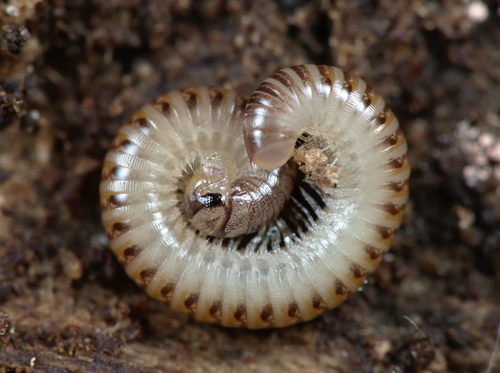
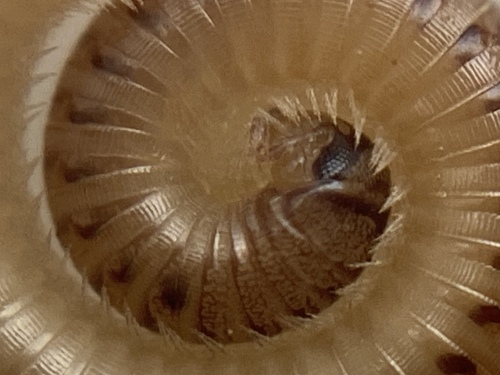
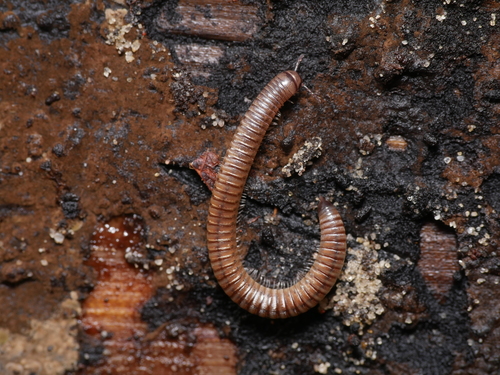
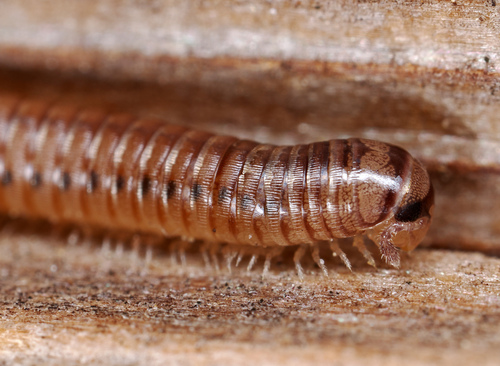
The blunt-tailed snake millipede is brown, has about 100 legs and moves slowly, with faint dotted markings that are hard to see. It lives under bark on trees, takes three years to become sexually mature, and can live for many years. It was first described in western Europe (including Great Britain) in 1815 and has also been introduced to North America.
Source: Wikipedia
How to recognize it
Brown body, about 100 legs, slow movement, and faint punctate spots that are difficult to spot.
Source: Wikipedia
Where it lives
Found on trees, just under the bark.
Source: Wikipedia
Life cycle
Long-lived; takes three years to reach sexual maturity.
Source: Wikipedia
Where it comes from
Native to western Europe, including Great Britain, described by Leach in 1815. Has been introduced to North America.
Source: Wikipedia
Where it is found in the US
Recorded in 23 of 51 states and DC. Most records: Pennsylvania, Massachusetts, New York, New Jersey, Ohio, Maryland, Connecticut, Delaware.
Darker = more records. Counts are museum and citizen-science records, not population size.
Source: GBIF
Status: introduced in North America; introduced in Canada; introduced in United States. Source: iNaturalist
Months it is reported in the US
Source: GBIF
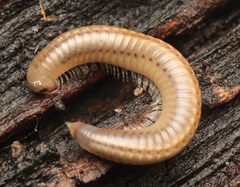
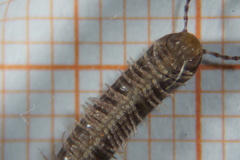
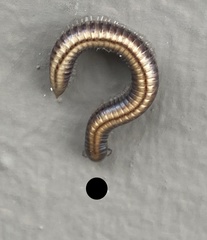
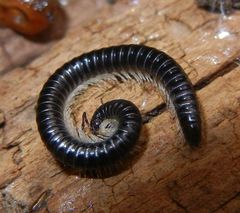
More photos
Questions people ask
What does the blunt-tailed snake millipede look like?
It is brown, has about 100 legs, moves slowly, and has faint dotted markings that are hard to see.
Source: Wikipedia
Where is this species from?
It is native to western Europe, including Great Britain, and has been introduced to North America.
Source: Wikipedia
Same family (Julidae)
Sources
- Wikipedia: https://en.wikipedia.org/wiki/Cylindroiulus_punctatus
Look it up elsewhere: GBIF · iNaturalist · BugGuide · ITIS · Wikipedia
Text written 2026-10-22 from the sources above and checked sentence by sentence against them. Data fetched 2026-10-22.