 Bug FAQ
Cylindroiulus caeruleocinctus
Cylindroiulus caeruleocinctus · Order: Julida · Family: Julidae
Source: Wikipedia
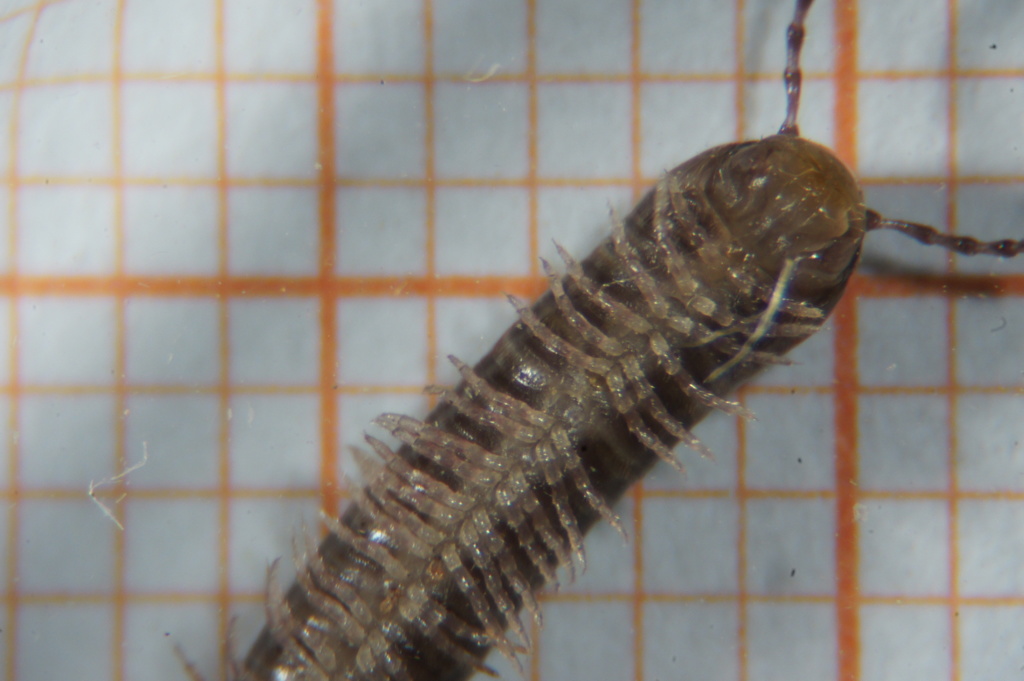
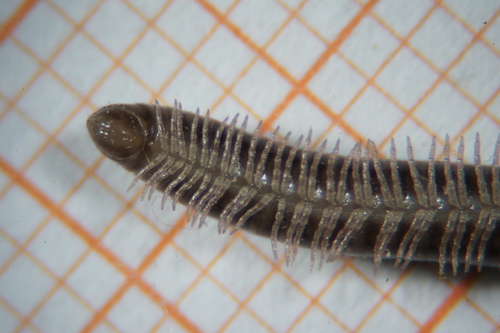
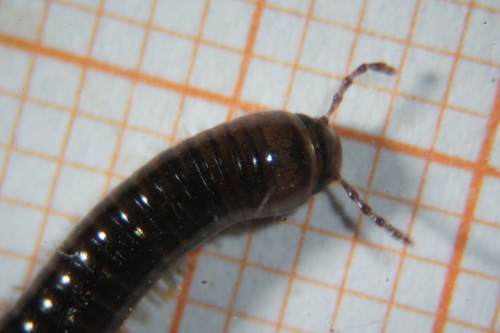
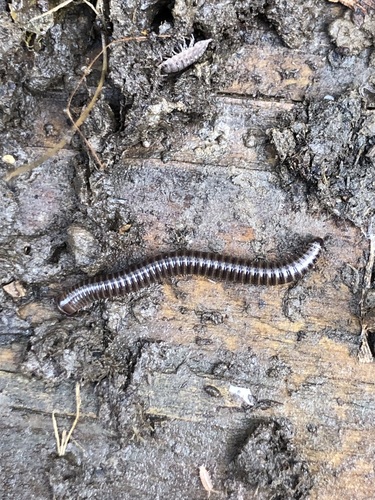
Cylindroiulus caeruleocinctus grows up to about 30 mm and is dark brown or bronze with a blue band on each segment. It lives in grasslands, hedges, small woods, parks, gardens and even cemeteries, especially in northern Europe. It feeds on broadleaf leaves, grass and moss and can become an agricultural pest, damaging crops and garden plants.
Source: Wikipedia
How to recognize it
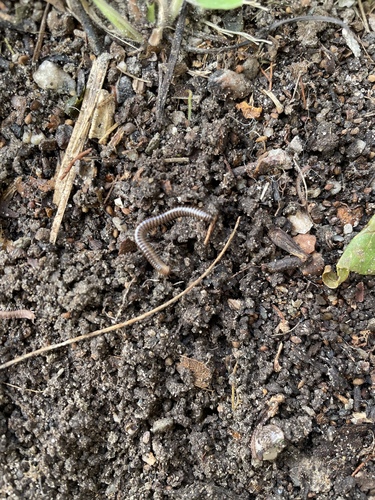
Each body segment has a darker or blue band, and the final segment (telson) is smooth and flat.
Source: Wikipedia
Size
Adults can reach up to 30 mm in length.
Source: Wikipedia
Is it a pest in the house?
Large populations are common in urban areas. It has been recorded as an agricultural pest.
Source: Wikipedia
Where it lives
Found in grassland, hedges, small woods, and rarely in forests. Large numbers also occur in urban parks, gardens and cemeteries.
Source: Wikipedia
What it eats
Prefers broadleaf leaves, then grass and moss.
Source: Wikipedia
Life cycle
Activity peaks in spring and fall, dropping in summer and winter.
Source: Wikipedia
When you see it
Sightings rise in spring and fall, fall sharply in summer and winter.
Source: Wikipedia
Where it comes from
Native to northern Europe.
Source: Wikipedia
Lookalikes
Smaller relatives like C. britannicus are under 20 mm and lack a projecting telson.
Source: Wikipedia
Where it is found in the US
Recorded in 29 of 51 states and DC. Most records: Massachusetts, Pennsylvania, Ohio, Illinois, New York, Wisconsin, Minnesota, Washington.
Darker = more records. Counts are museum and citizen-science records, not population size.
Source: GBIF
Status: introduced in North America; introduced in Canada; introduced in United States. Source: iNaturalist
Months it is reported in the US
Source: GBIF
More photos
Questions people ask
What does Cylindroiulus caeruleocinctus eat?
It mainly eats broadleaf leaves, and also grazes on grass and moss.
Source: Wikipedia
Is this millipede a garden pest?
Yes, it can damage garden plants and crops, especially broadleaf foliage.
Source: Wikipedia
When am I most likely to see them?
You’ll see the most activity in spring and fall, with fewer sightings in summer and winter.
Source: Wikipedia
How can I tell it apart from similar species?
Look for a smooth, flat telson and a blue band on each segment; larger species like C. londinensis have a club-shaped telson.
Source: Wikipedia
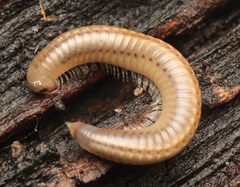
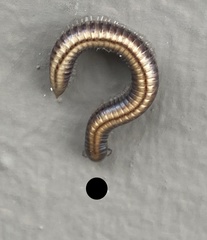
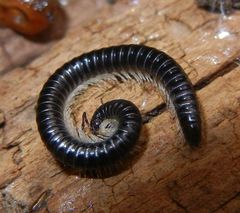
Same family (Julidae)

Sources
- Wikipedia: https://en.wikipedia.org/wiki/Cylindroiulus_caeruleocinctus
Look it up elsewhere: GBIF · iNaturalist · BugGuide · ITIS · Wikipedia
Text written 2026-10-23 from the sources above and checked sentence by sentence against them. Data fetched 2026-10-22.