 Bug FAQ
Portuguese Millipede
Ommatoiulus moreleti · Order: Julida · Family: Julidae
Also called: Portuguese black millipede, black Portuguese millipede
Source: Wikipedia
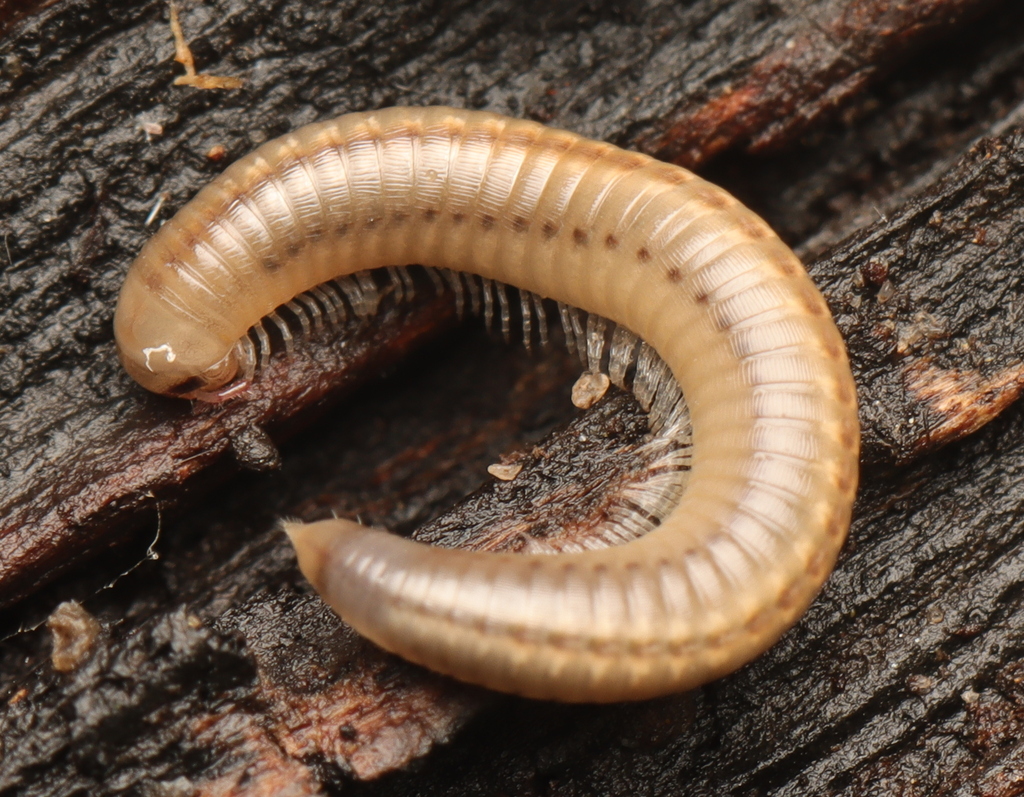
Adult Portuguese millipedes are smooth, 20 to 45 mm long and range from grey to black, while younger ones are light brown with a dark stripe. They live in leaf litter of oak and pine trees in their native Iberian Peninsula and can become very abundant in Australian grasslands and urban gardens. Females lay 60 to 80 eggs in shallow soil chambers; the young hatch, pass through a pupoid stage and undergo up to 16 molts over three years.
Source: Wikipedia
How to recognize it
Adults are smooth, 20 to 45 mm long and grey-to-black; one-year-old immatures are light brown with a darker central stripe, turning black after two years.
Source: Wikipedia
Size
Adults measure about 0.8 to 1.8 in (20 to 45 mm) in length.
Source: Wikipedia
Is it a pest in the house?
They frequently enter homes in southern Australia during autumn and spring.
Source: Wikipedia
Does it bite or sting?
When threatened they release a pungent yellowish fluid containing quinones that can permanently stain clothing and irritate eyes. Because of this defense it is safer to sweep them up rather than crush them.
Source: Wikipedia
How to get rid of it
South Australian residents use chemical or physical barriers to keep millipedes out of houses. Applying the nematode Rhabditis necromena has successfully lowered millipede populations below worry thresholds in many urban and semi-rural areas.
Source: Wikipedia
Where it lives
In its native range it prefers oak (Quercus) and pine (Pinus) leaf litter, reaching about five individuals per square metre. In southern Australia it can reach densities over 40 per square metre in grassland litter.
Source: Wikipedia
What it eats
In southern Australia it damages seedlings of brassica and cereal crops and eats soft ripe fruits such as strawberries.
Source: Wikipedia
Life cycle
Reproductive females mature their eggs in late summer-early autumn, mate in autumn, and lay 60 to 80 eggs in a shallow soil chamber. Eggs hatch into a pupoid stage and then molt through up to 16 stages over three years.
Source: Wikipedia
When you see it
Adults are active on the surface during autumn and early winter, when mating can be observed. In urban southern Australia they enter houses during their autumn and spring activity periods.
Source: Wikipedia
Where it comes from
The species is native to the western Iberian Peninsula. It was unintentionally introduced to Australia, where it has become an invasive pest without its natural enemies.
Source: Wikipedia
Lookalikes
Several other Ommatoiulus species share the southern Iberian range but occupy different litter types, suggesting habitat partitioning.
Source: Wikipedia
Questions people ask
Can they damage my garden or crops?
In Australia they can harm seedlings of brassica and cereal crops and eat soft fruits like strawberries.
Source: Wikipedia
How can I keep them out of my house?
Use chemical or physical barriers at entry points, and consider biological control with the nematode Rhabditis necromena.
Source: Wikipedia
Same family (Julidae)

Sources
- Wikipedia: https://en.wikipedia.org/wiki/Ommatoiulus_moreleti
Look it up elsewhere: GBIF · iNaturalist · BugGuide · Wikipedia
Text written 2026-10-22 from the sources above and checked sentence by sentence against them. Data fetched 2026-10-22.