 Bug FAQ
Western Wood Cockroach
Parcoblatta americana · Order: Blattodea · Family: Ectobiidae
Also called: American Wood Cockroach

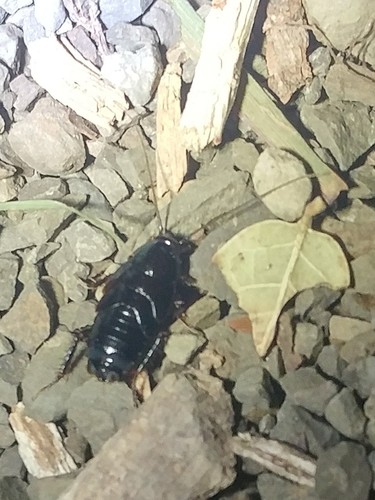
The western wood cockroach measures within the ranges reported by Hebard for males and females. Males can be dark brown to pale yellowish-tan, while females range from reddish-orange to dark brown or black.
Source: Wikipedia
How to recognize it
Females are shiny reddish-orange or brown, sometimes darker on the abdomen, or dark brown to black with darker underparts.
Source: Wikipedia
Size
Hebard’s 1917 description gives measurement ranges based on 14 male and 7 female specimens.
Source: Wikipedia
Where it lives
Both sexes are found living in harvester ant nests during the day and come out at night to feed on debris around the nest. Females and nymphs also live on the ground under rocks, in rotting wood, and in ant nests.
Source: Wikipedia
What it eats
They feed on debris in ant nests and have been observed eating an apple hanging six feet above ground.
Source: Wikipedia
Life cycle
Nymphs have been taken from pack-rat houses in Orange County, California. Adult males live apart from females and nymphs, are attracted to light, and sometimes perch on chaparral plants at night.
Source: Wikipedia
Lookalikes
The only other male Parcoblatta with a similar tuft is P. zebra, which has a broader tuft and more specialized segment. The only other female with reduced tegmina and no hind wings is P. bolliana.
Source: Wikipedia
Where it is found in the US
Recorded in 6 of 51 states and DC. Most records: California, Oregon, Nevada, Washington, Idaho, Nebraska.
Darker = more records. Counts are museum and citizen-science records, not population size.
Source: GBIF
Status: native in North America; native in United States. Source: iNaturalist
Months it is reported in the US
Source: GBIF
More photos



Questions people ask
What does the western wood cockroach look like?
Males range from dark brown or blackish to pale yellowish-tan, while females are shiny reddish-orange to dark brown or black, often darker on the abdomen.
Source: Wikipedia
Same family (Ectobiidae)
 German CockroachBlattella germanicaCan spread germs or disease
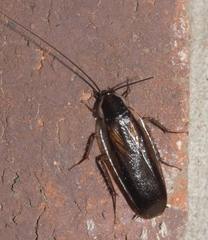 Pennsylvania Wood CockroachParcoblatta pennsylvanicaNuisance, not dangerous
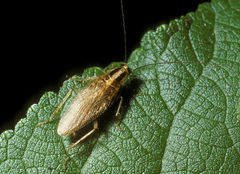 Asian CockroachBlattella asahinaiNuisance, not dangerous
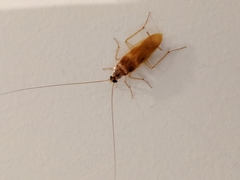 Brown-banded CockroachSupella longipalpaCan spread germs or disease
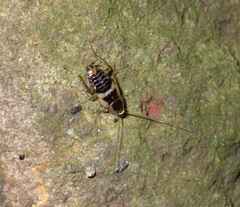 Variable CockroachPlanuncus tingitanus
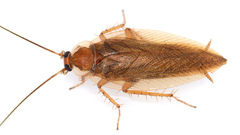 Amber Wood CockroachEctobius vittiventrisHarmless
Sources
- Wikipedia: https://en.wikipedia.org/wiki/Parcoblatta_americana
Look it up elsewhere: GBIF · iNaturalist · BugGuide · ITIS · Wikipedia
Text written 2026-10-23 from the sources above and checked sentence by sentence against them. Data fetched 2026-10-23.