 Bug FAQ
Pennsylvania Wood Cockroach
Parcoblatta pennsylvanica · Order: Blattodea · Family: Ectobiidae
Also called: Pennsylvanian wood cockroach
Source: Penn State Extension
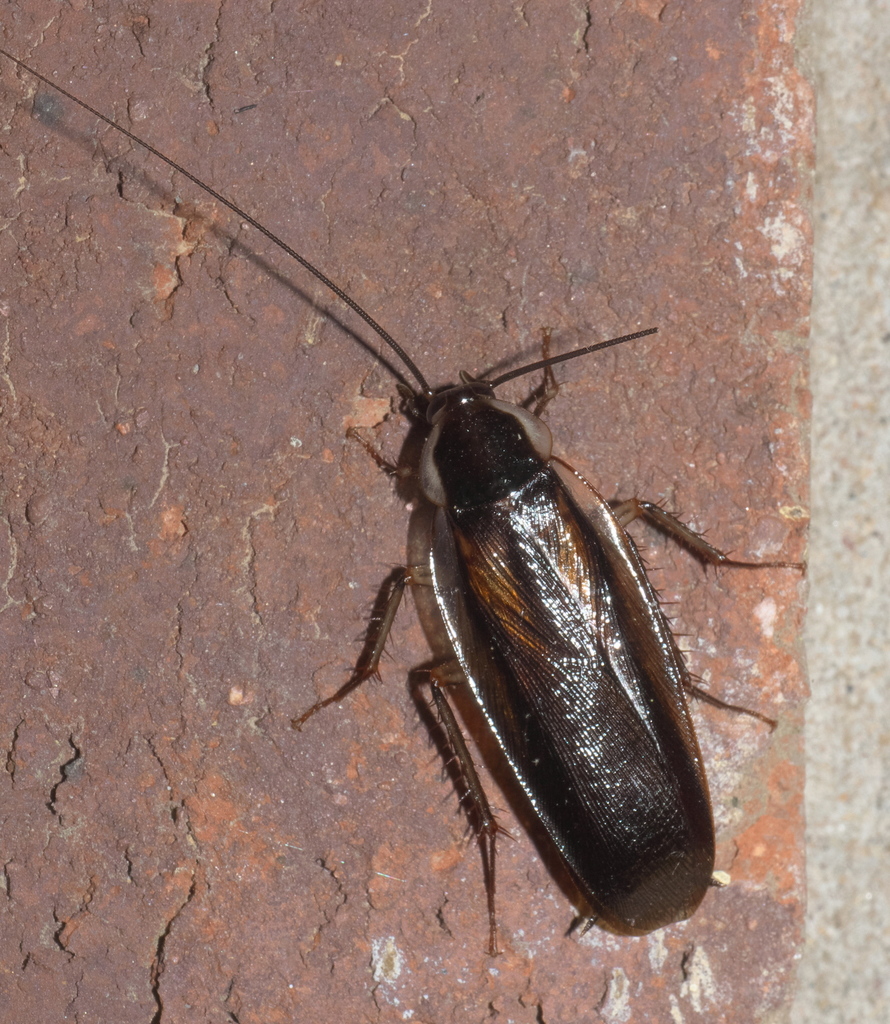
Adult males fly to lights in late spring and can be seen in large numbers, while females crawl in search of shelter. They feed on decaying organic matter and die quickly from dehydration if they end up inside a house.
Source: Wikipedia, Penn State Extension
How to recognize it
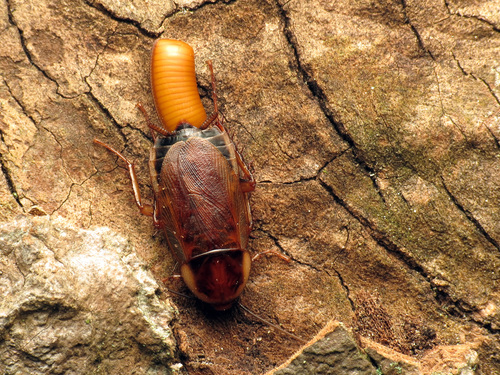
Males are dark brown with yellow margins on the thorax sides and front wings; females are light brown to nearly black with short wing pads covering part of the abdomen. Egg capsules are yellow-brown and curved like a half-moon.
Source: Wikipedia, Penn State Extension, Penn State Extension
Size
Males have wings longer than their bodies and can reach about 1 inch (25 mm) in length.
Source: Penn State Extension, Wikipedia
Is it a pest in the house?
They occasionally enter homes but die within a few days from dehydration and do not reproduce indoors. They are considered a nuisance rather than a serious pest.
Source: Penn State Extension, Penn State Extension, Wikipedia
How to get rid of it
Treat foundations, doors, windows, porches, and patio lights to reduce both flying males and crawling females. Keep firewood away from the house and avoid storing it indoors. Seal cracks, install door brushes, and turn off outdoor lights at night to prevent entry. Cedar shake shingles near woodpiles can provide habitat, so move debris away from the building.
Source: Wikipedia, Penn State Extension, Penn State Extension
What it eats
They primarily eat decaying organic material.
Source: Wikipedia
Life cycle
Their life stages are egg, nymph, and adult. Eggs develop in about 34 days at 80 °F; nymphs take 10 to 12 months, up to 2 years, to become adults.
Source: Wikipedia
When you see it
Mating occurs in May and June, when many males fly in large numbers.
Source: Wikipedia
Where it comes from
They are native to the eastern United States and southeastern Canada, including Ontario and Quebec.
Source: Wikipedia
Lookalikes
Males fly quickly but cannot stay aloft for long periods. They can be confused with larger, reddish-brown American cockroaches that grow up to 2 inches.
Source: Wikipedia, Penn State Extension, Penn State Extension
Where it is found in the US
Recorded in 33 of 51 states and DC. Most records: Illinois, Michigan, Oklahoma, Ohio, Pennsylvania, Indiana, Texas, Virginia.
Darker = more records. Counts are museum and citizen-science records, not population size.
Source: GBIF
Status: native in North America; native in United States; native in Canada. Source: iNaturalist
Months it is reported in the US
Source: GBIF
More photos

Questions people ask
How can I keep Pennsylvania wood cockroaches out of my house?
Seal cracks, use door brushes, keep firewood away from the building, and turn off porch lights at night.
Source: Wikipedia, Penn State Extension, Penn State Extension
When are they most noticeable?
During May and June, when many males fly to lights for mating.
Source: Wikipedia
Same family (Ectobiidae)
 German CockroachBlattella germanicaCan spread germs or disease
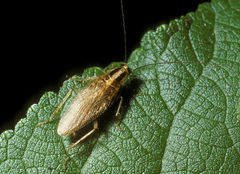 Asian CockroachBlattella asahinaiNuisance, not dangerous
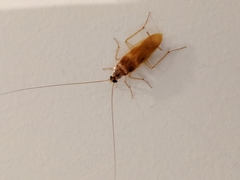 Brown-banded CockroachSupella longipalpaCan spread germs or disease
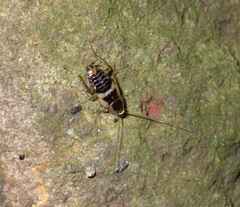 Variable CockroachPlanuncus tingitanus
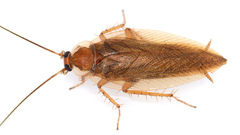 Amber Wood CockroachEctobius vittiventrisHarmless
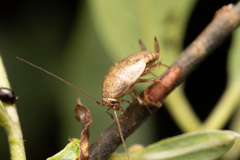 Tawny CockroachEctobius pallidus
Sources
- Penn State Extension: https://extension.psu.edu/pennsylvania-wood-cockroaches
- Wikipedia: https://en.wikipedia.org/wiki/Pennsylvania_wood_cockroach
- Penn State Extension: https://extension.psu.edu/wood-cockroaches
Look it up elsewhere: GBIF · iNaturalist · BugGuide · Wikipedia
Text written 2026-10-23 from the sources above and checked sentence by sentence against them. Data fetched 2026-10-22.