 Bug FAQ
Asian Cockroach
Blattella asahinai · Order: Blattodea · Family: Ectobiidae
Source: Wikipedia, urbanentomology.tamu.edu
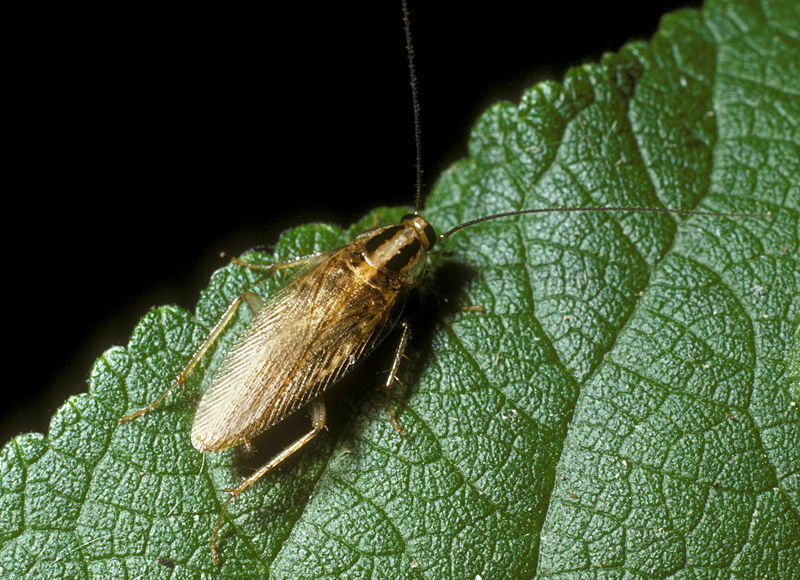
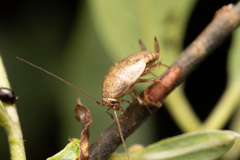
Asian cockroaches are small, about 1.3-1.6 cm long, and look almost identical to German cockroaches, with tan to brown bodies and wings. They live mainly outdoors in shaded, moist mulched areas, are most active at dusk, and may occasionally wander into houses.
Source: Wikipedia, urbanentomology.tamu.edu
How to recognize it
For practical purposes they look the same as German cockroaches.
Source: urbanentomology.tamu.edu
Size
Adults measure about 1.3 to 1.6 cm (½ to 5⁄8 in) in length.
Source: Wikipedia
Is it a pest in the house?
They are now common around U.S. houses, though indoor invasions are rare. They can enter homes and become established, especially in warmer regions.
Source: Wikipedia, urbanentomology.tamu.edu
Does it bite or sting?
Research has not shown them to carry any pathogens or diseases. They may pick up bacteria from outdoor sources such as animal feces and fungi.
Source: Wikipedia
How to get rid of it
They respond to the same insecticides used for German cockroaches. Several scatter baits have been developed and successfully control their populations. Small morphological differences (mandible, wing veins, cerci bristles) can be used to tell them apart.
Source: urbanentomology.tamu.edu, Wikipedia
Where it lives
They are mostly found outdoors in shaded, mulched or composted sites with fresh plant litter and damp conditions.
Source: Wikipedia
What it eats
In Texas they have become the main predator of bollworm eggs in the Rio Grande Valley. They encounter bacteria from outdoor pathogens, animal feces, and fungi in their habitats.
Source: Wikipedia
Life cycle
Their numbers peak in late August and drop quickly when cooler weather arrives.
Source: Wikipedia
Where it comes from
The species was first described from specimens collected on Okinawa Island, Japan in 1981.
Source: Wikipedia
Lookalikes
They are often mistaken for German cockroaches because of their near-identical appearance.
Source: Wikipedia, urbanentomology.tamu.edu
Where it is found in the US
Recorded in 10 of 51 states and DC. Most records: Texas, Florida, Alabama, Georgia, South Carolina, Louisiana, Mississippi, North Carolina.
Darker = more records. Counts are museum and citizen-science records, not population size.
Source: GBIF
Status: introduced in North America; introduced in United States. Source: iNaturalist
Months it is reported in the US
Source: GBIF
More photos

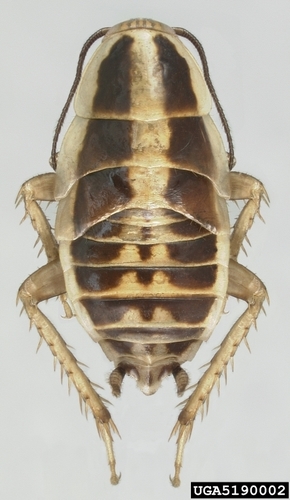
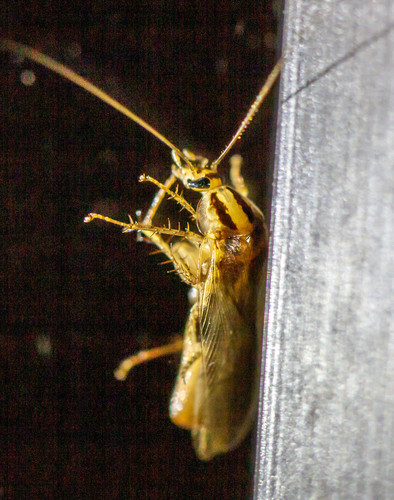
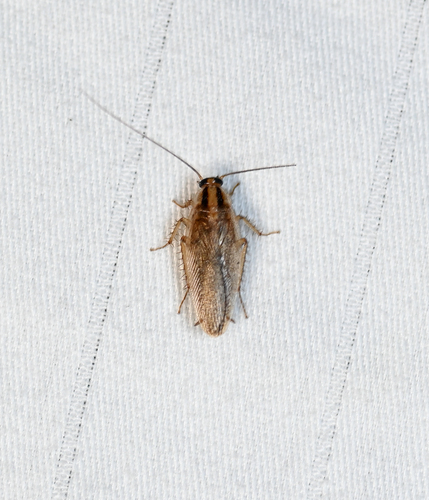
Questions people ask
How can I tell an Asian cockroach from a German cockroach?
Look for subtle differences such as the left mandible surface, wing vein colour, wing size and the bristles on the cerci; otherwise they look the same.
Source: Wikipedia, urbanentomology.tamu.edu
Do Asian cockroaches bite or spread disease?
Research has not suggested that Asian cockroaches carry any diseases, though they do pick up bacteria outdoors around homes, from animal droppings and fungi.
Source: Wikipedia
What should I do if they get into my house?
Use standard cockroach insecticides or scatter baits, which are effective against Asian cockroaches.
Source: urbanentomology.tamu.edu
Are Asian cockroaches a problem for crops?
In Texas they help by eating bollworm eggs, which are pests of cotton and other crops.
Source: Wikipedia
Same family (Ectobiidae)
 German CockroachBlattella germanicaCan spread germs or disease
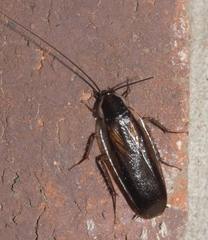 Pennsylvania Wood CockroachParcoblatta pennsylvanicaNuisance, not dangerous
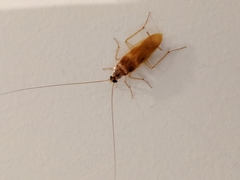 Brown-banded CockroachSupella longipalpaCan spread germs or disease
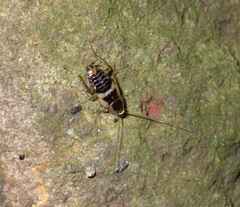 Variable CockroachPlanuncus tingitanus
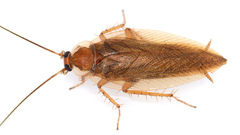 Amber Wood CockroachEctobius vittiventrisHarmless
 Tawny CockroachEctobius pallidus
Sources
- Wikipedia: https://en.wikipedia.org/wiki/Blattella_asahinai
- urbanentomology.tamu.edu: https://urbanentomology.tamu.edu/cockroaches/asian-cockroach/
Look it up elsewhere: GBIF · iNaturalist · BugGuide · ITIS · Wikipedia
Text written 2026-10-23 from the sources above and checked sentence by sentence against them. Data fetched 2026-10-23.