 Bug FAQ
Western Fairy Lady Beetle
Psyllobora borealis · Order: Coleoptera · Family: Coccinellidae
Also called: Western Psyllobora Lady Beetle
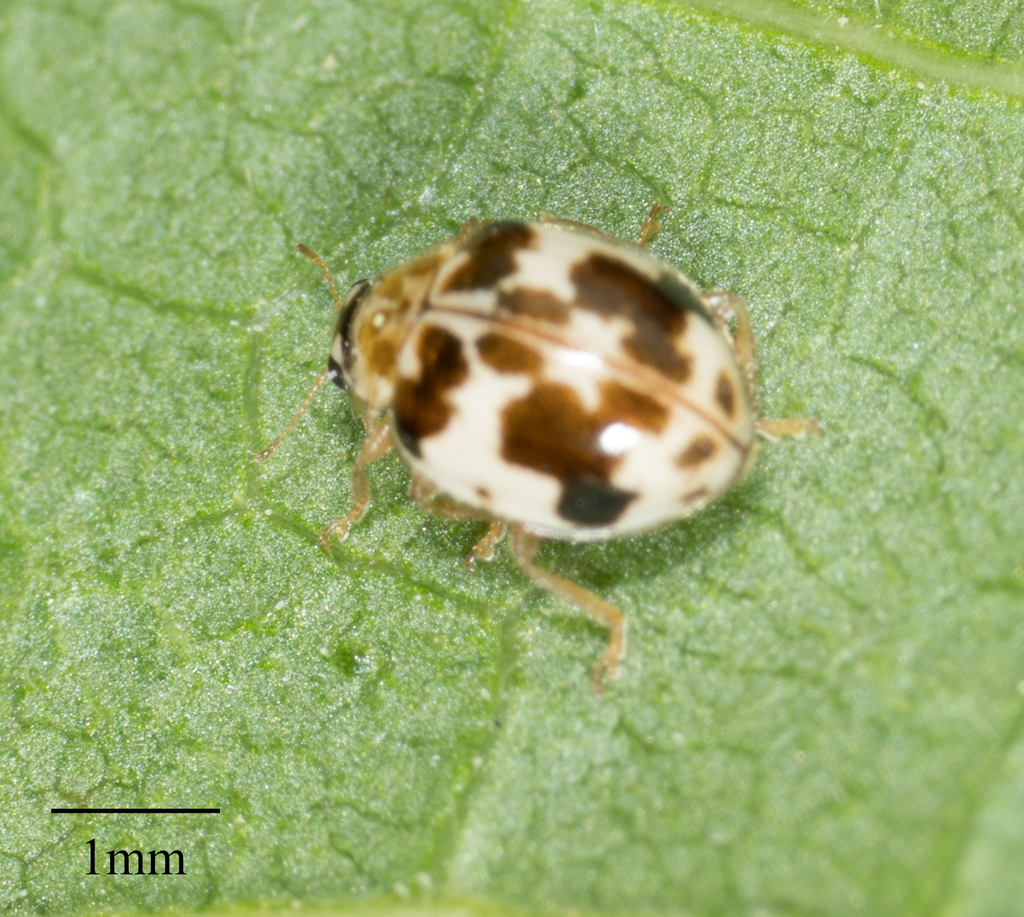
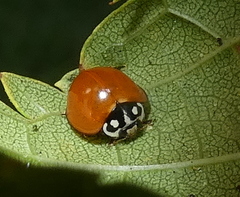
Adults are tiny, measuring about 2.4 to 3.1 mm long. The beetle’s wing covers show dark spots, while the pronotum has lighter markings, and the side spot is small and never touches the middle spot. It lives across western North America from Montana down to New Mexico and west to southern British Columbia and California, and it feeds mainly on powdery mildew.
Source: Wikipedia
How to recognize it
The beetle has dark splotches on its elytra and lighter splotches on the pronotum. A key difference from the similar P. vigintimaculata is that the lateral spot is much smaller and always separate from the median spot.
Source: Wikipedia
What it eats
Its primary food source is powdery mildew.
Source: Wikipedia
Where it comes from
Its native range covers the same western North American region as its habitat records.
Source: Wikipedia
Lookalikes
It can be confused with P. vigintimaculata, but the lateral spot is smaller and never merges with the median spot.
Source: Wikipedia
Where it is found in the US
Recorded in 11 of 51 states and DC. Most records: Washington, California, Oregon, Utah, Idaho, Montana, New Mexico, Indiana.
Darker = more records. Counts are museum and citizen-science records, not population size.
Source: GBIF
Status: native in North America; native in Canada; native in United States. Source: iNaturalist
Months it is reported in the US
Source: GBIF
More photos

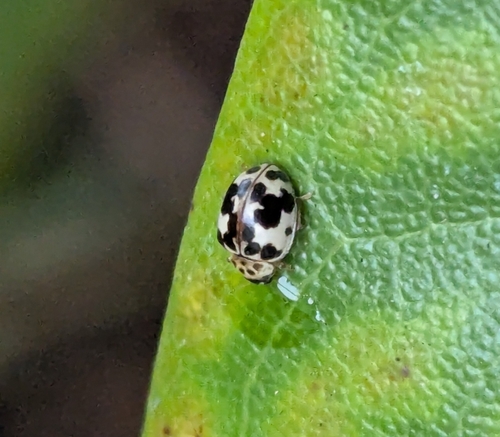
Questions people ask
Same family (Coccinellidae)

Sources
- Wikipedia: https://en.wikipedia.org/wiki/Psyllobora_borealis
Look it up elsewhere: GBIF · iNaturalist · BugGuide · ITIS · Wikipedia
Text written 2026-10-23 from the sources above and checked sentence by sentence against them. Data fetched 2026-10-22.