 Bug FAQ
Convergent Lady Beetle
Hippodamia convergens · Order: Coleoptera · Family: Coccinellidae
Also called: Convergent Ladybird, Convergent Ladybug
Source: pestsense.cahnrs.wsu.edu, ohioline.osu.edu
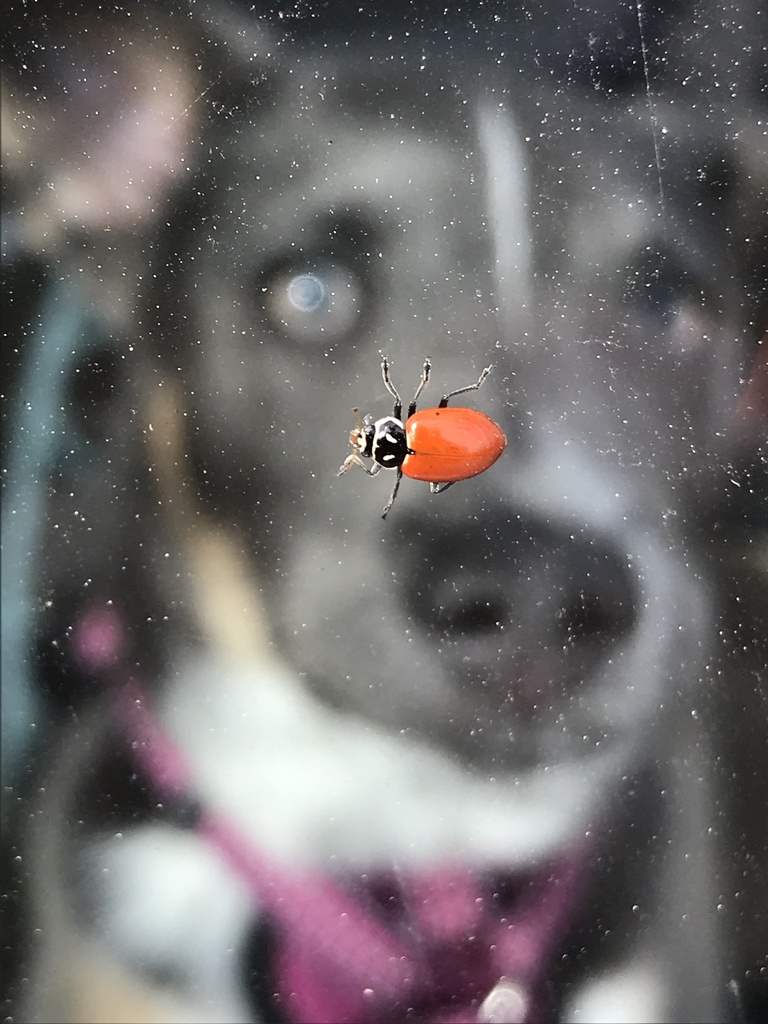
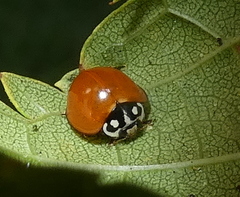
Convergent lady beetles are small, round to oval beetles about a quarter-inch long with dome-shaped, shiny red-orange wing covers that may have black spots. They are beneficial predators that eat aphids in gardens, fields and forests.
Source: pestsense.cahnrs.wsu.edu, ohioline.osu.edu, Wikipedia
How to recognize it
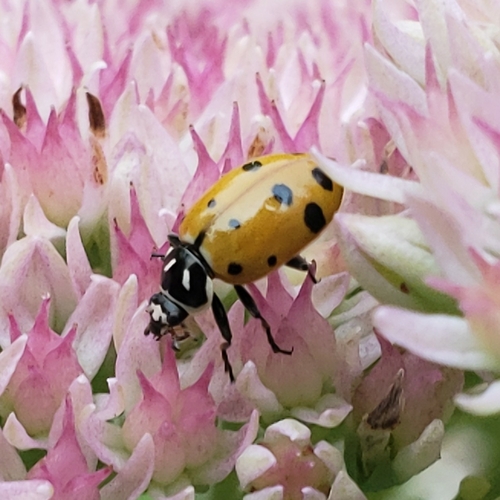
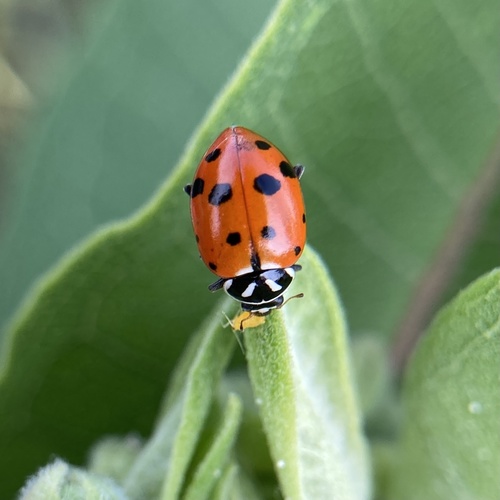
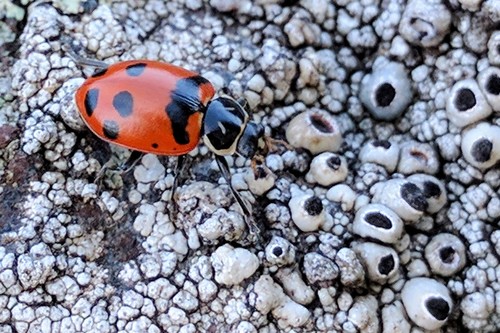
They have the classic lady-beetle look: a rounded, shiny body with short legs and antennae. Wing covers are red to orange, sometimes pale yellow, and may be spotted with black or be solid black with red spots.
Source: pestsense.cahnrs.wsu.edu, ohioline.osu.edu
Size
Adults are about 1/4 inch (6 mm) long.
Source: pestsense.cahnrs.wsu.edu
Is it a pest in the house?
They are not a problem indoors; if found inside, gently sweep or scoop them out. Seal cracks and gaps to keep them from entering homes.
Source: pestsense.cahnrs.wsu.edu, ohioline.osu.edu
Does it bite or sting?
Adults and larvae can bite if handled, but the bite does not pose any health risk.
Source: pestsense.cahnrs.wsu.edu, ohioline.osu.edu
How to get rid of it
No control measures are needed; they are beneficial predators.
Source: pestsense.cahnrs.wsu.edu
Where it lives
They live in grasslands, forests, agricultural fields, gardens and parks. They can tolerate temperatures from about 6.5 °C to 50 °C.
Source: Wikipedia
What it eats
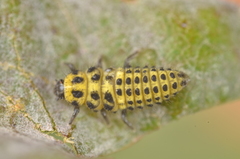
Both larvae and adults feed mainly on soft-bodied insects such as aphids.
Source: Wikipedia
Life cycle
Females lay 200 to 1000 eggs over several months in spring or early summer.
Source: Wikipedia
When you see it
In some populations they may enter diapause when food is scarce.
Source: Wikipedia
Where it comes from
Native to North America; introduced to South America from California.
Source: Wikipedia
Lookalikes
Spot number and pattern can vary, so check the pronotum (area behind the head) for consistent markings. Other lady beetles may be black-white or black with red spots.
Source: ohioline.osu.edu, pestsense.cahnrs.wsu.edu
Where it is found in the US
Recorded in 51 of 51 states and DC. Most records: California, Texas, Colorado, New Mexico, Arizona, Oregon, Washington, Utah.
Darker = more records. Counts are museum and citizen-science records, not population size.
Source: GBIF
Months it is reported in the US
Source: GBIF
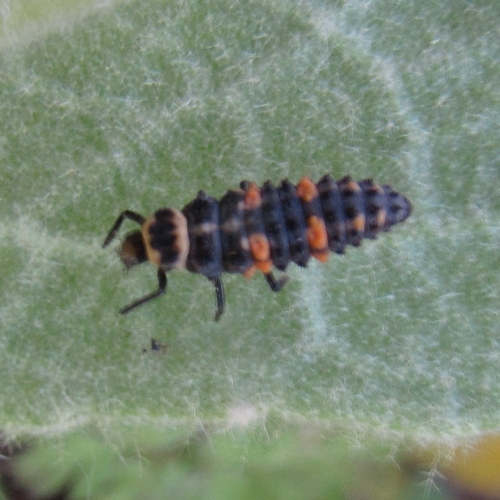
More photos
Questions people ask
Do convergent lady beetles bite?
Yes, they can bite if handled, but the bite is harmless to people.
Source: pestsense.cahnrs.wsu.edu, ohioline.osu.edu
How can I keep them out of my house?
Seal cracks and gaps and gently remove any that get inside.
Source: ohioline.osu.edu
Are they good for my garden?
They eat aphids and help control these pests in gardens and fields.
Source: Wikipedia
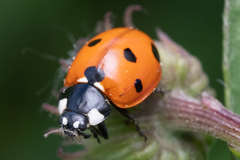
Same family (Coccinellidae)

Sources
- pestsense.cahnrs.wsu.edu: https://pestsense.cahnrs.wsu.edu/fact-sheet/lady-beetles/
- ohioline.osu.edu: https://ohioline.osu.edu/factsheet/ENT-45
- Wikipedia: https://en.wikipedia.org/wiki/Hippodamia_convergens
Look it up elsewhere: GBIF · iNaturalist · BugGuide · ITIS · Wikipedia
Text written 2026-10-23 from the sources above and checked sentence by sentence against them. Data fetched 2026-10-23.