 Bug FAQ
Spotless Lady Beetle
Cycloneda sanguinea · Order: Coleoptera · Family: Coccinellidae
Also called: Ladybird beetle, Spotless Ladybird Beetle
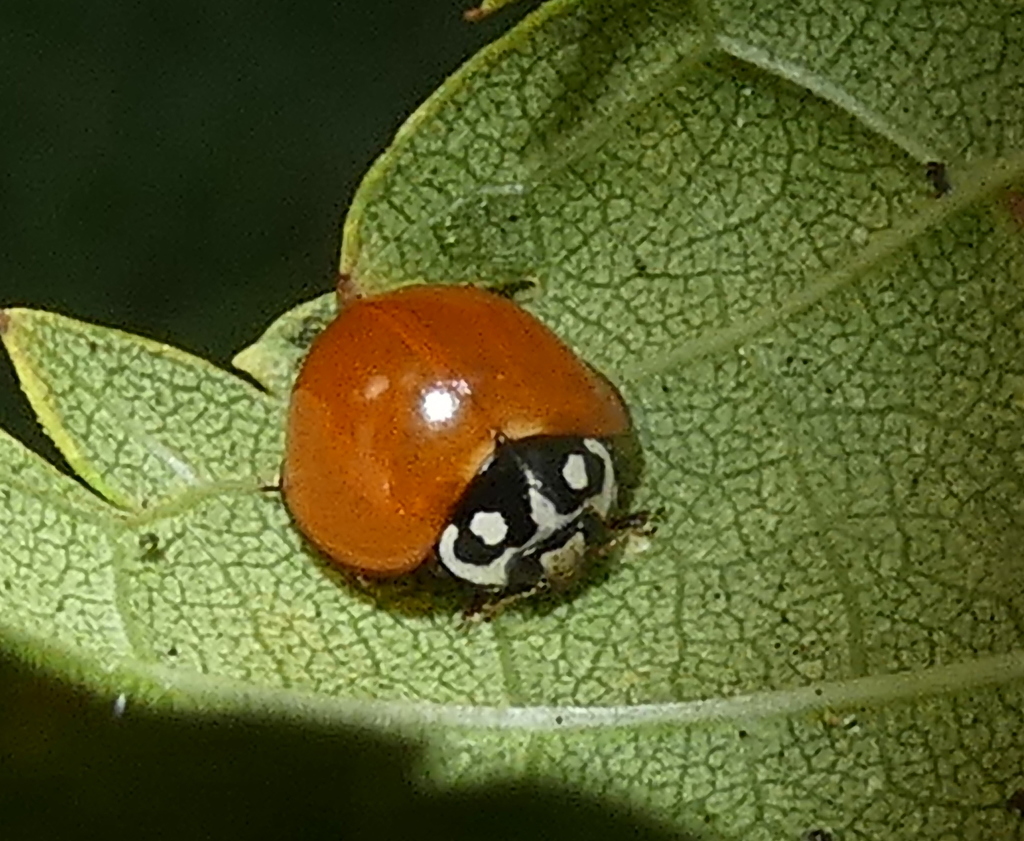
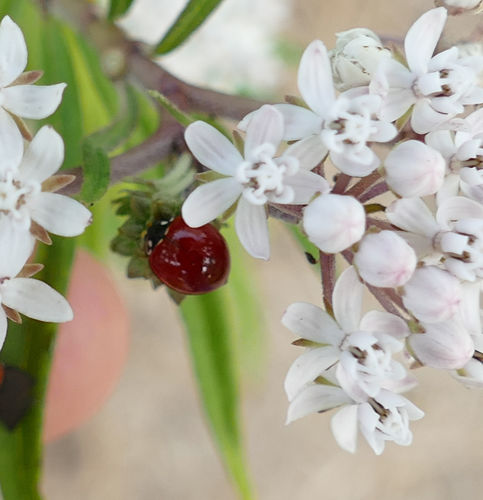
They are a relatively large ladybird with solid red wing covers and distinctive head markings. They live from the southern United States through Latin America and feed on aphids, making them useful for natural pest control.
Source: Wikipedia
Size
Adults are 4 to 6.5 mm long, which is large for a ladybird.
Source: Wikipedia
How to get rid of it
Because they prey on aphids, they are considered beneficial insects for garden pest management.
Source: Wikipedia
Where it lives
They are found in plant-dense habitats such as gardens and fields.
Source: Wikipedia
What it eats
They eat aphids, so they are often used in biological control programs.
Source: Wikipedia
Life cycle
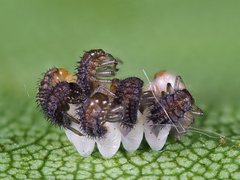
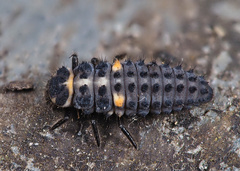
Eggs are orange or yellow and about 1 mm across; larvae are black with yellow markings up to 6 mm; pupae start pale and turn brown or orange.
Source: Wikipedia
Where it comes from
Their range extends from the southern United States down to Argentina and east to the Cayman Islands.
Source: Wikipedia
Lookalikes
On the Galápagos Islands they coexist with a similar species, Cycloneda galapagensis.
Source: Wikipedia
Where it is found in the US
Recorded in 33 of 51 states and DC. Most records: California, Texas, Florida, Louisiana, Arizona, Hawaii, Michigan, Nevada.
Darker = more records. Counts are museum and citizen-science records, not population size.
Source: GBIF
Status: native in North America; native in United States. Source: iNaturalist
Months it is reported in the US
Source: GBIF
More photos
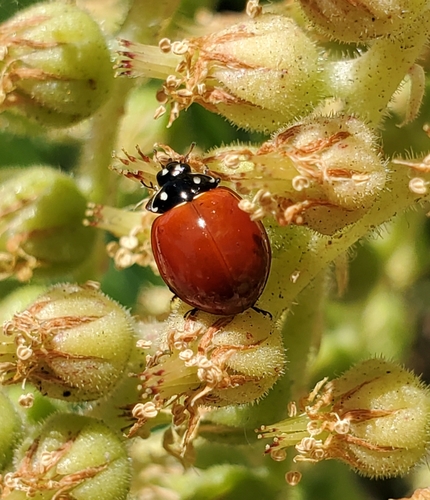
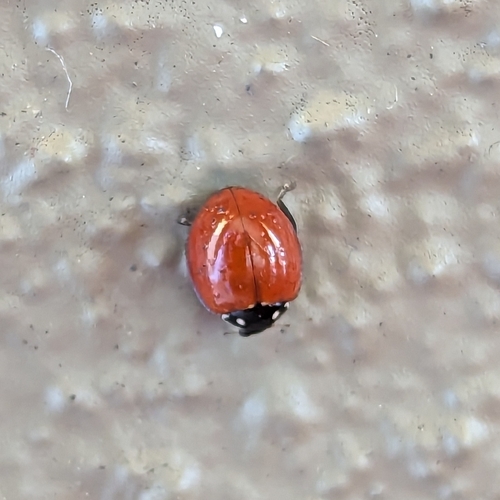
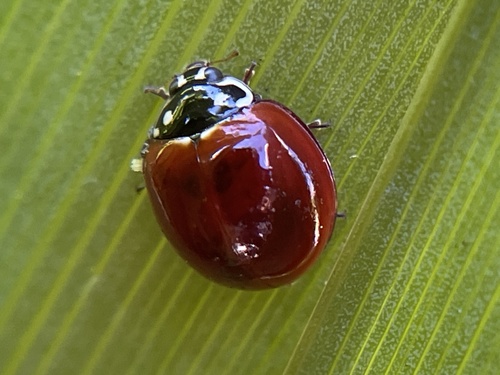
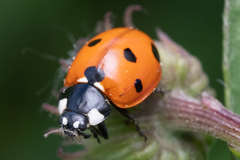
Same family (Coccinellidae)

Sources
- Wikipedia: https://en.wikipedia.org/wiki/Cycloneda_sanguinea
Look it up elsewhere: GBIF · iNaturalist · BugGuide · ITIS · Wikipedia
Text written 2026-10-22 from the sources above and checked sentence by sentence against them. Data fetched 2026-10-22.