 Bug FAQ
Asian Lady Beetle
Harmonia axyridis · Order: Coleoptera · Family: Coccinellidae
Also called: Harlequin Ladybird Beetle, Harlequin Ladybird, Multicoloured Asian Ladybird
Source: extension.msstate.edu, University of Minnesota Extension, Wikipedia, pestsense.cahnrs.wsu.edu
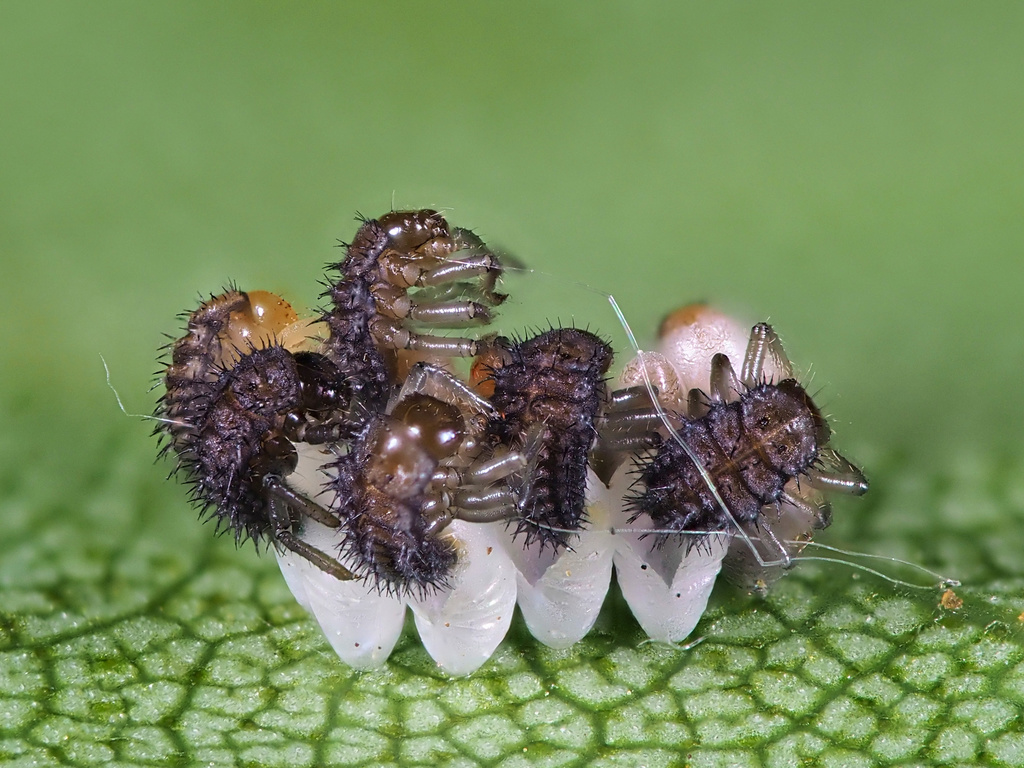
They are 5.5 to 8.5 mm long and come in many colour forms, from orange-red with black spots to black with red markings. In autumn they gather in large groups on sunny walls, windows and house eaves to overwinter, and they may enter homes where they emit a foul-smelling yellow fluid if disturbed. They feed on aphids and other small insects, but they also eat fruit such as grapes and raspberries.
Source: Wikipedia, pestsense.cahnrs.wsu.edu, University of Minnesota Extension
How to recognize it
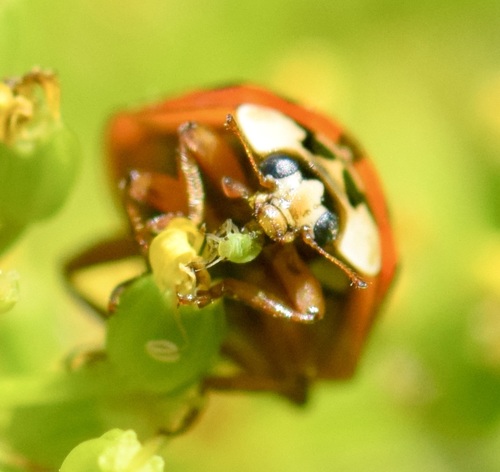
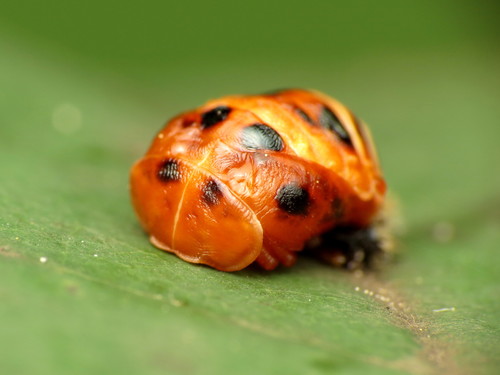
The common orange-red form has up to 22 black spots, while other forms are solid black with two or four red patches. Both adults and larvae have a distinctive “M” marking on the head.
Source: Wikipedia, extension.msstate.edu
Size
Adults measure between 5.5 and 8.5 mm (about 0.22 to 0.33 in).
Source: Wikipedia
Is it a pest in the house?
When disturbed they release a foul-smelling yellow fluid that can stain surfaces. They are considered a household pest because they congregate on houses and can be a nuisance indoors.
Source: Wikipedia, pestsense.cahnrs.wsu.edu, extension.msstate.edu
Does it bite or sting?
If handled or provoked they may give a small bite that feels like a pinch. They also emit an unpleasant odor when threatened.
Source: Wikipedia, pestsense.cahnrs.wsu.edu, extension.msstate.edu, University of Minnesota Extension
How to get rid of it
Seal cracks and crevices to keep them from entering the home. Vacuum up the beetles and discard the bag far from the building. A professional can apply a perimeter insecticide if infestations recur.
Source: pestsense.cahnrs.wsu.edu, University of Minnesota Extension
Where it lives
In North America they are often called Halloween beetles because they swarm into houses in October to overwinter. They like sunny spots, so they may become active on warm winter days when sunlight heats the walls.
Source: Wikipedia
What it eats
They are mainly carnivorous, preying on aphids and other small hemipteran insects. They also feed on fruit such as grapes and raspberries.
Source: Wikipedia
Life cycle
Eggs are yellow when fresh and turn black a day before hatching; each egg is about 1.2 mm long.
Source: Wikipedia
When you see it
They become noticeable in the fall as they look for warm places to hibernate.
Source: Wikipedia
Where it comes from
They are native to eastern Asia.
Source: Wikipedia
Lookalikes
In America they resemble the smaller convergent lady beetle (Hippodamia convergens) and the spotless forms of Adalia bipunctata. They are often mistaken for native ladybugs, but their scientific name is Harmonia axyridis.
Source: pestsense.cahnrs.wsu.edu, extension.msstate.edu, University of Minnesota Extension
Where it is found in the US
Recorded in 49 of 51 states and DC. Most records: Texas, California, New York, Virginia, North Carolina, Massachusetts, Pennsylvania, Ohio.
Darker = more records. Counts are museum and citizen-science records, not population size.
Source: GBIF
Status: introduced in North America; introduced in Canada. Source: iNaturalist
Months it is reported in the US
Source: GBIF
More photos

Questions people ask
Do Asian lady beetles bite?
Yes, they can bite if handled, but the bite is only a mild pinch.
Source: Wikipedia, pestsense.cahnrs.wsu.edu
Why are they inside my house in the fall?
They look for warm, sunny places to overwinter and often enter homes in October.
Source: Wikipedia
How can I get rid of them?
Seal entry points, vacuum them up, and consider a perimeter insecticide applied by a professional.
Source: pestsense.cahnrs.wsu.edu, University of Minnesota Extension
What do they look like?
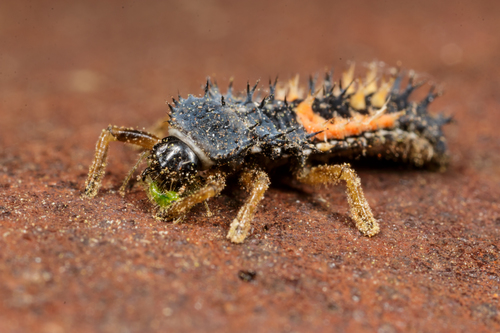
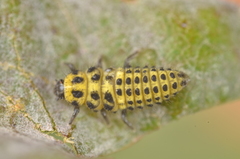
Adults are 5.5 to 8.5 mm long and can be orange-red with black spots or black with red patches; larvae are spiny and black-orange.
Source: Wikipedia, pestsense.cahnrs.wsu.edu
Same family (Coccinellidae)

Sources
- extension.msstate.edu: https://extension.msstate.edu/node/7027
- University of Minnesota Extension: https://extension.umn.edu/yard-and-garden-news/soybean-harvest-brings-familiar-pest-asian-lady-beetles
- Wikipedia: https://en.wikipedia.org/wiki/Harmonia_axyridis
- pestsense.cahnrs.wsu.edu: https://pestsense.cahnrs.wsu.edu/fact-sheet/multicolored-asian-lady-beetle/
Look it up elsewhere: GBIF · iNaturalist · BugGuide · ITIS · Wikipedia
Text written 2026-10-23 from the sources above and checked sentence by sentence against them. Data fetched 2026-10-23.