 Bug FAQ
Wasp Beetle
Clytus arietis · Order: Coleoptera · Family: Cerambycidae
Source: Wikipedia
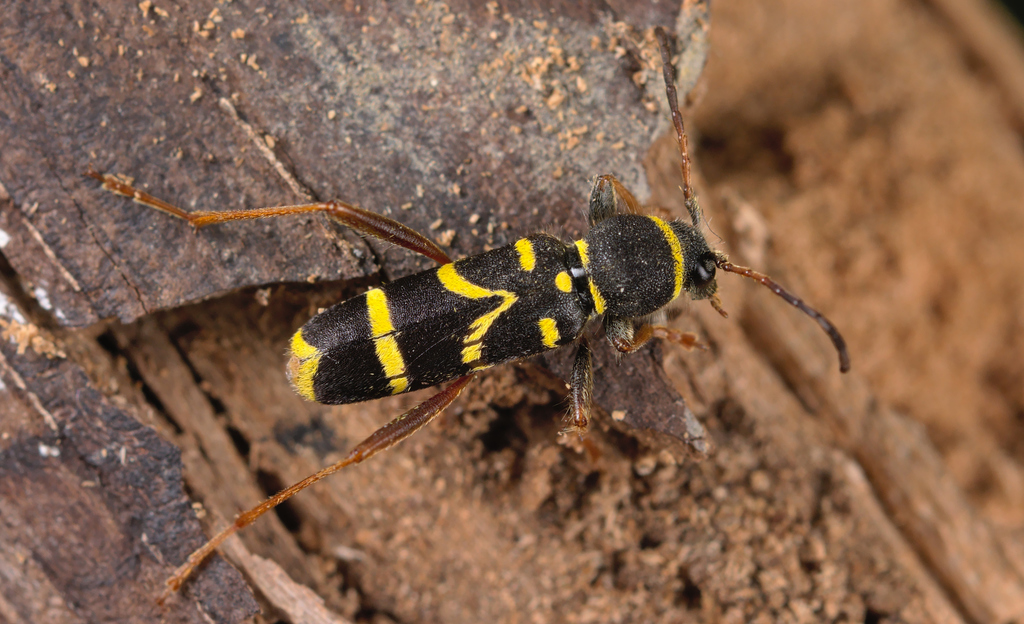
The wasp beetle is 9 to 18 mm long and shows bright yellow-black markings that mimic a wasp. Adults are seen on flowers and decaying wood, feeding on pollen, and they appear from May onward. They live across Europe, especially in England and Wales, and inhabit farmlands, woodlands, towns and gardens.
Source: Wikipedia
How to recognize it
They have striking yellow and black patterns on the head and abdomen, a mimicry of wasps.
Source: Wikipedia
Size
They measure between 9 and 18 mm in length.
Source: Wikipedia
Does it bite or sting?
Despite looking like a wasp, they do not bite or sting people.
Source: Wikipedia
Where it lives
They are found in farmlands, woodlands, towns and gardens, and may visit flowers in urban flower pots.
Source: Wikipedia
What it eats
Adults feed on pollen found on flowers and decaying wood.
Source: Wikipedia
Life cycle
The species needs about two years to complete its life cycle, with larvae developing in dead or decaying wood.
Source: Wikipedia
When you see it
Adults emerge in May, live a short time, and are seen on flowers and decaying wood during summer.
Source: Wikipedia
Where it comes from
Their range covers most of Europe from Portugal to southwestern Russia and from southern Norway to southern Italy. They are common in England and Wales but rare in Scotland.
Source: Wikipedia
Lookalikes
Do not mix them up with the similar longhorn beetle Rutpela maculata or species like Clytus ruricola, Xylotrechus undulatus, and Plagionotus arcuatus.
Source: Wikipedia
More photos

Questions people ask
What do wasp beetles look like?
They have bright yellow and black patterns on the head and abdomen that mimic a wasp.
Source: Wikipedia
Where might I find a wasp beetle?
They live in farmlands, woodlands, towns and gardens across most of Europe, especially in England and Wales.
Source: Wikipedia
Do they bite or sting?
No, they are harmless to people despite their wasp-like appearance.
Source: Wikipedia
Same family (Cerambycidae)
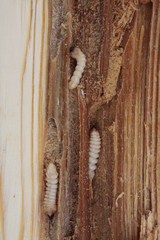 House LonghornHylotrupes bajulusCan damage your home
 Asian Longhorned BeetleAnoplophora glabripennisDamages trees, gardens or crops
 Red Milkweed BeetleTetraopes tetrophthalmus
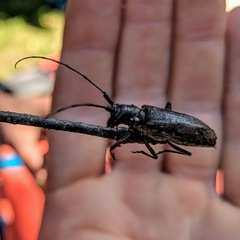 White-spotted SawyerMonochamus scutellatusCan damage your home
 Red Pine Longhorn BeetleStictoleptura rubra
 Spotted Longhorn BeetleRutpela maculataDamages trees, gardens or crops
Sources
- Wikipedia: https://en.wikipedia.org/wiki/Clytus_arietis
Look it up elsewhere: GBIF · iNaturalist · BugGuide · Wikipedia
Text written 2026-10-23 from the sources above and checked sentence by sentence against them. Data fetched 2026-10-22.