 Bug FAQ
Walnut Orbweaver
Nuctenea umbratica · Order: Araneae · Family: Araneidae
Also called: Toad Spider, Walnut Orb-Weaver Spider
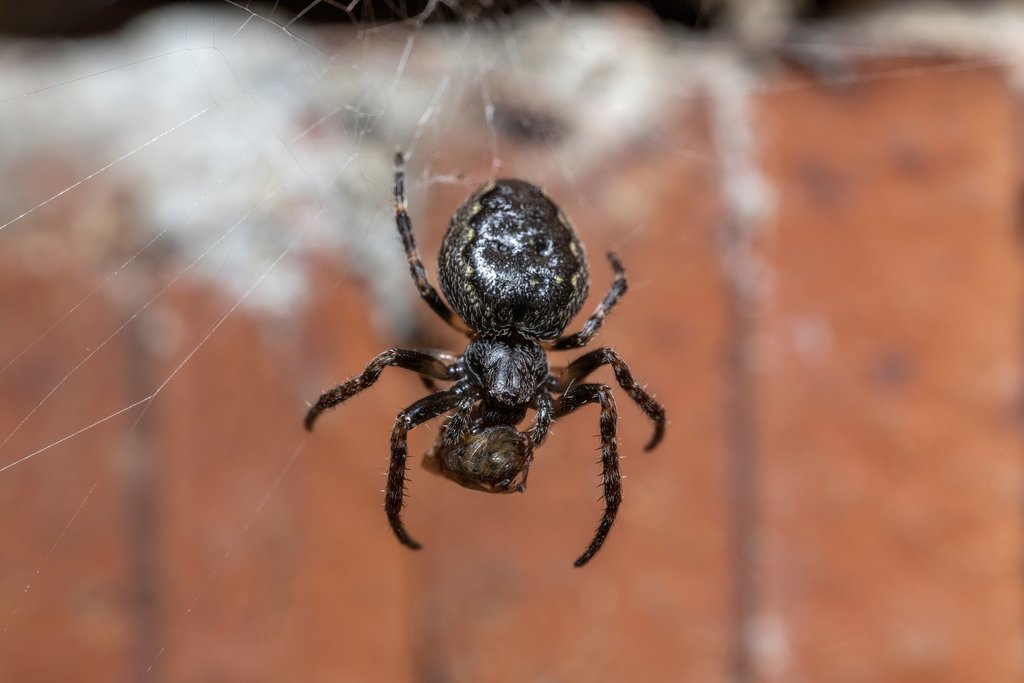
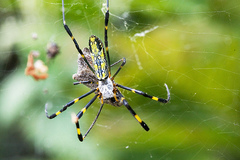
Female walnut orbweavers can grow up to about 15 mm, while males stay under 8 mm. Their abdomen is reddish-brown to black with leaf-shaped yellow-green markings and visible dents that are muscle attachments. They hide in tight outdoor spots such as wall cracks or under bark and are present year-round, with males most common in summer.
Source: Wikipedia
How to recognize it
The spider’s back shows reddish-brown to black colour with dark yellow-green leaf-like spots and small dents. The dents are where muscles attach to flatten the abdomen.
Source: Wikipedia
Size
Females can reach up to 15 mm, males only about 8 mm.
Source: Wikipedia
Where it lives
During the day they stay outside buildings in wall crevices or under loose bark. They can squeeze into very narrow spaces.
Source: Wikipedia
Life cycle
A flattened body helps them hide in cracks and crevices.
Source: Wikipedia
When you see it
Females are found all year, while males appear mainly in summer.
Source: Wikipedia
Where it is found in the US
Recorded in 1 of 51 states and DC. Most records: Washington.
Darker = more records. Counts are museum and citizen-science records, not population size.
Source: GBIF
Questions people ask
Where are walnut orbweavers most likely to be found?
They hide in tight outdoor spots like wall cracks or under loose bark, often in very confined spaces.
Source: Wikipedia
Same family (Araneidae)


Sources
- Wikipedia: https://en.wikipedia.org/wiki/Nuctenea_umbratica
Look it up elsewhere: GBIF · iNaturalist · BugGuide · ITIS · Wikipedia
Text written 2026-10-22 from the sources above and checked sentence by sentence against them. Data fetched 2026-10-22.