 Bug FAQ
Golden Silk Spider
Trichonephila clavipes · Order: Araneae · Family: Araneidae
Also called: Banana Spider, Florida orb web spider, Giant Wood Spider
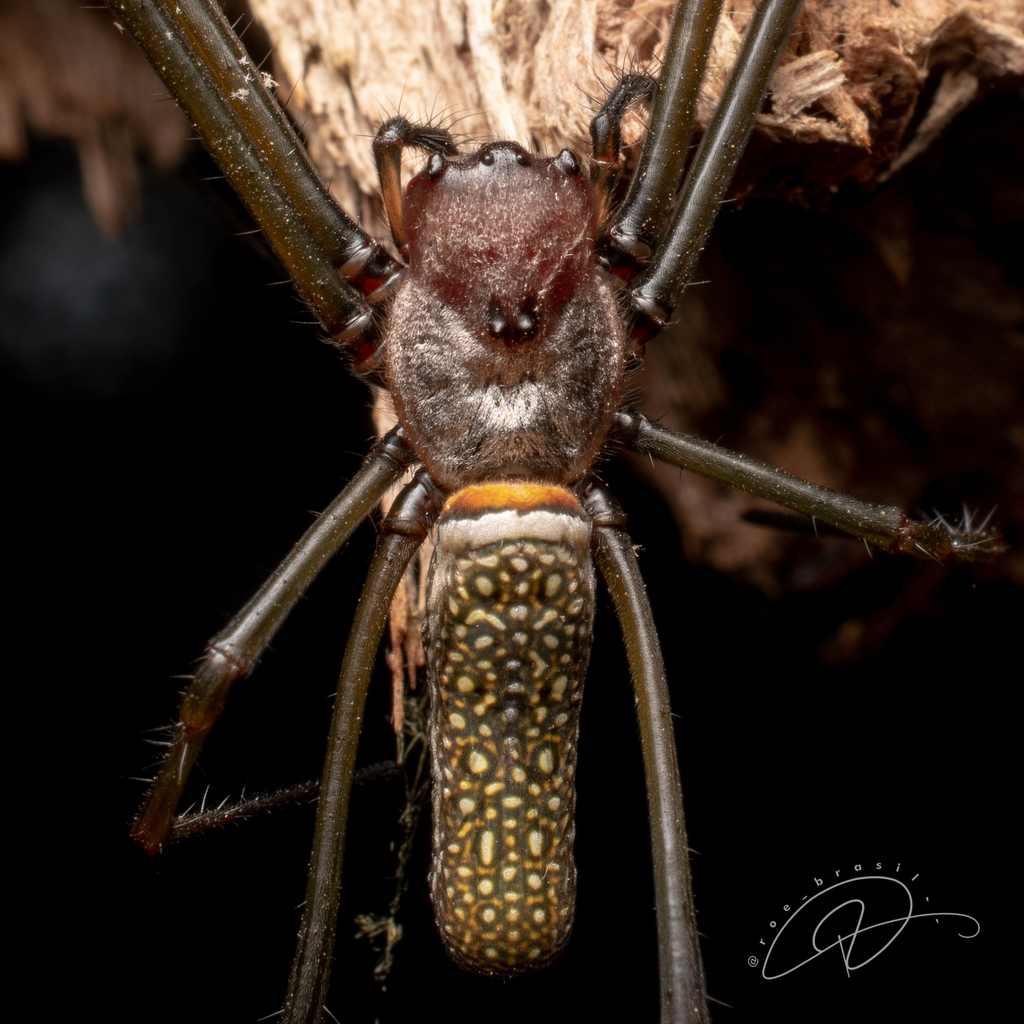
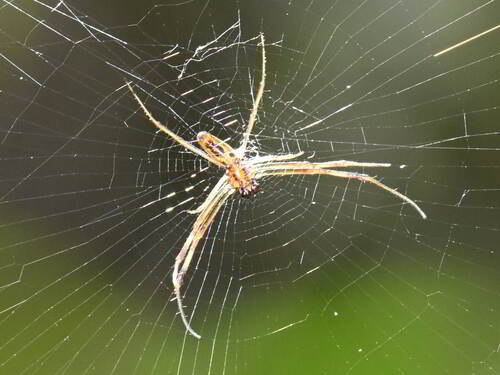
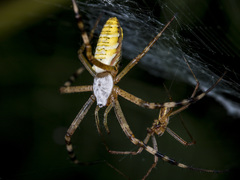
Females are large orb-weavers with a silvery head, orange-brown abdomen with white-yellow spots, and banded legs with black brush-like hairs; males are much smaller, about 6 mm long. They build large, asymmetrical circular webs in trees and shrubs across North and South America, especially in the Antilles and Central America, and catch flying insects. They are not aggressive and only bite when pinched, with a bite that is milder than a bee sting.
Size
Males are about one-quarter to one-third the size of females, roughly 6 mm long.
Source: Wikipedia
Does it bite or sting?
They are not aggressive and will bite only if handled roughly, delivering a mild bite with slight redness and temporary localized pain. The bite is generally less severe than a bee sting.
How to get rid of it
Overall, the bite is milder than a bee sting.
Source: UF/IFAS
Life cycle
Females are larger and more colorful than males, showing strong sexual dimorphism. Mating can be monogynous or polygynous, with a tendency toward polygyny.
Source: Wikipedia
When you see it
In summer they can be found as far north as southern Eastern Canada, but they rarely survive winters beyond 40° N latitude.
Source: Wikipedia
Where it comes from
The species is native to continental North America and South America. It is most common in the Antilles and Central America from Mexico to Panama.
Source: Wikipedia
Lookalikes
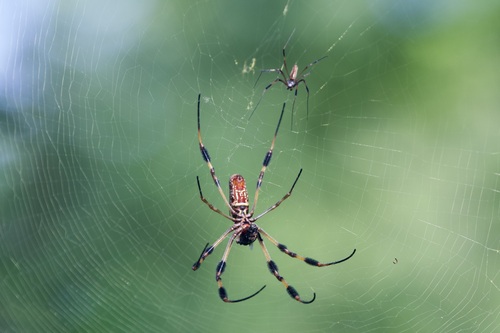
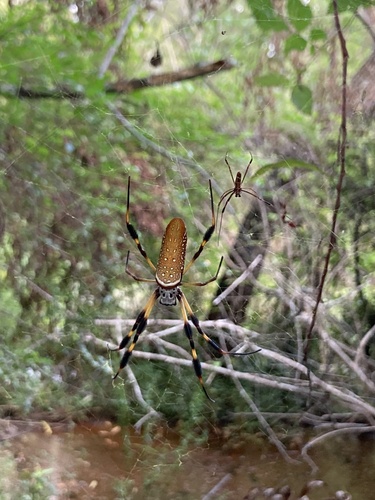
They resemble Trichonephila plumipes, but the hair tufts on T. plumipes are more closely set than those of T. clavipes. Males are inconspicuous dark brown spiders about 6 mm long and are often found in female webs. T. clavipes is the only species of its genus occurring in the Western Hemisphere.
Where it is found in the US
Recorded in 18 of 51 states and DC. Most records: Florida, South Carolina, Texas, Alabama, North Carolina, Georgia, Louisiana, Mississippi.
Darker = more records. Counts are museum and citizen-science records, not population size.
Source: GBIF
Status: native in North America; native in United States. Source: iNaturalist
Months it is reported in the US
Source: GBIF
More photos
Questions people ask
Do golden silk spiders bite people?
They bite only if handled roughly, and the bite causes mild localized pain and slight redness.
How can I identify a female golden silk spider?
Look for a silvery head, orange-brown abdomen with white-yellow spots, and banded legs with black brush-like tufts on legs I, II, and IV.
Where are golden silk spiders commonly found?
They build large webs in trees and shrubs across North and South America, especially in the Antilles and Central America from Mexico to Panama.
Source: Wikipedia
Same family (Araneidae)


Sources
- Wikipedia: https://en.wikipedia.org/wiki/Trichonephila_clavipes
- UF/IFAS: https://edis.ifas.ufl.edu/publication/IN467
Look it up elsewhere: GBIF · iNaturalist · BugGuide · Wikipedia
Text written 2026-10-23 from the sources above and checked sentence by sentence against them. Data fetched 2026-10-23.