 Bug FAQ
Yellow Garden Spider
Argiope aurantia · Order: Araneae · Family: Araneidae
Also called: Black-and-yellow Garden Spider, Writing Spider
Source: Wikipedia, University of Minnesota Extension, Penn State Extension
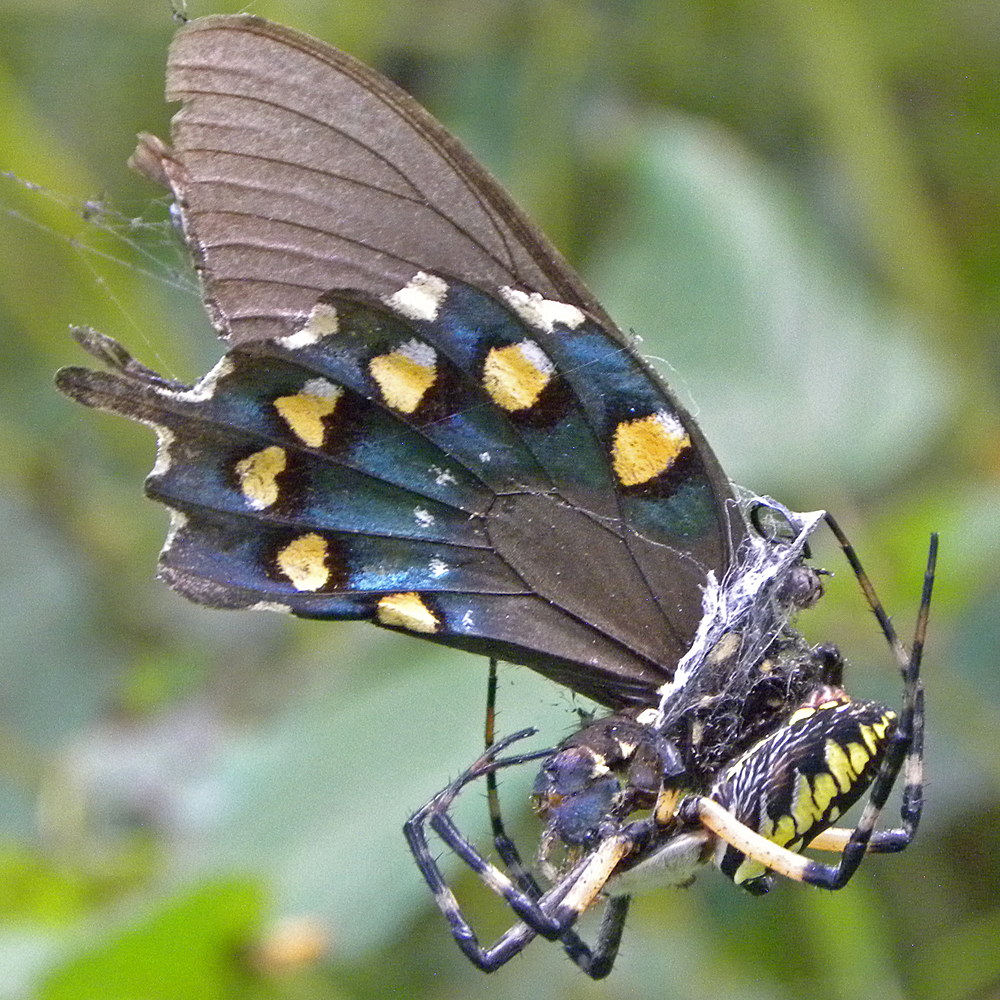
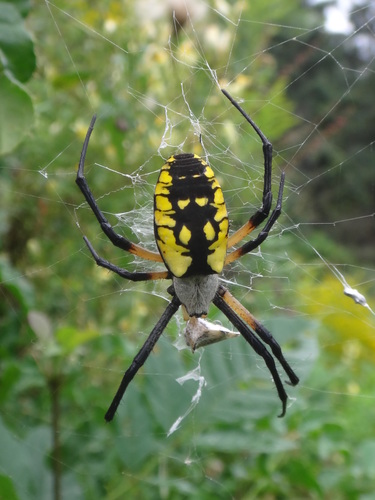
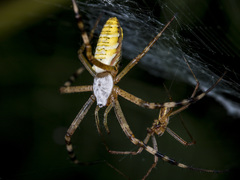
The yellow garden spider has a bright yellow-black patterned abdomen and a mostly white front body. Females are large, 19 to 28 mm long, weigh about 0.75 g, and build big orb webs in sunny garden spots.
Source: Wikipedia, Penn State Extension, University of Minnesota Extension
How to recognize it
Its abdomen is an elongated oval with yellow and black markings and two front humps. The name Argiope aurantia means “gilded silver-face”. It is also called the black-and-yellow garden spider, writing spider, zipper spider, or golden garden spider.
Source: Penn State Extension, Wikipedia, extension.msstate.edu
Size
Females measure 19 to 28 mm in body length; males are only 5 to 9 mm. A typical female weighs about 752 mg.
Source: Wikipedia, Penn State Extension
Is it a pest in the house?
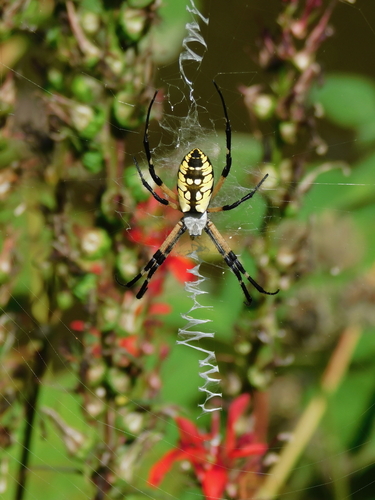
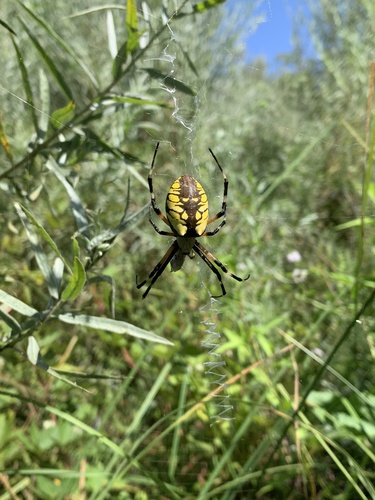
They are often seen in gardens, tall weeds, and sunny bushes where they hang their large orb webs. Their webs are usually placed out of the way, so they rarely interfere with garden activities. The central zig-zag pattern may make the web more visible to birds, reducing accidental collisions.
Does it bite or sting?
Bites can occur if the spider is handled, but the pain is similar to a bee or wasp sting and causes only mild redness and swelling. Serious reactions are rare, but anyone who notices unusual swelling should watch for an allergic response.
Source: Wikipedia, Penn State Extension, extension.msstate.edu, extension.sdstate.edu
How to get rid of it
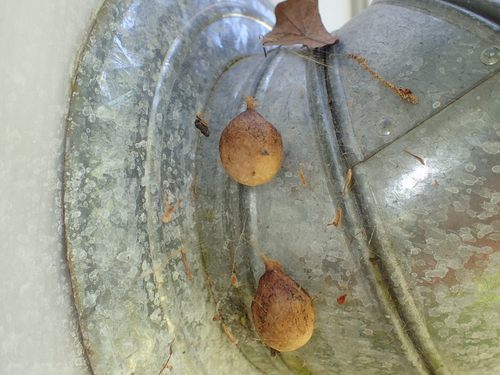
Adults die after the first hard frost, but eggs survive the winter in tan-colored sacs. If a spider is in a high-traffic garden area, you can catch it in a container and relocate it elsewhere.
Where it lives
They build webs near sunny open fields, on house eaves, or in tall vegetation.
Source: Wikipedia
Life cycle
They breed twice a year; males wander to find females and court them by plucking the web.
Source: Wikipedia
When you see it
Webs with a central stabilimentum are built by day-active spiders and usually stay in one spot for the summer.
Source: Wikipedia
Where it comes from
They are common throughout the contiguous United States and southern Canada.
Source: Wikipedia
Lookalikes
Males are smaller (5 to 8 mm) and have lighter-colored legs than females. Immature spiders have banded legs, which can help tell them apart from other orb weavers.
Source: Penn State Extension
Where it is found in the US
Recorded in 47 of 51 states and DC. Most records: Texas, North Carolina, Virginia, Florida, Georgia, California, Oklahoma, Alabama.
Darker = more records. Counts are museum and citizen-science records, not population size.
Source: GBIF
Status: native in North America; native in Canada; native in United States. Source: iNaturalist
Months it is reported in the US
Source: GBIF
More photos
Questions people ask
Do they bite?
They may bite if handled, but the bite feels like a mild bee sting.
How can I move a yellow garden spider away from my patio?
Place a large container over the spider and gently lift it to relocate it to a quieter spot.
Source: extension.sdstate.edu
What does the zig-zag pattern in the web do?
It likely makes the web more visible to birds, reducing accidental collisions.
Source: extension.msstate.edu
Same family (Araneidae)


Sources
- Wikipedia: https://en.wikipedia.org/wiki/Argiope_aurantia
- University of Minnesota Extension: https://apps.extension.umn.edu/garden/diagnose/insect/garden/relatives/medium/argiope.html
- Penn State Extension: https://extension.psu.edu/yellow-garden-spider
- extension.msstate.edu: https://extension.msstate.edu/newsletters/bugs-eye-view/2019/black-and-yellow-garden-spider-vol-5-no-31
- extension.sdstate.edu: https://extension.sdstate.edu/black-and-yellow-garden-spiders
Look it up elsewhere: GBIF · iNaturalist · BugGuide · ITIS · Wikipedia
Text written 2026-10-23 from the sources above and checked sentence by sentence against them. Data fetched 2026-10-23.