 Bug FAQ
Vespillo Burying Beetle
Nicrophorus vespillo · Order: Coleoptera · Family: Staphylinidae
Also called: Burying beetle, Common Burying Beetle, Common Sexton Beetle
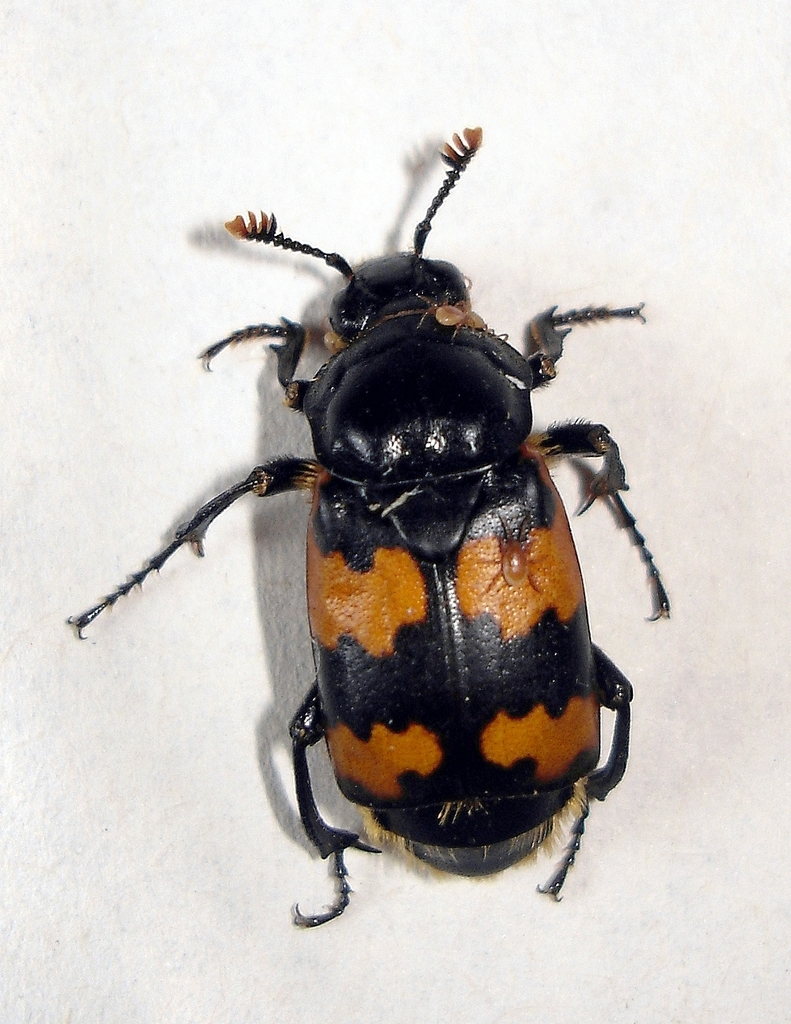
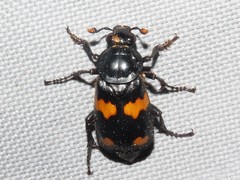
Vespillo burying beetles are large, 12 to 25 mm long, and fly strongly. They have two orange-yellow bands on their wing-cases and long golden hairs, plus orange club-shaped antenna tips and distinctive hind legs. These beetles live across the Palearctic, from western Europe to Mongolia, and breed on carrion, where the larvae eat the corpse and food regurgitated by parents.
Source: Wikipedia
How to recognize it
They show two bright orange-yellow bands on their wing-cases and are covered with long golden hairs; the antennae end in orange club-shaped tips and the hind legs have a unique shape.
Source: Wikipedia
Size
Adults measure between 12 and 25 mm in length and are strong fliers.
Source: Wikipedia
Where it lives
They are found throughout the Palearctic region, from western Europe across Asia to Mongolia.
Source: Wikipedia
What it eats
Adults locate carrion to lay eggs, and the larvae feed directly on the dead animal and on pre-digested food supplied by the parents.
Source: Wikipedia
Life cycle
After developing, the larvae pupate in the soil; late-season pupae may overwinter and emerge as juveniles in spring.
Source: Wikipedia
Lookalikes
They can be told apart from other Nicrophorus species by their long golden hairs, orange club-shaped antenna tips, and the shape of their hind legs.
Source: Wikipedia
Questions people ask
How big are Vespillo burying beetles?
Adults are 12 to 25 mm long and are strong fliers.
Source: Wikipedia
What do these beetles look like?
They have two orange-yellow bands on their wing-cases, long golden hairs, orange club-shaped antenna tips, and uniquely shaped hind legs.
Source: Wikipedia
Where are Vespillo burying beetles found?
They occur across the Palearctic, from western Europe to Mongolia.
Source: Wikipedia
What do they eat?
They live on carrion; larvae eat the dead animal and also consume food regurgitated by their parents.
Source: Wikipedia
How do they develop?
After feeding, the larvae pupate in soil; those formed late in the season may hibernate and emerge as juveniles the following spring.
Source: Wikipedia
How can I tell them apart from similar beetles?
Their long golden hairs, orange club-shaped antenna ends, and distinctive hind-leg shape set them apart from other Nicrophorus species.
Source: Wikipedia
Same family (Staphylinidae)


Sources
- Wikipedia: https://en.wikipedia.org/wiki/Nicrophorus_vespillo
Look it up elsewhere: GBIF · iNaturalist · BugGuide · ITIS · Wikipedia
Text written 2026-10-22 from the sources above and checked sentence by sentence against them. Data fetched 2026-10-22.