 Bug FAQ
Devil's Coach Horse Beetle
Ocypus olens · Order: Coleoptera · Family: Staphylinidae
Also called: Staph beetle, Devil's Coach Horse
Source: Wikipedia
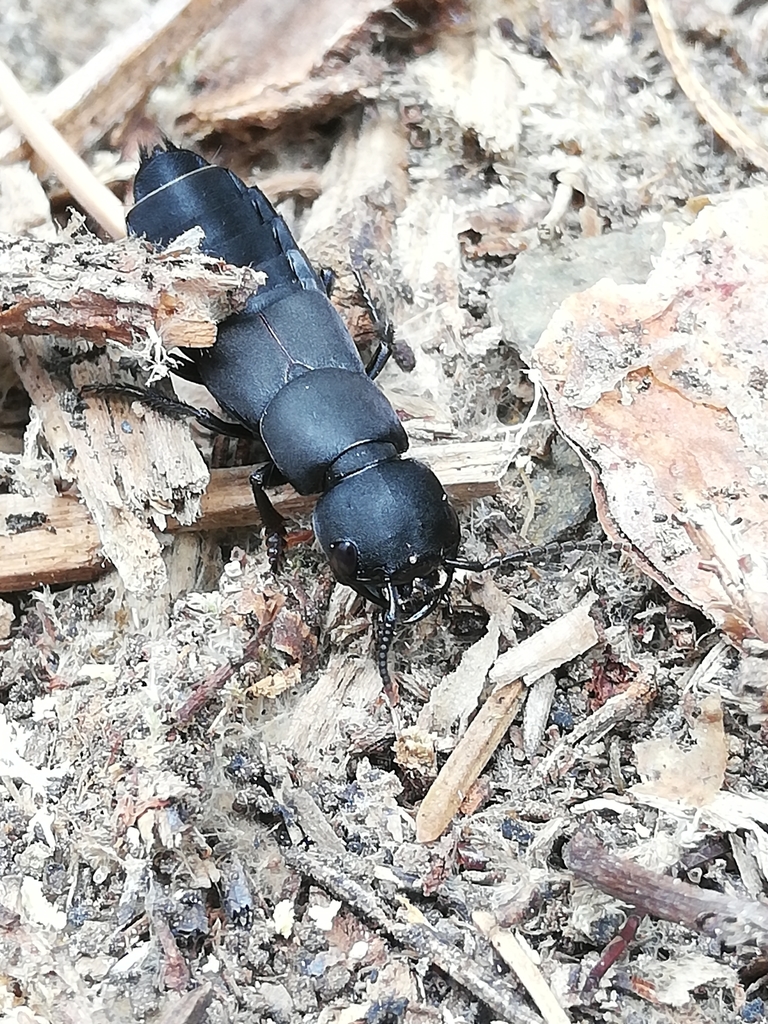
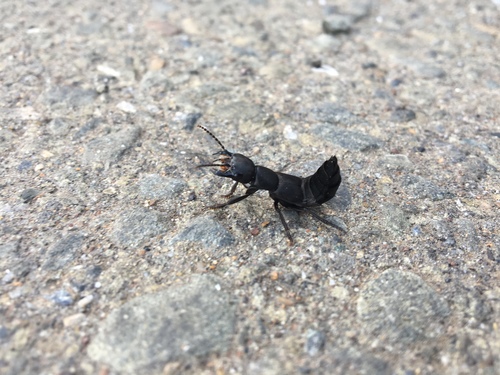
The Devil's Coach Horse Beetle is a large, black, long-bodied beetle covered in fine hairs. It lives in damp places such as under logs, stones, leaf litter, and in meadows, woodlands, gardens and parks from spring to autumn. It is a nocturnal predator that eats worms, slugs, spiders, woodlice and carrion, and its larvae eat the same kinds of prey.
Source: Wikipedia
How to recognize it
It is a long, black beetle with fine black hairs covering its body.
Source: Wikipedia
Size
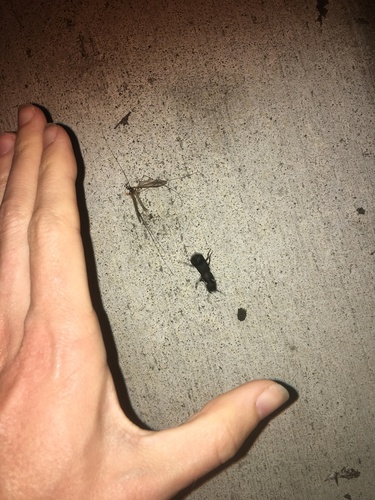
Adults measure about 20 to 32 mm in length.
Source: Wikipedia
Where it lives
During daylight it hides under logs, stones or leaf litter in damp habitats. It is found from April through October in meadows, heath, moorland, woodlands, hedgerows, parks and gardens.
Source: Wikipedia
What it eats
It hunts at night and feeds on a variety of invertebrates such as worms, slugs, spiders, woodlice and dead animals. The larvae are also carnivorous and eat the same types of prey.
Source: Wikipedia
Life cycle
Mating takes place in autumn. Eggs hatch after about a month, releasing white larvae with straw-coloured heads. Larvae pass through three growth stages, the final one reaching 20 to 26 mm. Around five months old they pupate for roughly 35 days before emerging as adults.
Source: Wikipedia
Where it comes from
The species is common throughout most of Europe and also occurs in North Africa.
Source: Wikipedia
Where it is found in the US
Recorded in 5 of 51 states and DC. Most records: California, Washington, Oregon, Pennsylvania, Utah.
Darker = more records. Counts are museum and citizen-science records, not population size.
Source: GBIF
Status: introduced in United States; introduced in Canada. Source: iNaturalist
Months it is reported in the US
Source: GBIF
More photos
Questions people ask
Can the Devil's Coach Horse Beetle bite humans?
Yes, it can bite with its strong jaws, and the bite can be painful.
Source: Wikipedia
What does this beetle eat?
It preys on worms, slugs, spiders, woodlice and also feeds on carrion; the larvae eat the same kinds of prey.
Source: Wikipedia
Where is this beetle usually found?
It prefers damp habitats and is commonly found under logs, stones, leaf litter, and in meadows, woodlands, gardens and parks from spring to autumn.
Source: Wikipedia
Is this beetle common in my area?
It is widespread across most of Europe and also occurs in North Africa.
Source: Wikipedia
Same family (Staphylinidae)


Sources
- Wikipedia: https://en.wikipedia.org/wiki/Devil%27s_coach_horse_beetle
Look it up elsewhere: GBIF · iNaturalist · BugGuide · Wikipedia
Text written 2026-10-23 from the sources above and checked sentence by sentence against them. Data fetched 2026-10-22.