 Bug FAQ
Roundneck Sexton Beetle
Nicrophorus orbicollis · Order: Coleoptera · Family: Staphylinidae
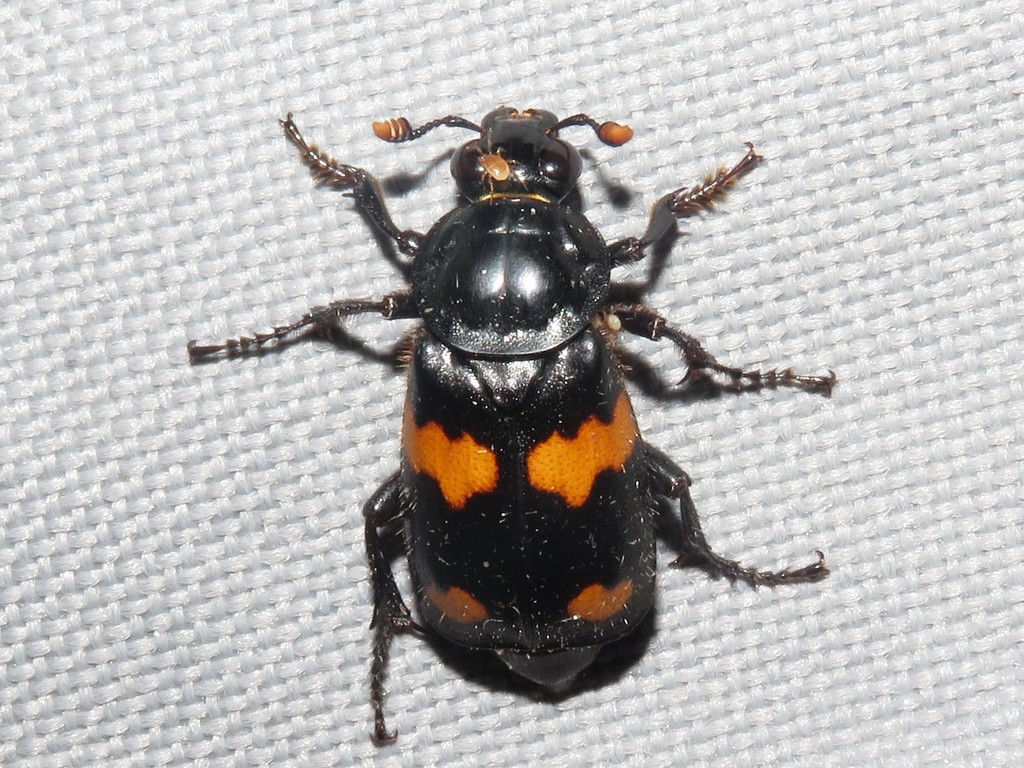
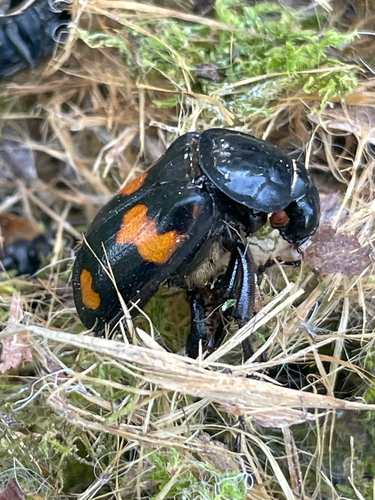
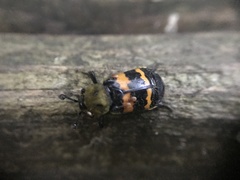
Adult Roundneck Sexton Beetles are 15 to 22 mm long and have bright orange markings on their wing covers. They live in open and forested areas, especially moist forests where they feed on small carcasses, rotten fruit, and feces. The species ranges from southeastern Canada down to Florida and east Texas, reaching as far west as Nebraska and north to North Dakota.
Source: Wikipedia
How to recognize it
They are instantly recognizable by orange spots on their elytra.
Source: Wikipedia
Where it lives
They spend winter as adults and are found in open and forested habitats. Most are collected in moist forest areas on animal feces, rotten fruit, and carrion.
Source: Wikipedia
What it eats
They are saprophagous, feeding on protein from small decomposing carcasses and providing it to their larvae. They act as decomposers, consuming dead animal matter.
Source: Wikipedia
Life cycle
They undergo complete metamorphosis with egg, larval, pupal, and adult stages. Eggs hatch about 56 hours after being laid, and larvae pupate in soil after 6 to 8 days.
Source: Wikipedia
When you see it
Adults first appear in late May and are active from February through October, most commonly in June-August.
Source: Wikipedia
Lookalikes
They belong to the sexton beetle genus Nicrophorus, the most common group in the Silphidae family.
Source: Wikipedia
Where it is found in the US
Recorded in 42 of 51 states and DC. Most records: Illinois, Pennsylvania, Massachusetts, New York, Connecticut, Wisconsin, Ohio, North Carolina.
Darker = more records. Counts are museum and citizen-science records, not population size.
Source: GBIF
Status: native in North America; native in Canada. Source: iNaturalist
Months it is reported in the US
Source: GBIF
More photos
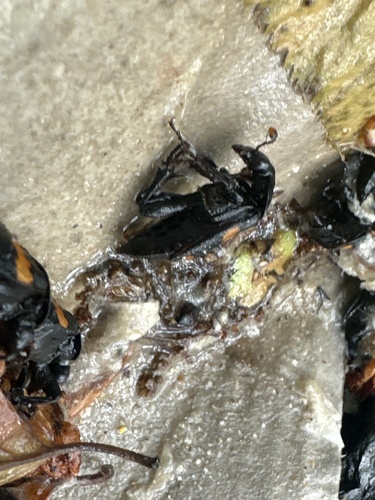
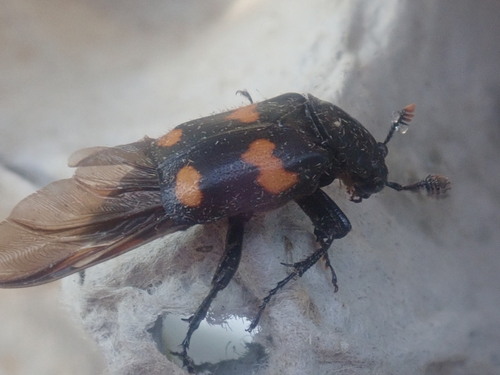
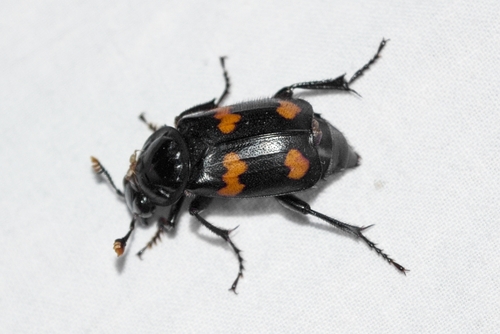
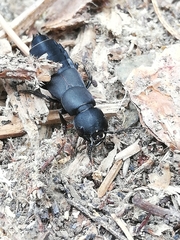
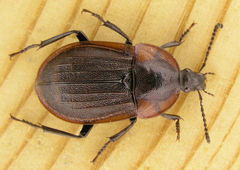
Same family (Staphylinidae)


Sources
- Wikipedia: https://en.wikipedia.org/wiki/Nicrophorus_orbicollis
Look it up elsewhere: GBIF · iNaturalist · BugGuide · ITIS · Wikipedia
Text written 2026-10-22 from the sources above and checked sentence by sentence against them. Data fetched 2026-10-22.