 Bug FAQ
Undertaker Carpet Beetle
Reesa vespulae · Order: Coleoptera · Family: Dermestidae
Also called: wasp nest dermestid
Source: Wikipedia
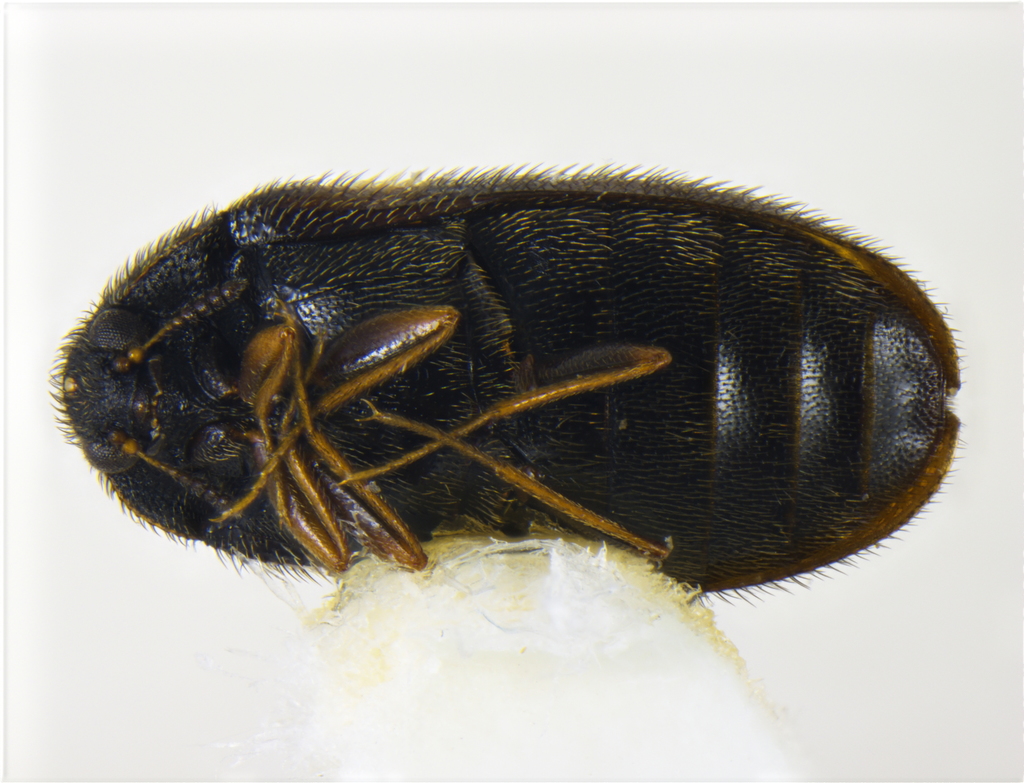
The Undertaker Carpet Beetle has two reddish bands on its wing covers, black hairs, and club-shaped antennae with four segments. It feeds on dried animal materials such as museum specimens and is considered a museum pest. Only females have been found and they reproduce without mating.
Source: Wikipedia
How to recognize it
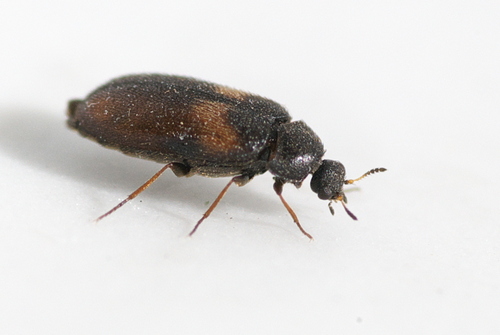
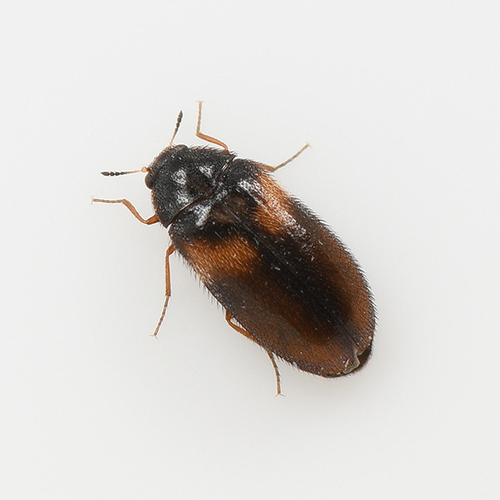
Two reddish bands on the elytra, black setae, and antennae ending in four-segmented clubs identify this beetle.
Source: Wikipedia
Is it a pest in the house?
Like other dermestids, it is regarded as a museum pest.
Source: Wikipedia
Where it lives
It is a museum pest like several other dermestids.
Source: Wikipedia
What it eats
It consumes dried animal products, including museum specimens.
Source: Wikipedia
Life cycle
Only female individuals have been observed, suggesting parthenogenetic reproduction.
Source: Wikipedia
Where it comes from
Native to the Nearctic region, it now occurs almost worldwide.
Source: Wikipedia
Lookalikes
Reesa is a monotypic genus in the Dermestidae family, so there are no closely related look-alike species listed.
Source: Wikipedia
Where it is found in the US
Recorded in 20 of 51 states and DC. Most records: California, Alaska, Oregon, Washington, Idaho, Colorado, Massachusetts, Minnesota.
Darker = more records. Counts are museum and citizen-science records, not population size.
Source: GBIF
Status: introduced in North America; introduced in Canada; introduced in United States. Source: iNaturalist
Months it is reported in the US
Source: GBIF
More photos

Questions people ask
How can I identify the Undertaker Carpet Beetle?
Look for two reddish bands on the elytra, black hairs, and antennae with four clubbed segments.
Source: Wikipedia
Does it reproduce sexually?
Only females have been observed, indicating it reproduces without mating.
Source: Wikipedia
Is it a problem for homes?
It is considered a museum pest rather than a household pest.
Source: Wikipedia
Same family (Dermestidae)
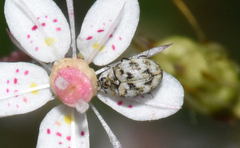 Varied Carpet BeetleAnthrenus verbasciCan damage your home
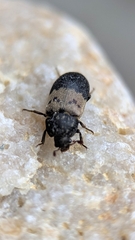 Larder BeetleDermestes lardariusCan damage your home
 Buffalo carpet beetleAnthrenus scrophulariaeCan damage your home
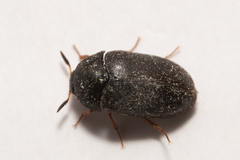 Black Carpet BeetleAttagenus unicolorCan damage your home
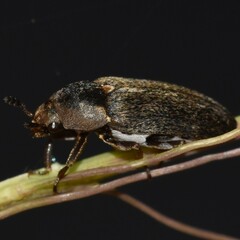 Hide BeetleDermestes maculatusCan damage your home
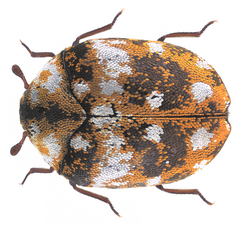 Furniture Carpet BeetleAnthrenus flavipesCan damage your home
Sources
- Wikipedia: https://en.wikipedia.org/wiki/Reesa
Look it up elsewhere: GBIF · iNaturalist · BugGuide · ITIS · Wikipedia
Text written 2026-10-28 from the sources above and checked sentence by sentence against them. Data fetched 2026-10-28.