 Bug FAQ
Larder Beetle
Dermestes lardarius · Order: Coleoptera · Family: Dermestidae
Also called: bacon beetle, Moisture Bug
Source: Wikipedia
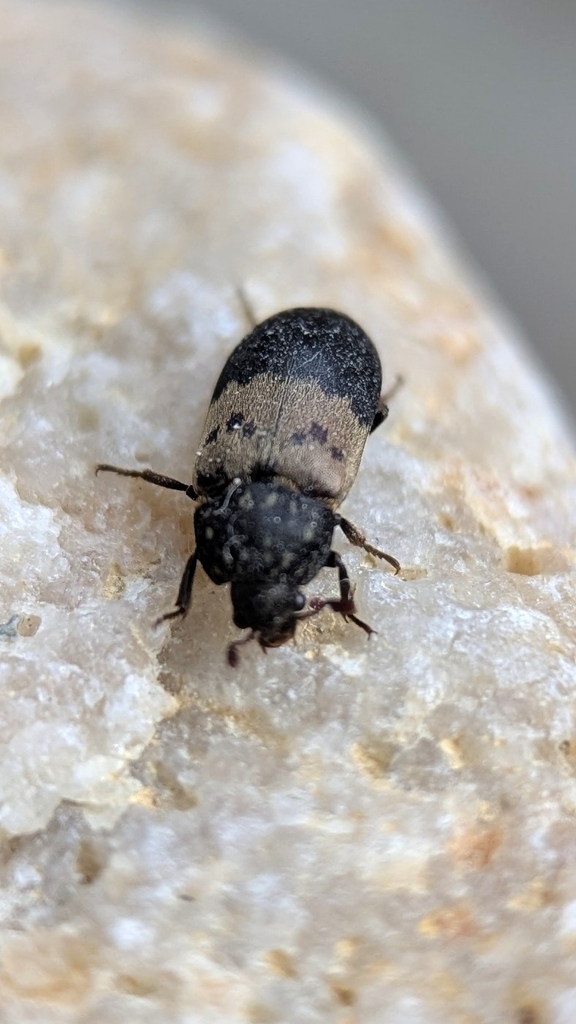
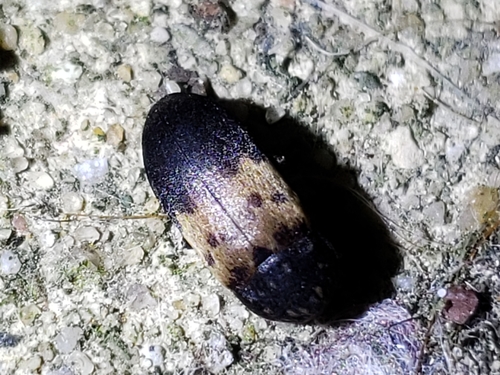
Adult larder beetles are about 8.5 to 9.5 mm long, dark brown with a pale yellow band on the wing covers. They feed on dried animal products and can become a problem in homes and storage areas.
Source: Wikipedia
Size
Adults measure roughly 8.5 to 9.5 mm in length.
Source: Wikipedia
Is it a pest in the house?
They are a common pest in homes and storage rooms worldwide.
Source: Wikipedia
Where it lives
In winter they stay outdoors in protected spots, but in spring and early summer they move into buildings.
Source: Wikipedia
What it eats
They eat dried meats, fish, pet food, skins, feathers, cheese, and preserved specimens.
Source: Wikipedia
Life cycle
Females lay about 135 eggs near food; the eggs hatch in roughly 12 days.
Source: Wikipedia
When you see it
Adults are outdoors in winter and enter homes during spring and early summer.
Source: Wikipedia
Where it comes from
The species occurs worldwide.
Source: Wikipedia
Where it is found in the US
Recorded in 41 of 51 states and DC. Most records: New York, Michigan, Pennsylvania, Minnesota, Massachusetts, Ohio, Wisconsin, Vermont.
Darker = more records. Counts are museum and citizen-science records, not population size.
Source: GBIF
Status: introduced in North America; introduced in United States; introduced in Canada. Source: iNaturalist
Months it is reported in the US
Source: GBIF
More photos
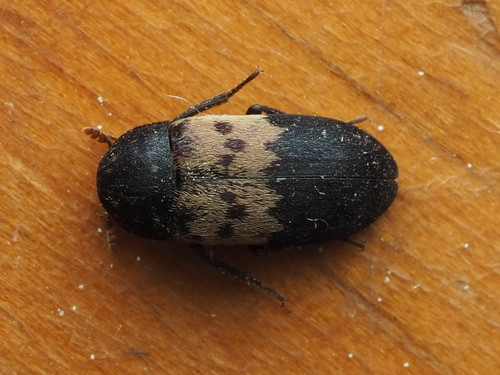
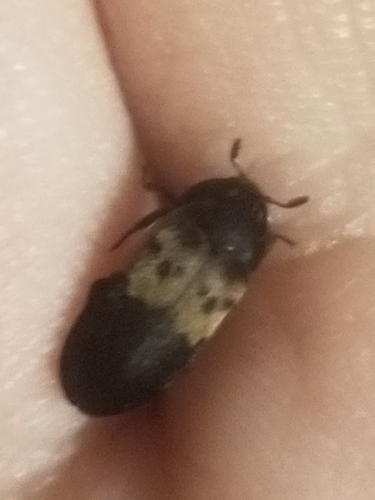
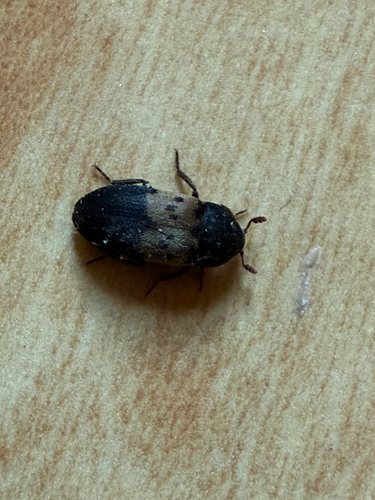
Same family (Dermestidae)
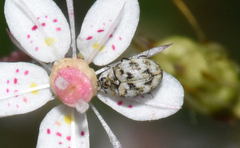 Varied Carpet BeetleAnthrenus verbasciCan damage your home
 Buffalo carpet beetleAnthrenus scrophulariaeCan damage your home
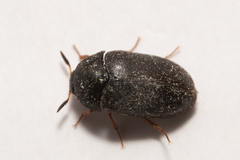 Black Carpet BeetleAttagenus unicolorCan damage your home
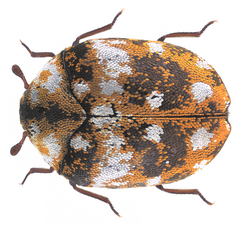 Furniture Carpet BeetleAnthrenus flavipesCan damage your home
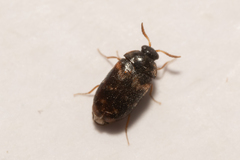 Warehouse BeetleTrogoderma variabileCan damage your home
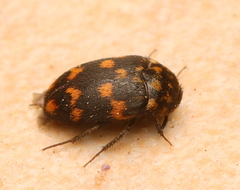 Gold Spot-row-band-dot Carpet BeetleAttagenus pustulatus
Sources
- Wikipedia: https://en.wikipedia.org/wiki/Dermestes_lardarius
Look it up elsewhere: GBIF · iNaturalist · BugGuide · ITIS · Wikipedia
Text written 2026-10-22 from the sources above and checked sentence by sentence against them. Data fetched 2026-10-22.