 Bug FAQ
Hide Beetle
Dermestes maculatus · Order: Coleoptera · Family: Dermestidae
Also called: Leather Beetle
Source: Wikipedia, citybugs.tamu.edu
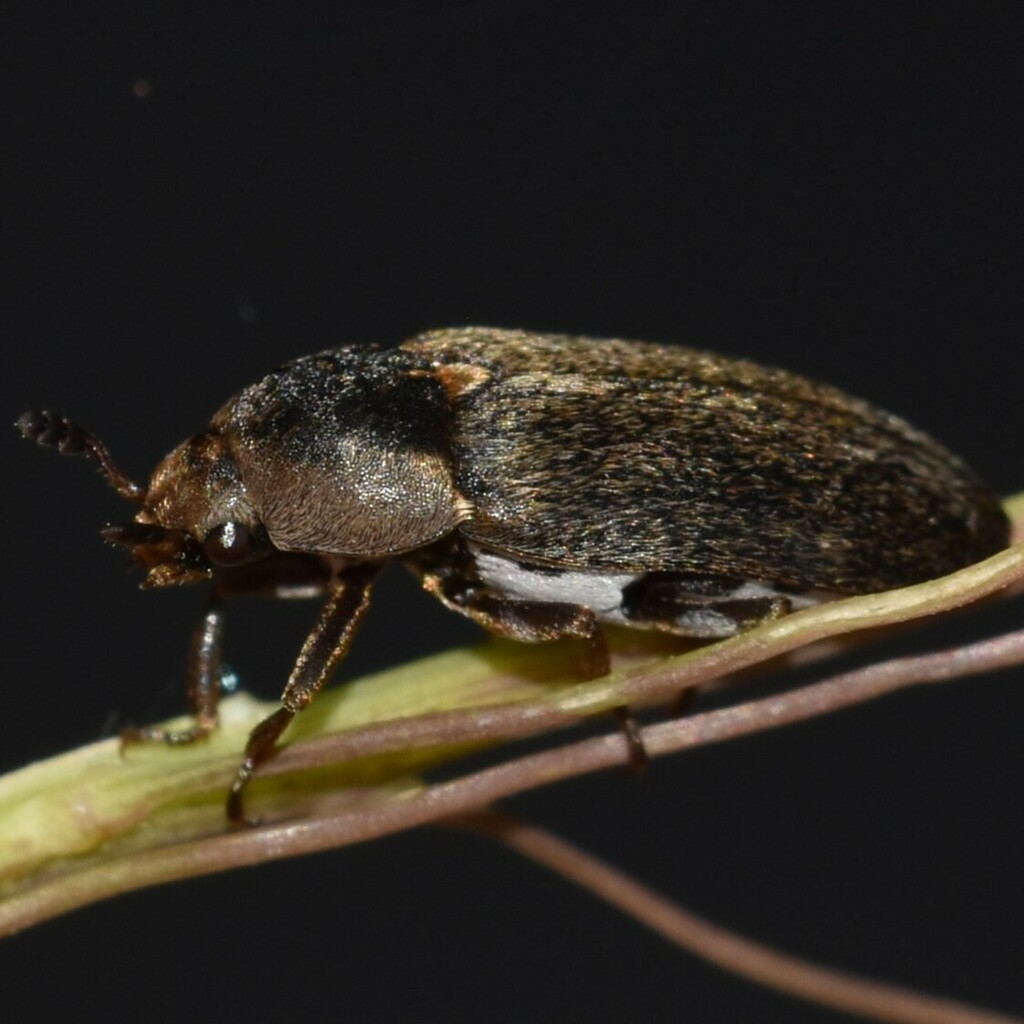
Adult Dermestes maculatus are dark brown to black beetles 5.5 to 10 mm long with a white, spotted underside of the abdomen. They appear under dead animals, feed on carrion and dried animal products, and can infest stored foods such as dried fish, cheese, bacon and pet treats.
Source: Wikipedia, citybugs.tamu.edu
How to recognize it
The beetle’s coloration and the sharply pointed, serrated tips of the elytra help separate it from other Dermestes species.
Source: citybugs.tamu.edu
Size
Adults measure between 5.5 and 10 mm in length.
Source: Wikipedia
Does it bite or sting?
Larvae have caused papular urticaria, a skin reaction, in at least one case. The beetle has been reported to feed parasitically on live turkeys, leaving deep wounds.
Source: Wikipedia
How to get rid of it
Eliminating infestation sources and maintaining good sanitation are key to control. Cold storage below 50 °F effectively protects furs and other valuable leather goods.
Source: citybugs.tamu.edu
Where it lives
They are often found beneath dead animals that have been decomposing for several days to weeks.
Source: Wikipedia
What it eats
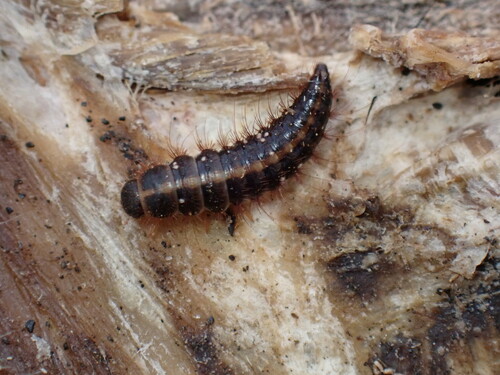
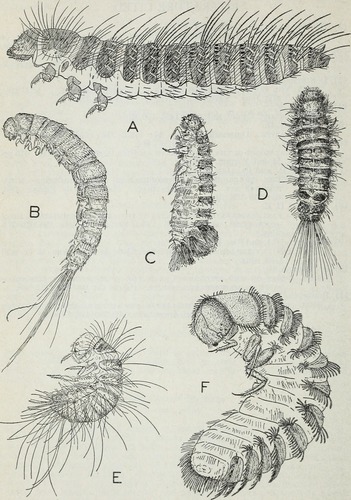
They feed on carrion and dry animal products. Larvae show no preference among calf meat, chicken meat, or rodent pellet feed.
Source: Wikipedia
Life cycle
Larvae develop for five to seven weeks before pupating, and adults live four to six months.
Source: Wikipedia
When you see it
Adults usually arrive 5 to 11 days after an animal’s death.
Source: Wikipedia
Where it comes from
Dermestes maculatus has a worldwide distribution, occurring on all continents except Antarctica.
Source: Wikipedia
Lookalikes
The black larder beetle lacks pointed elytral tips and has small patches of white hairs on the underside of abdominal segments in males, unlike the hide beetle.
Source: citybugs.tamu.edu
Where it is found in the US
Recorded in 30 of 51 states and DC. Most records: Illinois, Texas, Alaska, Michigan, Arizona, Connecticut, Indiana, New Mexico.
Darker = more records. Counts are museum and citizen-science records, not population size.
Source: GBIF
Months it is reported in the US
Source: GBIF
More photos
Questions people ask
How can I prevent Dermestes maculatus infestations in my home?
Keep storage areas clean, remove any dead animal material promptly, and store susceptible foods in sealed containers; cold storage below 50 °F also helps protect leather items.
Source: citybugs.tamu.edu
What does Dermestes maculatus look like?
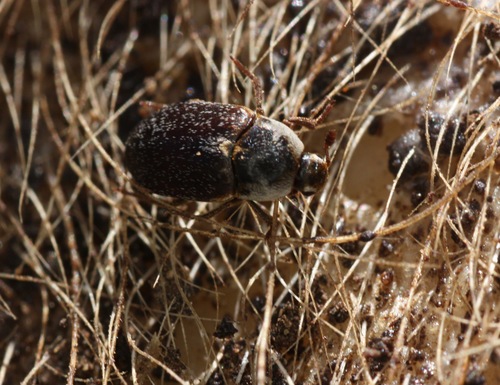
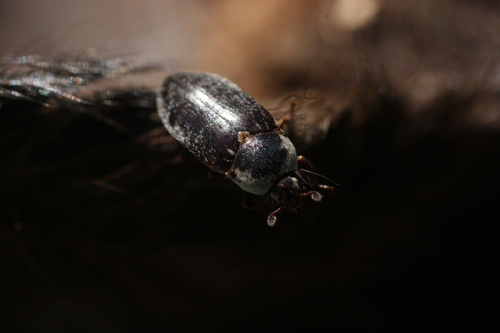
Adults are dark brown to black, 5.5 to 10 mm long, with a white, spotted underside of the abdomen and sharply pointed, serrated elytral tips.
Source: Wikipedia, citybugs.tamu.edu
Do they bite or sting people?
Larvae have caused a skin reaction called papular urticaria, and the beetle can feed on live turkeys, leaving deep wounds.
Source: Wikipedia
Can they damage stored food?
Yes, they infest dried fish, cheese, bacon, pet treats, poultry, leather goods, hides, skins, and feathers.
Source: Wikipedia, citybugs.tamu.edu
Same family (Dermestidae)
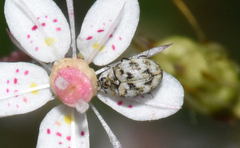 Varied Carpet BeetleAnthrenus verbasciCan damage your home
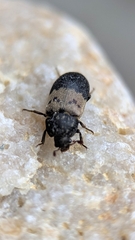 Larder BeetleDermestes lardariusCan damage your home
 Buffalo carpet beetleAnthrenus scrophulariaeCan damage your home
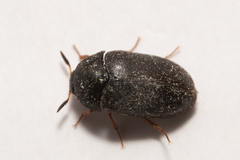 Black Carpet BeetleAttagenus unicolorCan damage your home
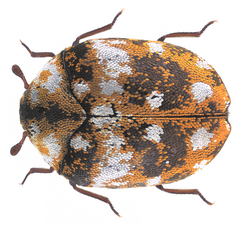 Furniture Carpet BeetleAnthrenus flavipesCan damage your home
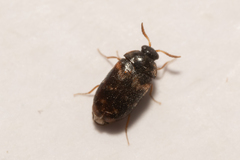 Warehouse BeetleTrogoderma variabileCan damage your home
Sources
- Wikipedia: https://en.wikipedia.org/wiki/Dermestes_maculatus
- citybugs.tamu.edu: https://citybugs.tamu.edu/factsheets/household/food-fabric/ent-2014
Look it up elsewhere: GBIF · iNaturalist · BugGuide · ITIS · Wikipedia
Text written 2026-10-23 from the sources above and checked sentence by sentence against them. Data fetched 2026-10-23.