 Bug FAQ
Varied Carpet Beetle
Anthrenus verbasci · Order: Coleoptera · Family: Dermestidae
Also called: Carpet Beetle, Woolly Bear
Source: Wikipedia
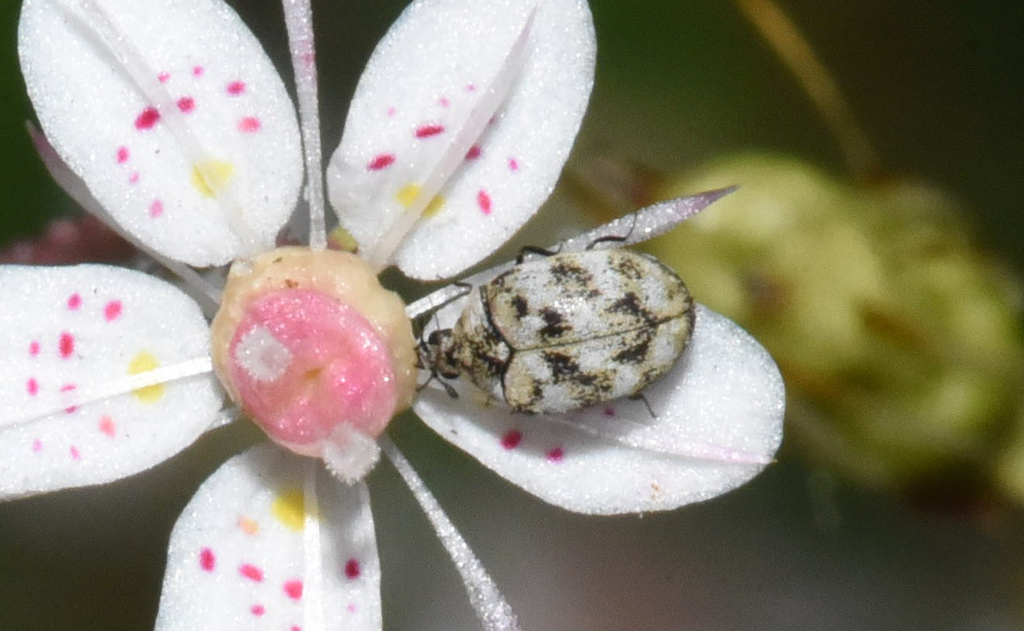
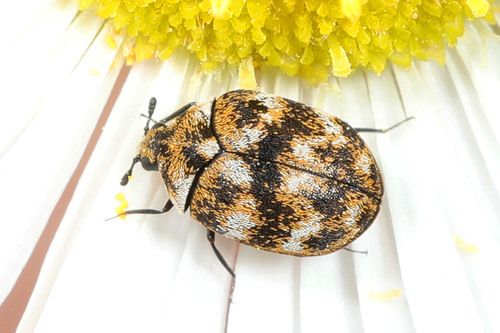
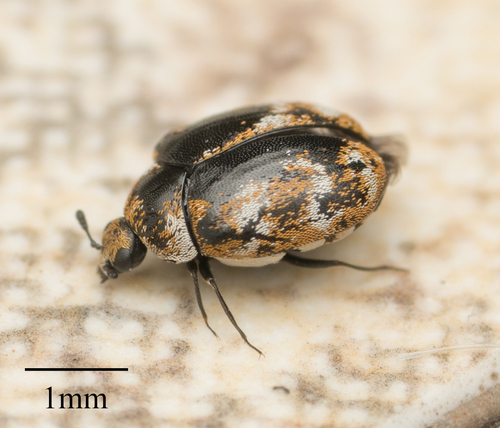
Adults are tiny beetles 1.7 to 3.5 mm long with patterned white, brown and yellow scales on their wing covers and pronotum. The hairy larvae, which look striped because of alternating light and dark brown setae, feed on keratin and chitin in fabrics, feathers and hair, causing damage to clothing, carpets and other items.
Source: Wikipedia
How to recognize it
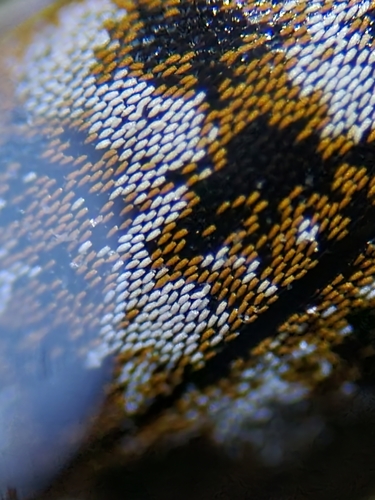
The beetle’s wing covers and pronotum have fine scales that form irregular white, brownish and yellowish patches. Three bright wavy white bands run across the wing covers and along the sides of the pronotum.
Source: Wikipedia
Size
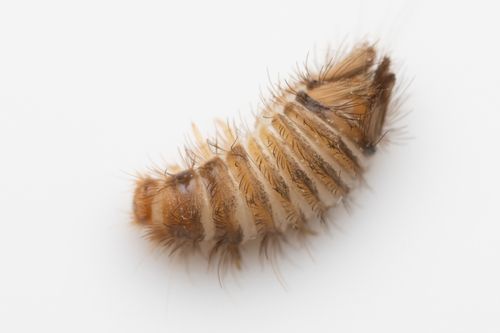
Adults measure between 1.7 and 3.5 mm in length. Larvae are elongated and densely covered with large hairs that create a striped appearance.
Source: Wikipedia
Is it a pest in the house?
The larvae are a common indoor pest and can damage furniture, clothing, blankets, furs and carpets.
Source: Wikipedia
How to get rid of it
Regular vacuuming, dry cleaning, airing clothes, and using naphthalene balls can prevent infestations. Insecticides, freezing, oxygen deprivation, and pheromone traps can also be used to kill or deter them.
Source: Wikipedia
Where it lives
They can be found both outdoors in open, flower-rich areas and indoors in homes, bird nests and stored fabrics.
Source: Wikipedia
What it eats
Larvae eat keratin and chitin from dead insects, animal hair and feathers. Adults feed on pollen and nectar of flowering plants.
Source: Wikipedia
Life cycle
The whole life cycle takes 1 to 3 years depending on conditions. Eggs hatch in spring or early summer, often in bird nests or near stored fabrics.
Source: Wikipedia
When you see it
Adults appear from late May to early August and live about two weeks.
Source: Wikipedia
Where it comes from
The species occurs across most of Europe, parts of Asia, North Africa, the Near East, North America and the Neotropics.
Source: Wikipedia
Lookalikes
The larvae are long, densely hairy, and show alternating light and dark brown stripe-like bands.
Source: Wikipedia
Where it is found in the US
Recorded in 46 of 51 states and DC. Most records: California, Texas, Virginia, Maryland, Pennsylvania, Massachusetts, New York, North Carolina.
Darker = more records. Counts are museum and citizen-science records, not population size.
Source: GBIF
Status: introduced in North America; introduced in United States; introduced in Canada. Source: iNaturalist
Months it is reported in the US
Source: GBIF
More photos
Questions people ask
What damage can the larvae cause?
The larvae feed on natural fibers like wool, feathers and hair, damaging clothing, carpets, blankets and other household items.
Source: Wikipedia
When are adult beetles active?
Adults are active from late May to early August and live for about two weeks, feeding on pollen and nectar.
Source: Wikipedia
How can I get rid of a carpet beetle infestation?
Clean regularly with a vacuum, dry-clean or air out fabrics, use naphthalene balls, and consider insecticides, freezing or pheromone traps for severe cases.
Source: Wikipedia
Same family (Dermestidae)
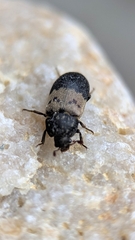 Larder BeetleDermestes lardariusCan damage your home
 Buffalo carpet beetleAnthrenus scrophulariaeCan damage your home
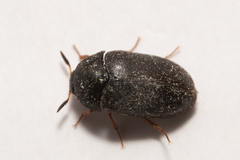 Black Carpet BeetleAttagenus unicolorCan damage your home
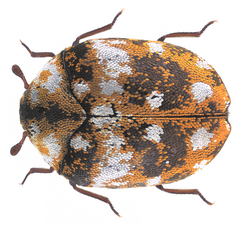 Furniture Carpet BeetleAnthrenus flavipesCan damage your home
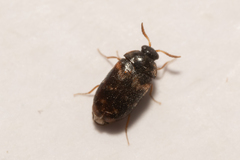 Warehouse BeetleTrogoderma variabileCan damage your home
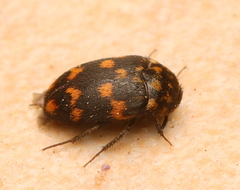 Gold Spot-row-band-dot Carpet BeetleAttagenus pustulatus
Sources
- Wikipedia: https://en.wikipedia.org/wiki/Varied_carpet_beetle
Look it up elsewhere: GBIF · iNaturalist · BugGuide · ITIS · Wikipedia
Text written 2026-10-22 from the sources above and checked sentence by sentence against them. Data fetched 2026-10-22.