 Bug FAQ
Uhler's Wood Cockroach
Parcoblatta uhleriana · Order: Blattodea · Family: Ectobiidae
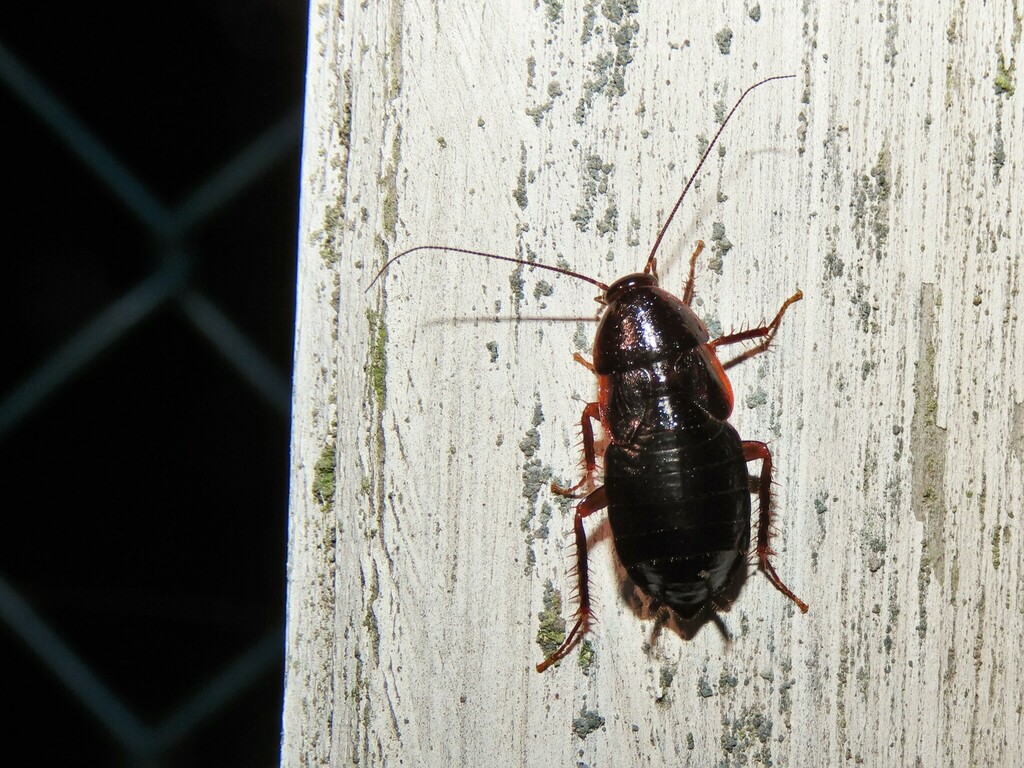
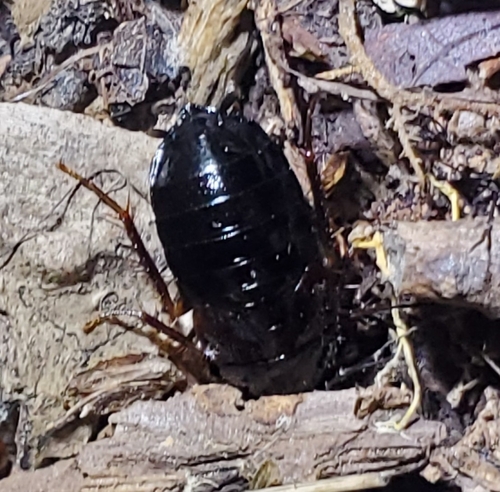
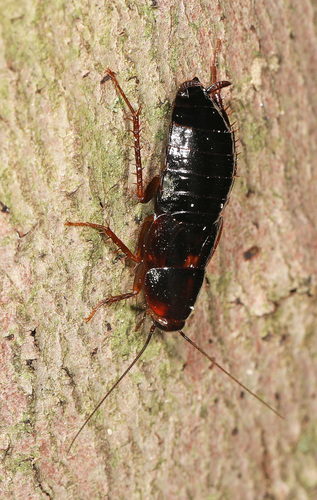
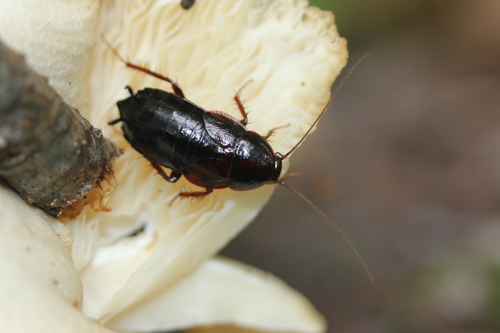
Uhler's wood cockroach lives in the United States and Canada and prefers moist leaf litter in dense forests, though it also shows up around suburban homes. Males are pale brownish-yellow with slightly darker forewings, while females are usually shiny blackish-brown or dark reddish-brown except for the abdomen. They feed at night on mushrooms, moss, bird droppings and mammalian cartilage, and their egg cases are about 3.4 to 3.5 mm wide and 6 to 9 mm long.
Source: Wikipedia
How to recognize it
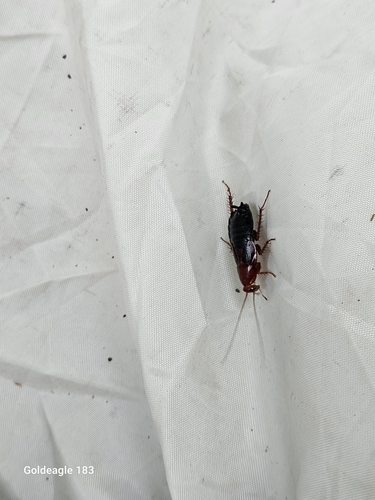
Female cockroaches are usually a shining blackish-brown, sometimes dark reddish-brown, except for a lighter abdomen.
Source: Wikipedia
Size
The egg case (ootheca) is typically 3.4 to 3.5 mm wide and 6 to 9 mm long.
Source: Wikipedia
Is it a pest in the house?
In a Raleigh, North Carolina suburban survey, this species was the most frequently caught cockroach using soil-level pitfall traps.
Source: Wikipedia
Where it lives
They are a dense deciduous-forest species that likes deep, moist leaf mold and plant litter. They are also found under dry or damp leaves, pine needles, bark, decaying logs, on foliage, grass, and even on roads at night.
Source: Wikipedia
What it eats
Adults feed on mushrooms, moss, bird feces and mammalian cartilage.
Source: Wikipedia
Life cycle
The ootheca measures about 3.4 to 3.5 mm wide and 6 to 9 mm long.
Source: Wikipedia
When you see it
Males are attracted to lights, while females are drawn to molasses baits.
Source: Wikipedia
Where it comes from
Uhler's wood cockroach is native to the United States and Canada.
Source: Wikipedia
Where it is found in the US
Recorded in 30 of 51 states and DC. Most records: Virginia, Maryland, New Jersey, New York, Alabama, Massachusetts, Tennessee, Missouri.
Darker = more records. Counts are museum and citizen-science records, not population size.
Source: GBIF
Status: native in North America; native in Canada; native in United States. Source: iNaturalist
Months it is reported in the US
Source: GBIF
More photos
Questions people ask
How can I tell a male from a female Uhler's wood cockroach?
Males are a uniform pale brownish-yellow with slightly darker forewings, while females are usually shiny blackish-brown or dark reddish-brown except for the abdomen.
Source: Wikipedia
Where does Uhler's wood cockroach live?
It lives in dense deciduous forests with moist leaf litter, but it also shows up under leaves, bark, logs and even on roads near suburban areas.
Source: Wikipedia
Is this cockroach a problem inside homes?
A survey near Raleigh, NC found it to be the most common cockroach caught in pitfall traps around houses, indicating it is frequently present near homes.
Source: Wikipedia
What does this cockroach eat?
Adults have been observed feeding on mushrooms, moss, bird droppings and mammalian cartilage.
Source: Wikipedia
Same family (Ectobiidae)
 German CockroachBlattella germanicaCan spread germs or disease
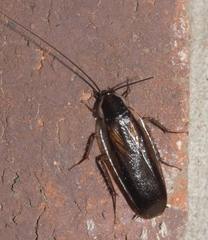 Pennsylvania Wood CockroachParcoblatta pennsylvanicaNuisance, not dangerous
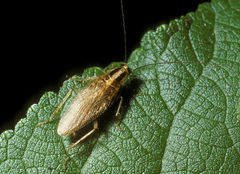 Asian CockroachBlattella asahinaiNuisance, not dangerous
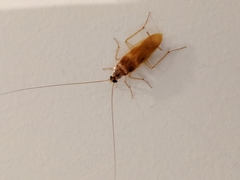 Brown-banded CockroachSupella longipalpaCan spread germs or disease
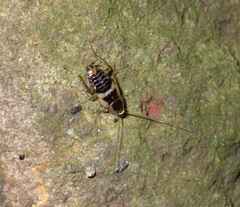 Variable CockroachPlanuncus tingitanus
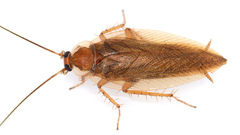 Amber Wood CockroachEctobius vittiventrisHarmless
Sources
- Wikipedia: https://en.wikipedia.org/wiki/Parcoblatta_uhleriana
Look it up elsewhere: GBIF · iNaturalist · BugGuide · ITIS · Wikipedia
Text written 2026-10-23 from the sources above and checked sentence by sentence against them. Data fetched 2026-10-23.