 Bug FAQ
Two-lined Chestnut Borer
Agrilus bilineatus · Order: Coleoptera · Family: Buprestidae
Also called: Twolined Chestnut Borer
Source: Wikipedia
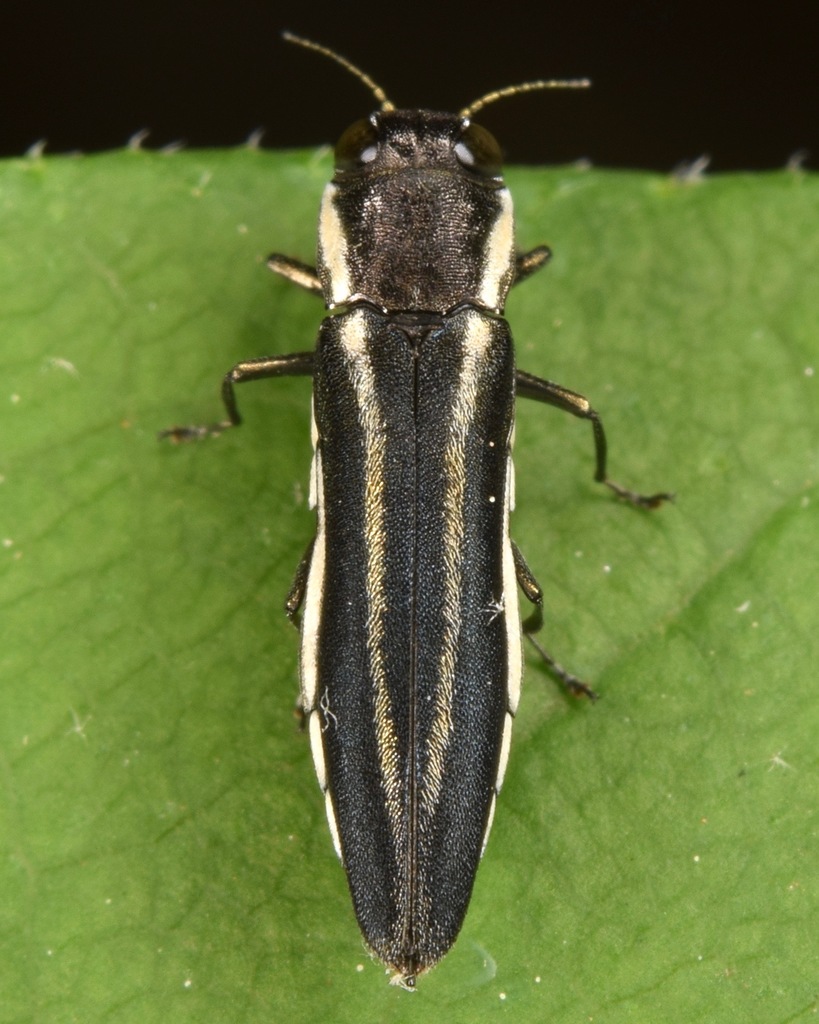
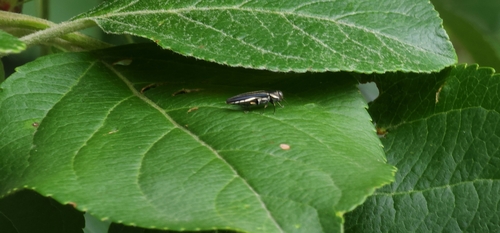
The two-lined chestnut borer shows two white lines on its wing covers. It bores into and harms chestnut and oak trees.
Source: Wikipedia
How to recognize it
Adults have two distinct white lines on their elytra.
Source: Wikipedia
Is it a pest in the house?
It can become a pest by boring into chestnut and oak trees.
Source: Wikipedia
Where it lives
It lives in and bores into chestnut and oak trees.
Source: Wikipedia
What it eats
Its larvae feed by boring into chestnut and oak wood.
Source: Wikipedia
Where it comes from
It originates from North America. It has also been introduced to Turkey.
Source: Wikipedia
Where it is found in the US
Recorded in 38 of 51 states and DC. Most records: Minnesota, Pennsylvania, West Virginia, Massachusetts, Maryland, Vermont, Illinois, Ohio.
Darker = more records. Counts are museum and citizen-science records, not population size.
Source: GBIF
Status: native in North America; native in Canada; native in United States. Source: iNaturalist
Months it is reported in the US
Source: GBIF
More photos
Questions people ask
What trees does the two-lined chestnut borer damage?
It bores into and harms chestnut and oak trees.
Source: Wikipedia
Where is the two-lined chestnut borer originally from?
It is native to North America.
Source: Wikipedia
How can I recognize an adult two-lined chestnut borer?
Look for two white lines on its wing covers.
Source: Wikipedia
Same family (Buprestidae)
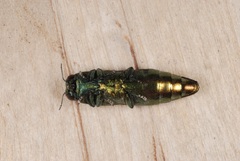 Emerald Ash BorerAgrilus planipennisDamages trees, gardens or crops
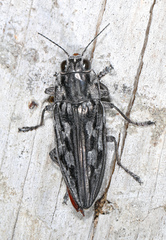 Sculptured Pine BorerChalcophora virginiensisDamages trees, gardens or crops
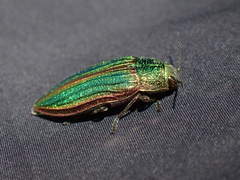 Golden Buprestid BeetleBuprestis aurulenta
 Anthaxia nitidulaDamages trees, gardens or crops
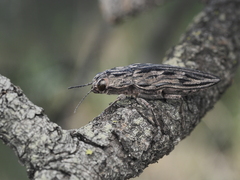 Western Sculptured Pine BorerChalcophora angulicollis
 Anthaxia quadripunctata
Sources
- Wikipedia: https://en.wikipedia.org/wiki/Agrilus_bilineatus
Look it up elsewhere: GBIF · iNaturalist · BugGuide · ITIS · Wikipedia
Text written 2026-10-24 from the sources above and checked sentence by sentence against them. Data fetched 2026-10-24.