 Bug FAQ
Anthaxia nitidula
Anthaxia nitidula · Order: Coleoptera · Family: Buprestidae
Source: Wikipedia
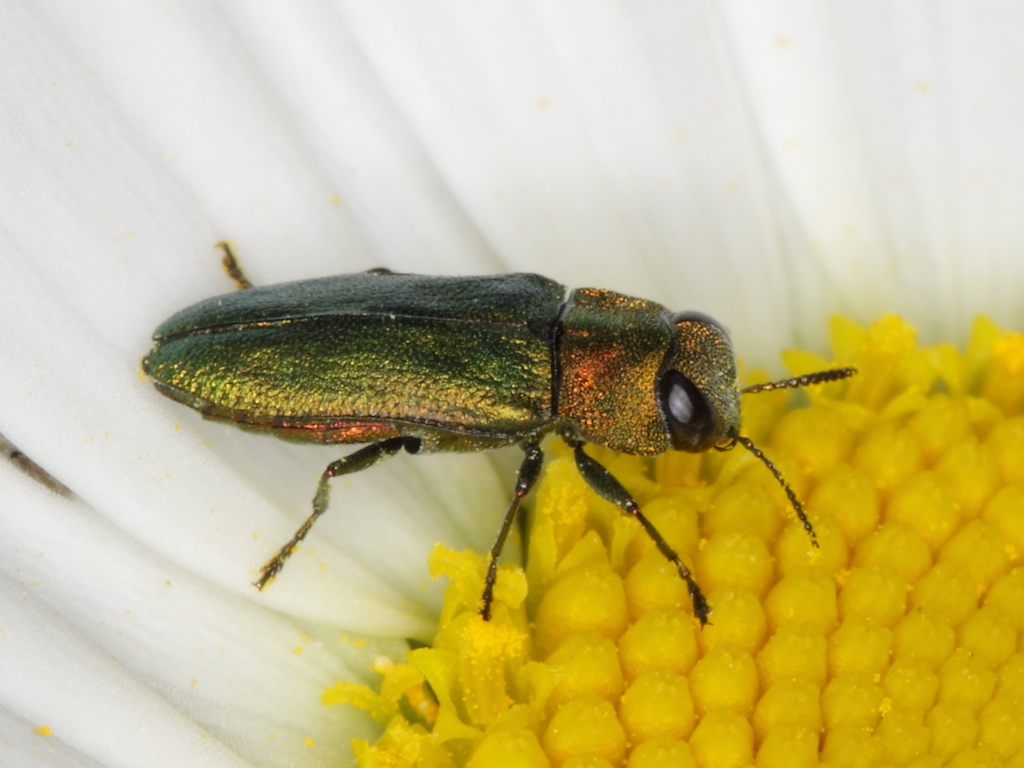
Adults are tiny, only five to seven millimetres long. Males shine metallic green, while females have a red head and pronotum with green wing covers. The beetle lives across most of Europe, the eastern Palearctic, the Near East and North Africa, where its larvae develop in the wood of almond, hawthorn and plum trees and the adults visit flowers as pollinators.
Source: Wikipedia
How to recognize it
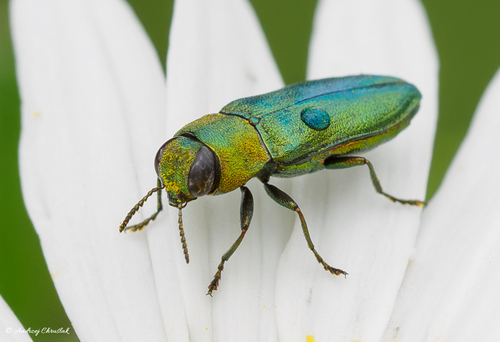
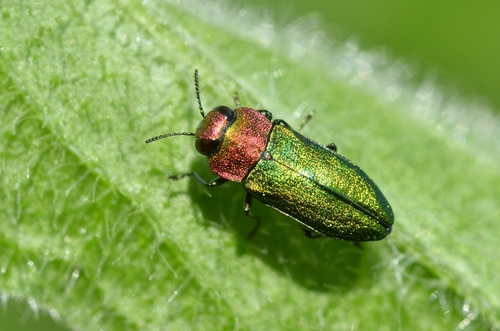
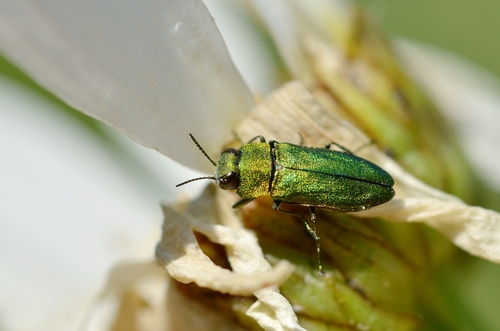
Males are completely metallic green; females have a red head and pronotum with green elytra.
Source: Wikipedia
Size
Adults measure between five and seven millimetres in length.
Source: Wikipedia
Where it lives
The species is found throughout most of Europe, the eastern Palearctic, the Near East and North Africa.
Source: Wikipedia
What it eats
Larvae bore into the wood of almond, hawthorn and plum trees, while adults feed on flower pollen as pollinators.
Source: Wikipedia
Life cycle
Adults are five to seven millimetres long and lay eggs on host trees; the wood-boring larvae develop inside the trunks of almond, hawthorn and plum species.
Source: Wikipedia
Where it comes from
Its range includes most of Europe, the eastern Palearctic realm, the Near East and North Africa.
Source: Wikipedia
More photos
Questions people ask
Which trees are affected by the larvae?
The larvae bore into almond, hawthorn and plum trees.
Source: Wikipedia
Do the adults help pollinate plants?
Yes, adult beetles visit flowers and act as pollinators.
Source: Wikipedia
Same family (Buprestidae)
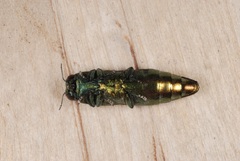 Emerald Ash BorerAgrilus planipennisDamages trees, gardens or crops
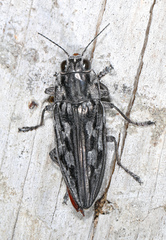 Sculptured Pine BorerChalcophora virginiensisDamages trees, gardens or crops
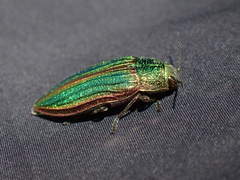 Golden Buprestid BeetleBuprestis aurulenta
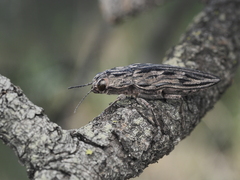 Western Sculptured Pine BorerChalcophora angulicollis
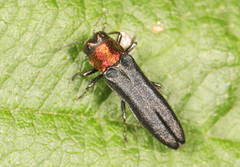 Red-necked Cane BorerAgrilus ruficollis
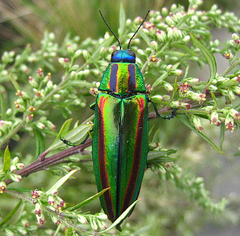 Japanese Jewel BeetleChrysochroa fulgidissima
Sources
- Wikipedia: https://en.wikipedia.org/wiki/Anthaxia_nitidula
Look it up elsewhere: GBIF · iNaturalist · BugGuide · Wikipedia
Text written 2026-10-22 from the sources above and checked sentence by sentence against them. Data fetched 2026-10-22.