 Bug FAQ
Twice-stabbed Stink Bug
Cosmopepla lintneriana · Order: Hemiptera · Family: Pentatomidae
Also called: Wee Harlequin Bug
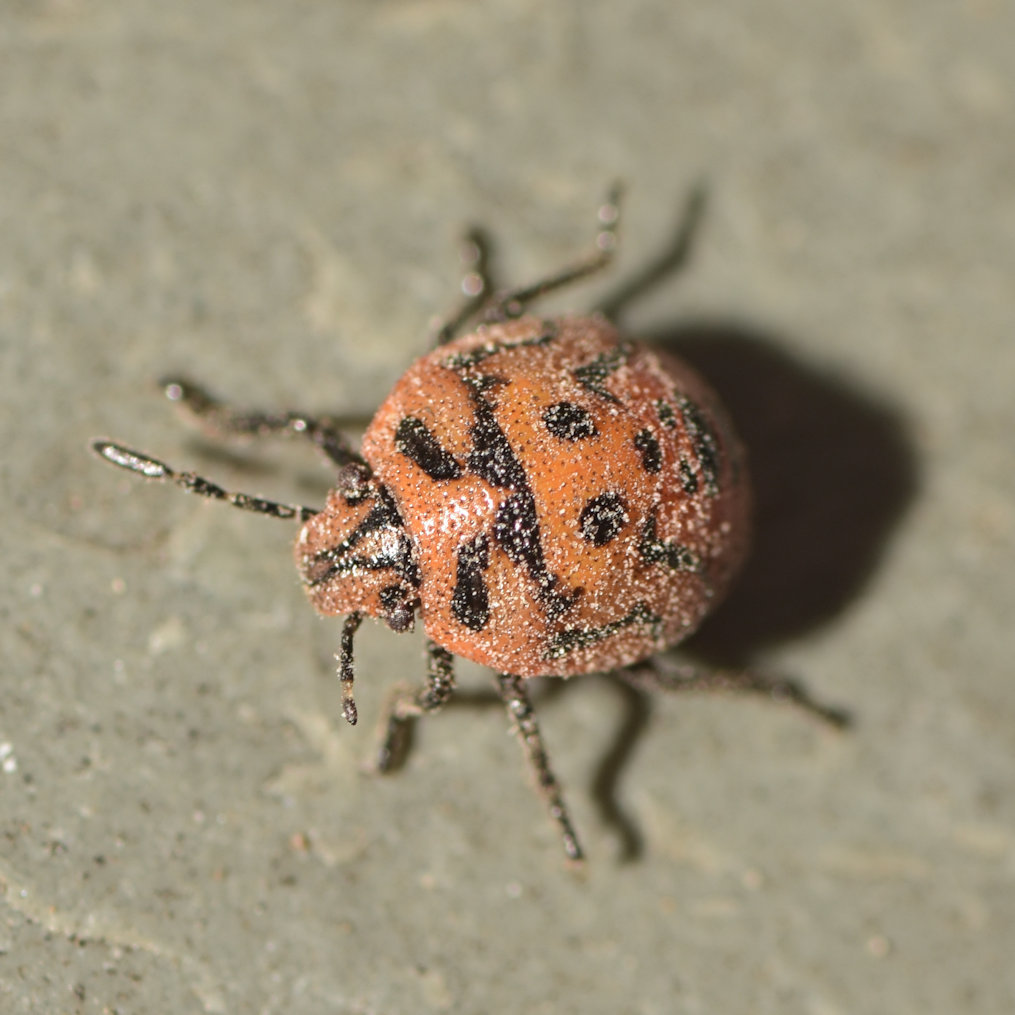
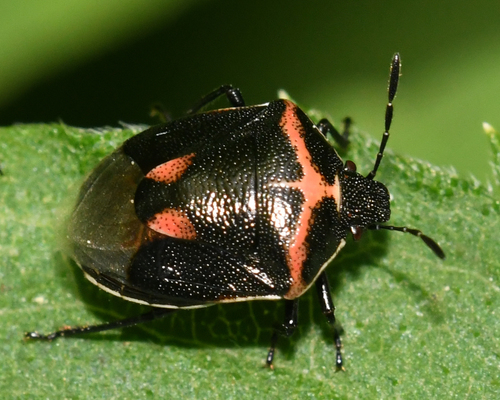
Adult twice-stabbed stink bugs are black with a colored band across the pronotum and red markings on the scutellum. The species was first described in 1798 and later renamed in 1865.
Source: Wikipedia
What it eats
They feed on the same host plants listed for their habitat.
Source: Wikipedia
Life cycle
The bug was first described in 1798 as Cimex carnifex and later renamed Cosmopepla bimaculata in 1865.
Source: Wikipedia
Where it comes from
Their range covers most of North America, from Canada through the United States to Mexico.
Source: Wikipedia
Lookalikes
Historical names for this species include Cimex carnifex and Cosmopepla bimaculata.
Source: Wikipedia
Where it is found in the US
Recorded in 47 of 51 states and DC. Most records: Illinois, Minnesota, New York, Wisconsin, Pennsylvania, Vermont, Michigan, Massachusetts.
Darker = more records. Counts are museum and citizen-science records, not population size.
Source: GBIF
Status: native in North America; native in United States; native in Canada. Source: iNaturalist
Months it is reported in the US
Source: GBIF
More photos

Same family (Pentatomidae)
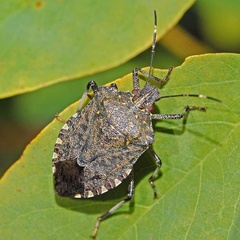 Brown Marmorated Stink BugHalyomorpha halysDamages trees, gardens or crops
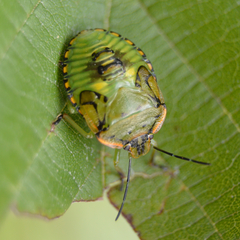 Green Stink BugChinavia hilarisDamages trees, gardens or crops
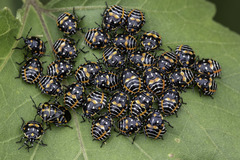 Harlequin BugMurgantia histrionicaDamages trees, gardens or crops
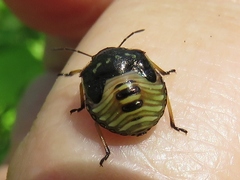 Brown Stink BugEuschistus servusDamages trees, gardens or crops
 Green Shield BugPalomena prasina
 European Striped Shield BugGraphosoma italicum
Sources
- Wikipedia: https://en.wikipedia.org/wiki/Cosmopepla_lintneriana
Look it up elsewhere: GBIF · iNaturalist · BugGuide · ITIS · Wikipedia
Text written 2026-10-22 from the sources above and checked sentence by sentence against them. Data fetched 2026-10-22.