 Bug FAQ
Tobacco-coloured longhorn beetle
Alosterna tabacicolor · Order: Coleoptera · Family: Cerambycidae
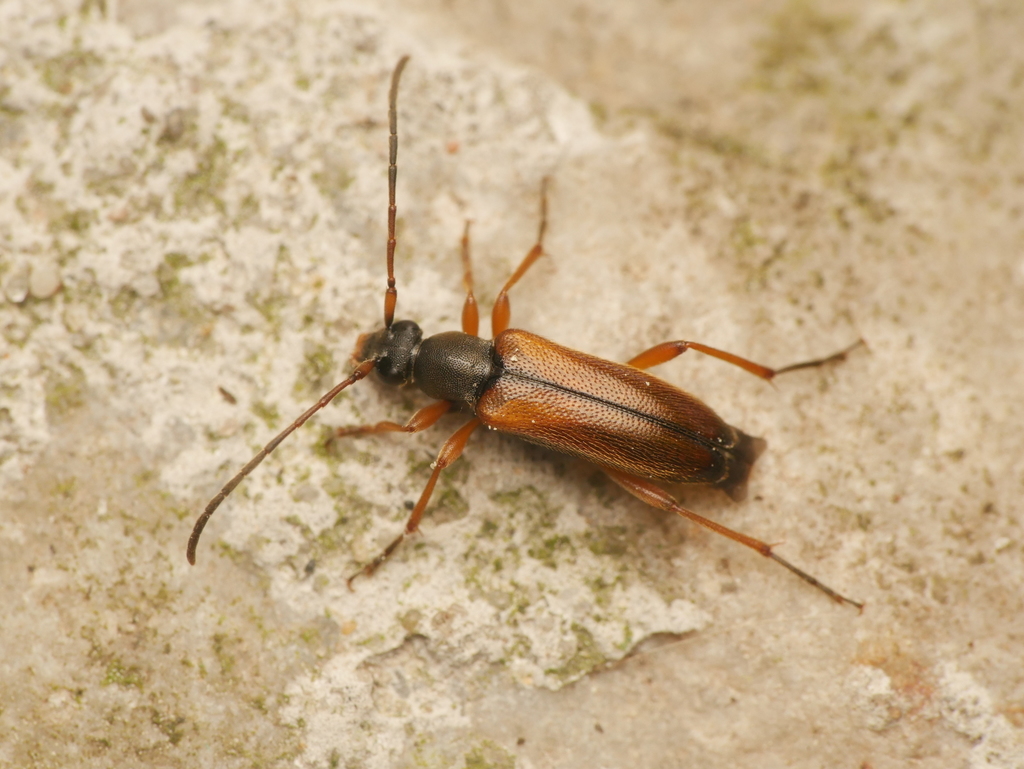
The tobacco-coloured longhorn beetle is 6 to 10 mm long and has a dark head, pronotum and upper elytra with brown-yellow lower elytra sides; the pronotum is longer than wide and the elytra are finely haired. It lives in forests from lowlands to lower mountains, including higher areas of the southern Alps, across much of the Palearctic in many European countries. Adults feed on Apiaceae and Aruncus flowers, while larvae develop in bark of oak and other decayed hardwoods; the life cycle takes two years and adults fly from April to July, especially in July.
Source: Wikipedia
How to recognize it
Its pronotum is longer than wide, with concave sides, and the elytra have fine hairs.
Source: Wikipedia
Size
Body length ranges from about 6 to 10 mm (0.24 to 0.39 in).
Source: Wikipedia
Where it lives
Found in forests from plains up to lower mountain ranges. Also occurs at higher elevations in the southern Alps.
Source: Wikipedia
What it eats
Adults feed on flowers of Apiaceae and on Aruncus dioicus in wooded areas.
Source: Wikipedia
Life cycle
The species completes its development over two years. Larvae develop in bark of oak and other decayed hardwoods.
Source: Wikipedia
When you see it
Adults are on the wing from April through July, with a peak in July.
Source: Wikipedia
Where it comes from
Present throughout the Palearctic region.
Source: Wikipedia
Questions people ask
What size is the tobacco-coloured longhorn beetle?
It measures about 6 to 10 mm in length.
Source: Wikipedia
What do the larvae feed on?
Larvae live in the bark of oak and other very decayed hardwoods such as elm, maple, willow, hazel, hornbeam and birch.
Source: Wikipedia
Where is this beetle found?
It occurs in forests across much of Europe and the Palearctic, from lowlands up to lower mountain ranges, including higher areas of the southern Alps.
Source: Wikipedia
Same family (Cerambycidae)
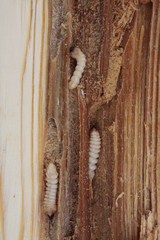 House LonghornHylotrupes bajulusCan damage your home
 Asian Longhorned BeetleAnoplophora glabripennisDamages trees, gardens or crops
 Red Milkweed BeetleTetraopes tetrophthalmus
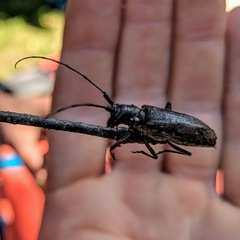 White-spotted SawyerMonochamus scutellatusCan damage your home
 Red Pine Longhorn BeetleStictoleptura rubra
 Spotted Longhorn BeetleRutpela maculataDamages trees, gardens or crops
Sources
- Wikipedia: https://en.wikipedia.org/wiki/Alosterna_tabacicolor
Look it up elsewhere: GBIF · iNaturalist · BugGuide · Wikipedia
Text written 2026-10-22 from the sources above and checked sentence by sentence against them. Data fetched 2026-10-22.