 Bug FAQ
Tetraopes discoideus
Tetraopes discoideus · Order: Coleoptera · Family: Cerambycidae
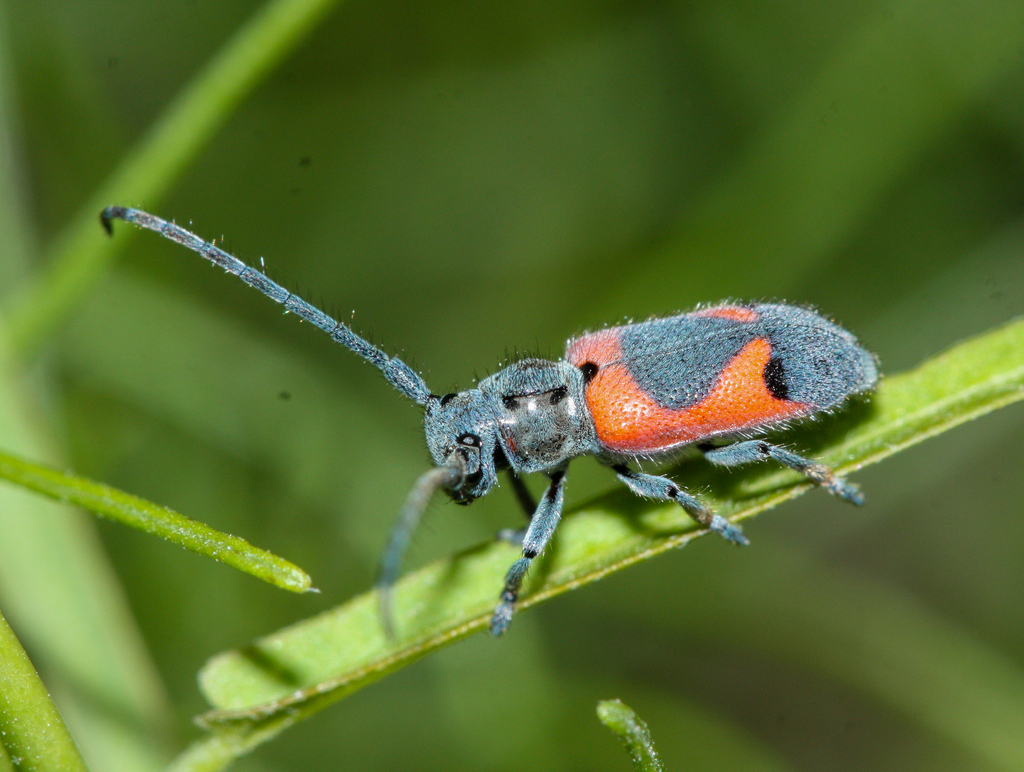
Tetraopes discoideus is a small milkweed beetle, only about 7 to 9 mm long. Adults are seen for roughly a month on milkweed plants, where they rest, feed and mate.
Source: Wikipedia
Size
Adults measure between 7 and 9 mm, making them smaller than most other Tetraopes species.
Source: Wikipedia
Where it lives
They spend their adult month on milkweed plants, where they rest, feed and look for mates.
Source: Wikipedia
What it eats
The larvae develop by eating the roots of their host plant; they may live in the soil around small roots or tunnel into larger taproots.
Source: Wikipedia
Life cycle
Adults are active for about one month, during which they rest, feed and mate on milkweed.
Source: Wikipedia
When you see it
The adult activity period lasts roughly a month on milkweed plants.
Source: Wikipedia
Where it is found in the US
Recorded in 5 of 51 states and DC. Most records: New Mexico, Texas, Arizona, Colorado, Oklahoma.
Darker = more records. Counts are museum and citizen-science records, not population size.
Source: GBIF
Months it is reported in the US
Source: GBIF
More photos
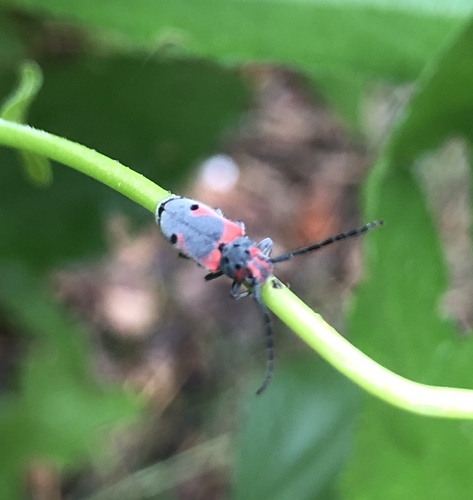
Questions people ask
What do the larvae of Tetraopes discoideus eat?
The larvae feed on the roots of their host plant, either living in the surrounding soil for small roots or tunneling directly into larger taproots.
Source: Wikipedia
Same family (Cerambycidae)
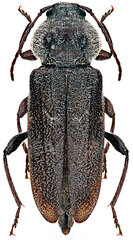 House LonghornHylotrupes bajulusCan damage your home
 Asian Longhorned BeetleAnoplophora glabripennisDamages trees, gardens or crops
 Red Milkweed BeetleTetraopes tetrophthalmus
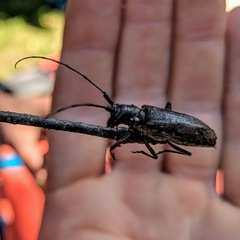 White-spotted SawyerMonochamus scutellatusCan damage your home
 Red Pine Longhorn BeetleStictoleptura rubra
 Spotted Longhorn BeetleRutpela maculata
Sources
- Wikipedia: https://en.wikipedia.org/wiki/Tetraopes_discoideus
Look it up elsewhere: GBIF · iNaturalist · BugGuide · ITIS · Wikipedia
Text written 2026-10-26 from the sources above and checked sentence by sentence against them. Data fetched 2026-10-26.