 Bug FAQ
Terrenella Bee Moth
Aphomia terrenella · Order: Lepidoptera · Family: Pyralidae
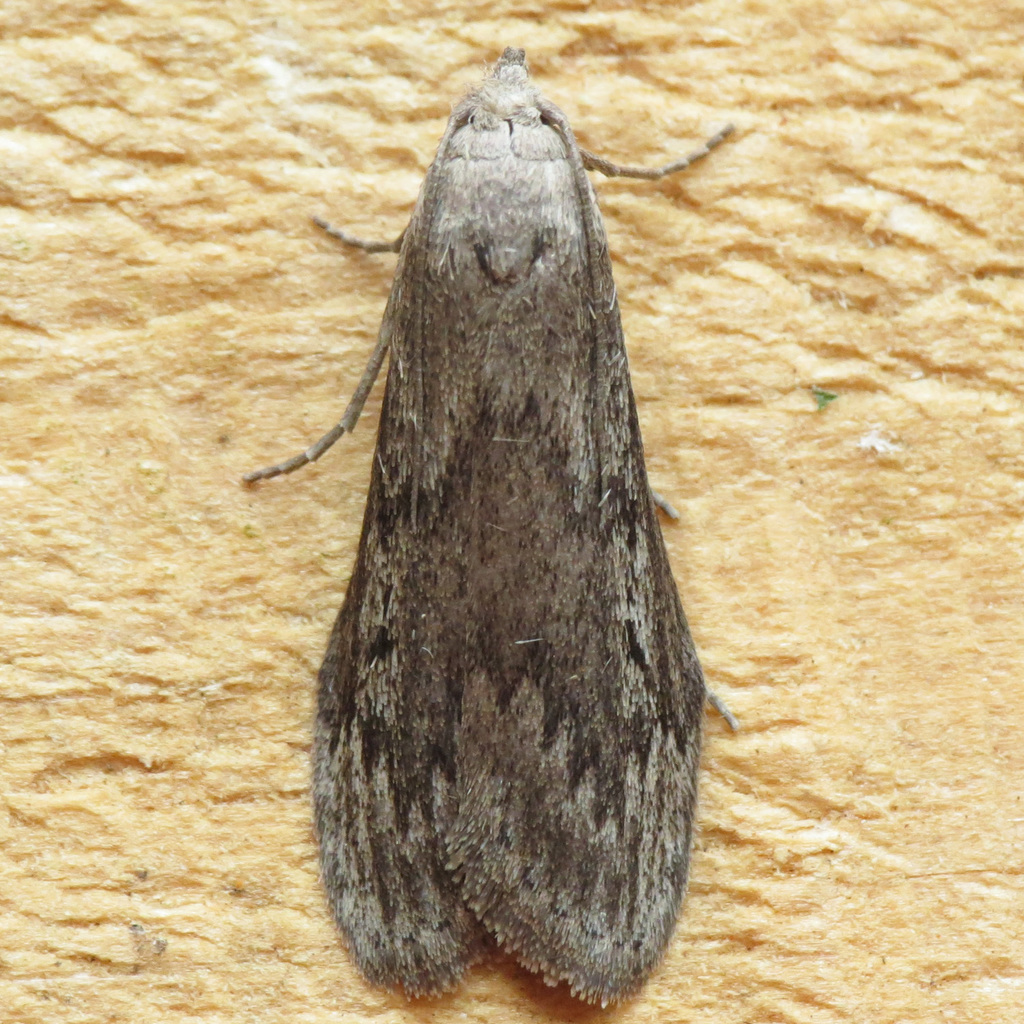
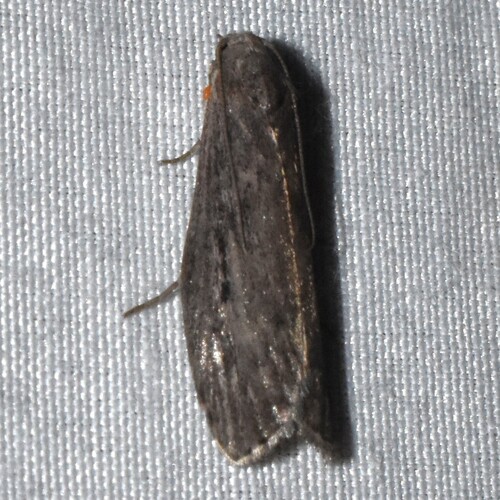
The Terrenella bee moth has a wingspan of about 25 mm. Adults fly from May through August. Its larvae may feed on honeycomb or bee larvae.
Source: Wikipedia
Size
Wingspan is roughly 25 mm.
Source: Wikipedia
Where it lives
Found in the United States and Canada from Michigan and New York down to Georgia.
Source: Wikipedia
What it eats
Larvae possibly consume honeycomb and/or bee larvae.
Source: Wikipedia
When you see it
Adults are on the wing between May and August.
Source: Wikipedia
Where it comes from
Native to North America, ranging from the Great Lakes region to the southeastern U.S.
Source: Wikipedia
Where it is found in the US
Recorded in 33 of 51 states and DC. Most records: Michigan, New York, Vermont, Maryland, North Carolina, Ohio, Pennsylvania, Tennessee.
Darker = more records. Counts are museum and citizen-science records, not population size.
Source: GBIF
Status: native in North America; native in Canada; native in United States. Source: iNaturalist
Months it is reported in the US
Source: GBIF
More photos
Questions people ask
Same family (Pyralidae)
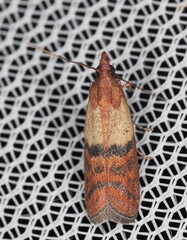 Indian-Meal MothPlodia interpunctellaCan damage your home
 Greater Wax MothGalleria mellonella
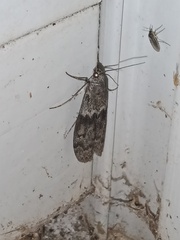 Mediterranean Flour MothEphestia kuehniellaCan damage your home
 Meal mothPyralis farinalisDamages trees, gardens or crops
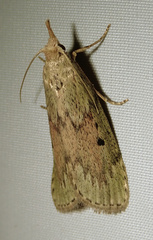 Bee MothAphomia sociellaNuisance, not dangerous
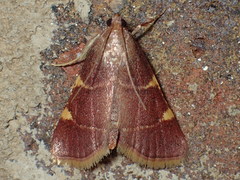 Yellow-fringed Dolichomia MothHypsopygia olinalis
Sources
- Wikipedia: https://en.wikipedia.org/wiki/Aphomia_terrenella
Look it up elsewhere: GBIF · iNaturalist · BugGuide · Wikipedia
Text written 2026-10-26 from the sources above and checked sentence by sentence against them. Data fetched 2026-10-26.