 Bug FAQ
Greater Wax Moth
Galleria mellonella · Order: Lepidoptera · Family: Pyralidae
Also called: Wax Moth

The greater wax moth is a moth that can be found wherever honeybees are kept and it now occurs worldwide. Its larvae grow to about 0.78 inches and are known for damaging honeybee colonies and stored comb.
Source: Wikipedia, blogs.ifas.ufl.edu
How to recognize it
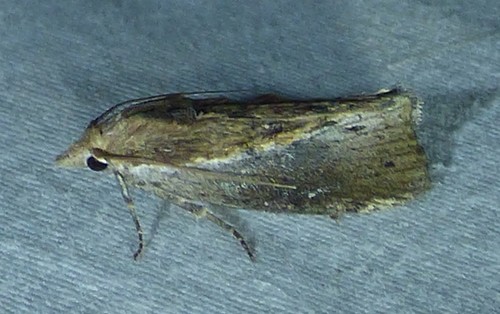
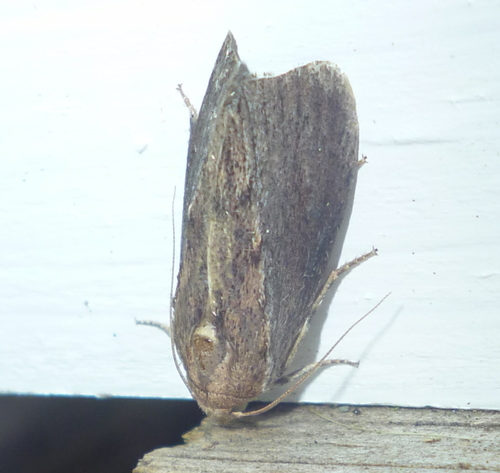
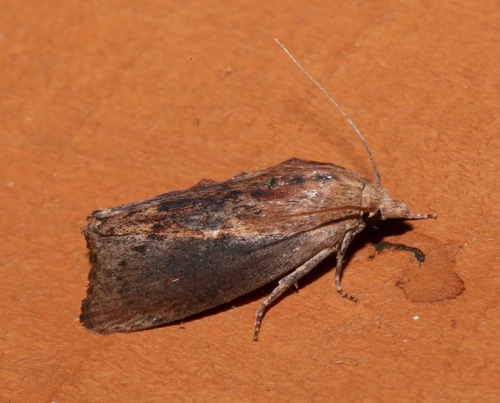
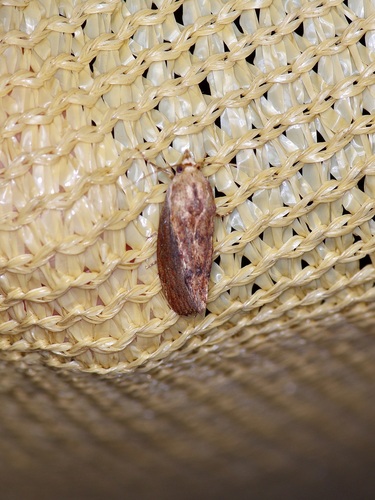
Adult greater wax moths can be distinguished by the appearance of males and females.
Source: blogs.ifas.ufl.edu
Size
The larval stage can reach roughly 0.78 inches in length.
Source: blogs.ifas.ufl.edu
Is it a pest in the house?
Greater wax moths parasitize honeybees and cause significant economic losses to beekeeping operations.
Source: Wikipedia, blogs.ifas.ufl.edu
How to get rid of it
Good sanitation helps keep colonies strong and resistant to infestation. Freezing infested equipment for 24 to 72 hours reliably kills all stages of the moth.
Source: Wikipedia, blogs.ifas.ufl.edu
Where it lives
They are found wherever honeybees are cultivated.
Source: Wikipedia
What it eats
The larvae are used as a model organism in research and can degrade polyethylene plastic.
Source: Wikipedia
Life cycle
The species has four life stages: egg, larva, pupa and adult.
Source: Wikipedia
When you see it
Eggs are laid in early spring and enter diapause by December awaiting warmer weather.
Source: Wikipedia
Where it comes from
Originally reported as a pest in Asia, they have spread to Africa, Europe, North America and New Zealand and are now worldwide.
Source: Wikipedia
Lookalikes
There are two wax moth species in Florida: the greater wax moth and the lesser wax moth.
Source: Wikipedia, blogs.ifas.ufl.edu
Where it is found in the US
Recorded in 41 of 51 states and DC. Most records: Texas, California, New York, Mississippi, North Carolina, Oklahoma, Florida, Michigan.
Darker = more records. Counts are museum and citizen-science records, not population size.
Source: GBIF
Status: introduced in United States; introduced in Canada. Source: iNaturalist
Months it is reported in the US
Source: GBIF
More photos
Questions people ask
How can I prevent a greater wax moth infestation?
Maintain clean beekeeping equipment and strong colonies; freeze any infested comb for at least a day.
Source: Wikipedia, blogs.ifas.ufl.edu
What damage do greater wax moths cause?
Their larvae eat honeycomb, weakening hives and leading to economic losses for beekeepers.
Source: Wikipedia, blogs.ifas.ufl.edu
Same family (Pyralidae)
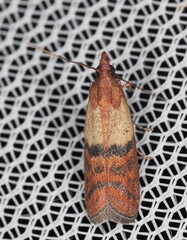 Indian-Meal MothPlodia interpunctellaCan damage your home
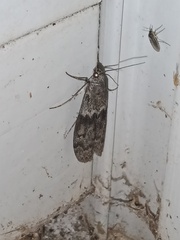 Mediterranean Flour MothEphestia kuehniellaCan damage your home
 Meal mothPyralis farinalisDamages trees, gardens or crops
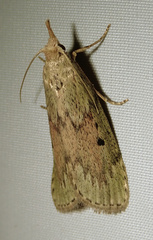 Bee MothAphomia sociellaNuisance, not dangerous
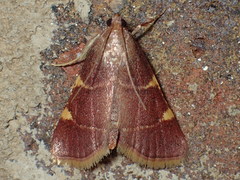 Yellow-fringed Dolichomia MothHypsopygia olinalis
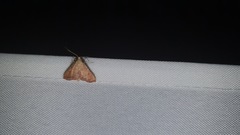 Rosy TabbyEndotricha flammealis
Sources
- Wikipedia: https://en.wikipedia.org/wiki/Galleria_mellonella
- blogs.ifas.ufl.edu: https://blogs.ifas.ufl.edu/polkco/2025/06/23/florida-farm-pest-wax-moths
Look it up elsewhere: GBIF · iNaturalist · BugGuide · Wikipedia
Text written 2026-10-23 from the sources above and checked sentence by sentence against them. Data fetched 2026-10-23.