 Bug FAQ
Bee Moth
Aphomia sociella · Order: Lepidoptera · Family: Pyralidae
Also called: Bumble Bee Wax Moth, Pyralid Moth, The Bee Moth
Source: Wikipedia
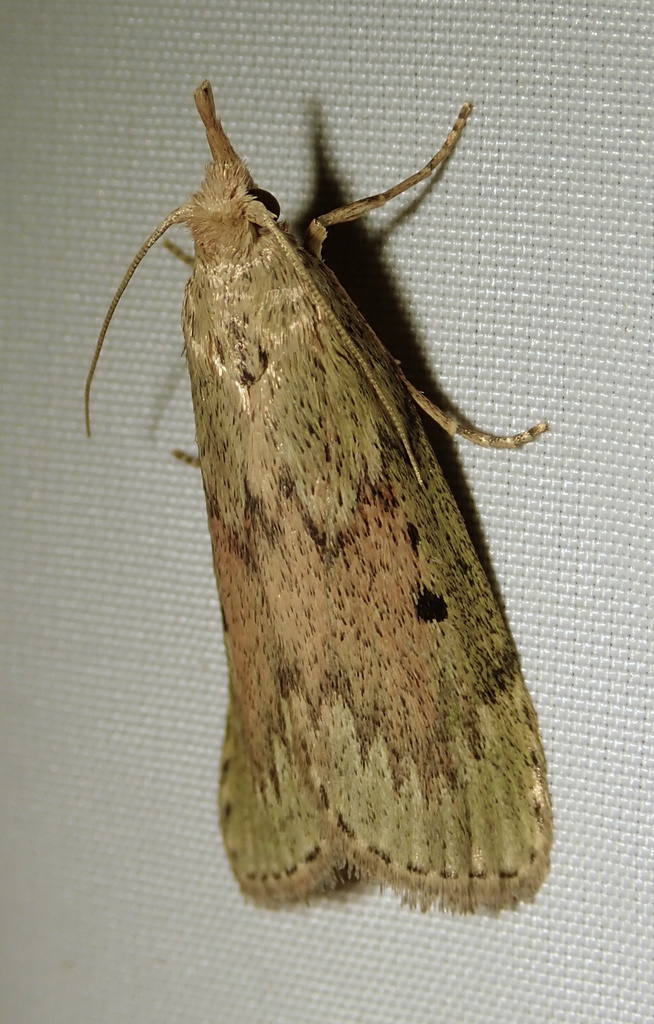
The bee moth is a European moth whose females lay up to a hundred eggs in bumblebee and wasp nests, and the larvae feed on the nest’s eggs, larvae, pupae, pollen, honey and waste. Adults have a wingspan of 18 to 40 mm, reddish-brown to dark-green forewings, and females show a dark spot on each forewing; they fly from June to August and emerge in early summer. The species is considered a pest because its larvae can severely damage commercial bee hives.
Source: Wikipedia
How to recognize it
The moth’s body and forewings are reddish brown, tan, or dark green, and females have a dark spot in the centre of each forewing.
Source: Wikipedia
Size
Adults have a wingspan of 18 to 40 mm (0.71 to 1.57 in). Larvae are yellow and 22 to 30 mm long.
Source: Wikipedia
Is it a pest in the house?
Bee moth larvae can severely damage commercial bee hives, making them a pest of bumblebees, wasps, and occasionally mice.
Source: Wikipedia
Where it lives
Bee moths are native to Europe and seek out bee and wasp nests to lay their eggs. Females prefer exposed, elevated nests of Bombus and vespine wasps.
Source: Wikipedia
What it eats
Larvae eat host eggs, larvae, pupae, pollen, honey and any waste in the nest.
Source: Wikipedia
Life cycle
Females are attracted to the odor of active bumblebee nests and can lay up to 100 eggs per nest. Eggs hatch in early summer (March to July) when host defenses are weakest.
Source: Wikipedia
When you see it
Adults fly from June to August in temperate parts of their range.
Source: Wikipedia
Where it is found in the US
Recorded in 27 of 51 states and DC. Most records: Maryland, Massachusetts, New York, Pennsylvania, Vermont, Michigan, Virginia, Ohio.
Darker = more records. Counts are museum and citizen-science records, not population size.
Source: GBIF
Status: introduced in Canada; introduced in United States. Source: iNaturalist
Months it is reported in the US
Source: GBIF
More photos

Questions people ask
When are bee moths active?
Adults are on the wing from June through August, and eggs hatch in early summer between March and July.
Source: Wikipedia
Same family (Pyralidae)


Sources
- Wikipedia: https://en.wikipedia.org/wiki/Aphomia_sociella
Look it up elsewhere: GBIF · iNaturalist · BugGuide · Wikipedia
Text written 2026-10-22 from the sources above and checked sentence by sentence against them. Data fetched 2026-10-22.