 Bug FAQ
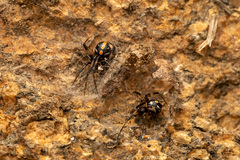
Tent Cobweb Weaver
Tidarren sisyphoides · Order: Araneae · Family: Theridiidae
Also called: cobweb spiders
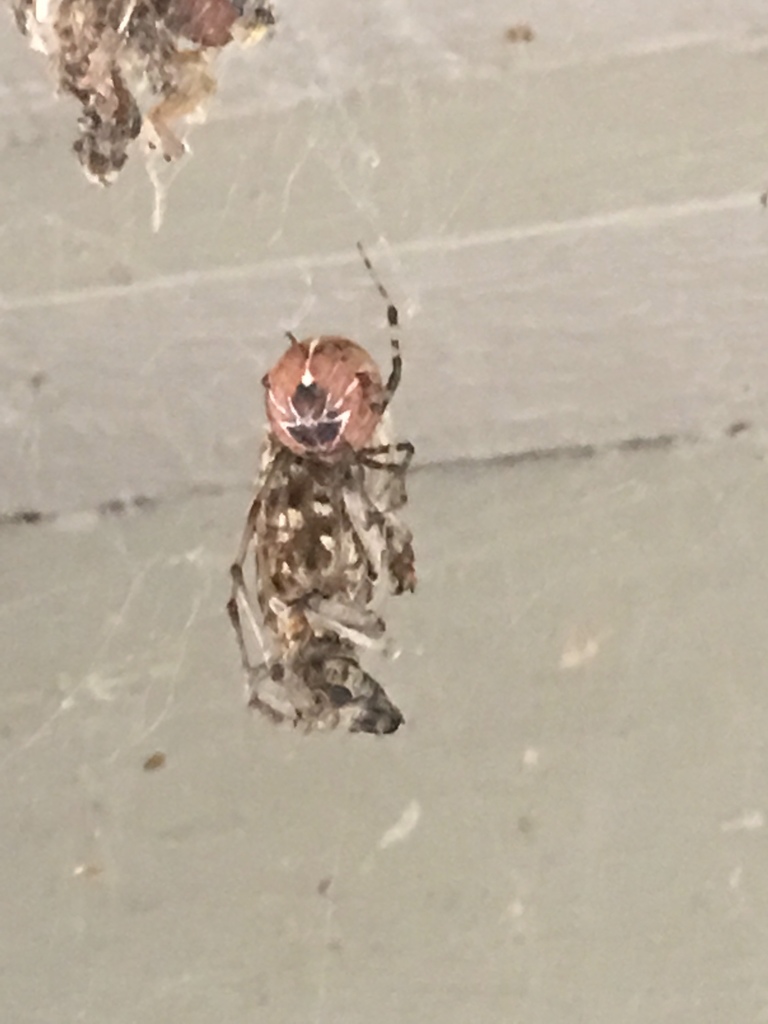
Males are only about one-tenth the size of females. Females lay clutches of roughly 238 eggs, each about 0.66 mm wide and 0.16 mg heavy. It lives from the southern United States through Central America to Colombia and the West Indies.
Source: Wikipedia
How to recognize it
It belongs to the tangle-web spider family Theridiidae.
Source: Wikipedia
Size
Males are about one-tenth the size of females.
Source: Wikipedia
What it eats
After capture, it moves the prey to its retreat and wraps it with additional silk.
Source: Wikipedia
Life cycle
Females produce clutches containing about 238 eggs. Each egg measures roughly 0.66 mm in diameter and weighs about 0.16 mg.
Source: Wikipedia
Where it comes from
It is found from the southern United States through Central America to Colombia and the West Indies.
Source: Wikipedia
Where it is found in the US
Recorded in 17 of 51 states and DC. Most records: California, Texas, Florida, North Carolina, Georgia, South Carolina, New Mexico, Arizona.
Darker = more records. Counts are museum and citizen-science records, not population size.
Source: GBIF
Months it is reported in the US
Source: GBIF
More photos
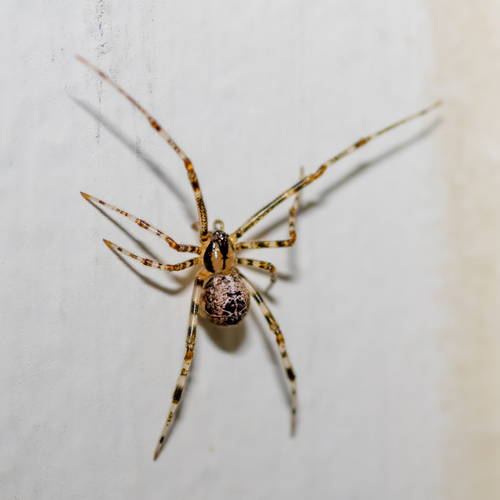
Questions people ask
How much smaller are the males than the females?
Males are only about ten percent the size of females.
Source: Wikipedia
What family does the Tent Cobweb Weaver belong to?
It is a member of the Theridiidae, the tangle-web spiders.
Source: Wikipedia
Where is this spider found?
Its range extends from the southern United States down to Colombia and includes the West Indies.
Source: Wikipedia
How does it handle captured prey?
It attaches sticky threads to the prey, then moves it to a retreat and wraps it further with silk.
Source: Wikipedia
Same family (Theridiidae)


Sources
- Wikipedia: https://en.wikipedia.org/wiki/Tidarren_sisyphoides
Look it up elsewhere: GBIF · iNaturalist · BugGuide · ITIS · Wikipedia
Text written 2026-10-28 from the sources above and checked sentence by sentence against them. Data fetched 2026-10-28.