 Bug FAQ
False Black Widow
Steatoda grossa · Order: Araneae · Family: Theridiidae
Also called: Brown House Spider, Dark Comb-footed Spider, House Cobweb Spider, Large Cupboard Spider
Source: Wikipedia, Penn State Extension
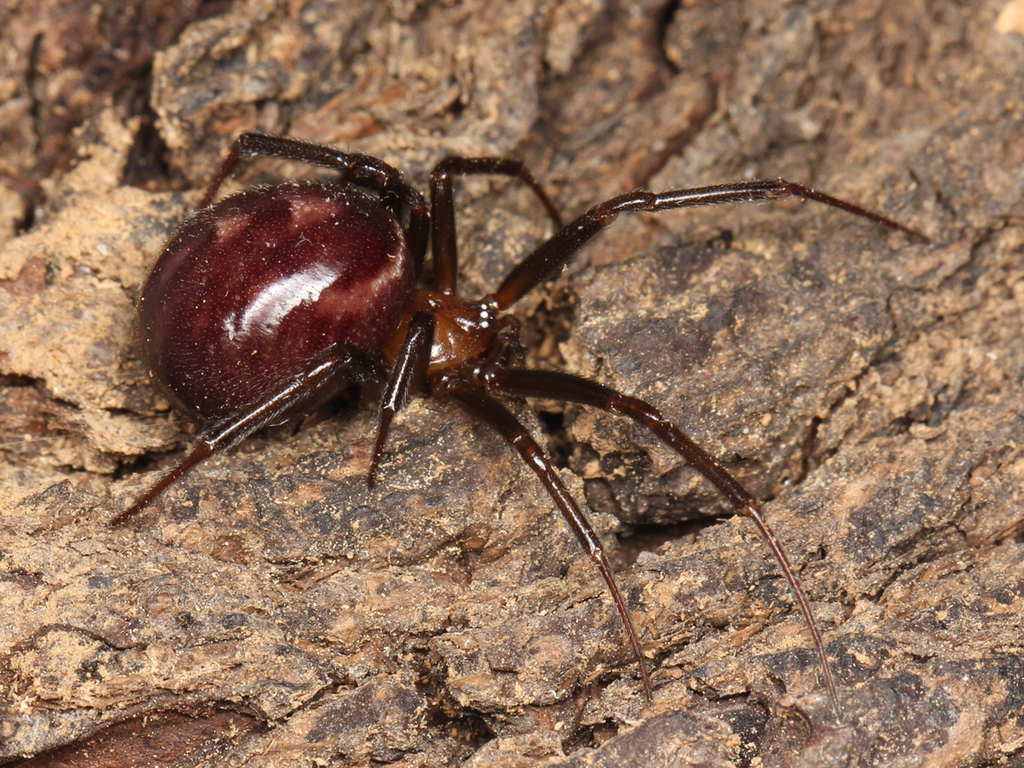
False black widows look like true black widows but lack the red hourglass marking and are usually dark brown to black with pale spots. They live in homes worldwide, build three-dimensional webs in dark corners, and may bite only when disturbed, causing minor pain, occasional blistering and a few days of malaise.
Source: Wikipedia, Penn State Extension
How to recognize it
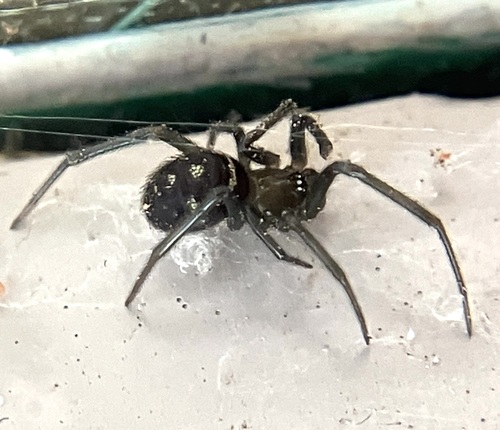
The abdomen is dark purplish-brown to black with light yellow-gray markings and no bright red hourglass.
Source: Wikipedia, Penn State Extension
Size
Females are about 6 to 10.5 mm long, while overall length ranges from 4.1 to 10 mm.
Source: Wikipedia
Is it a pest in the house?
They are common inside homes year-round and are not aggressive; bites occur mainly when the spider is squeezed or mistaken for prey.
Source: Wikipedia, Penn State Extension
Does it bite or sting?
Bites are usually minor, may cause a small blister and a few days of feeling unwell, but are far less severe than true black-widow bites. Antivenom for true black widows has been used successfully on a false black-widow bite when it was misidentified.
Source: Wikipedia, Penn State Extension
Where it lives
It spins three-dimensional webs in dark places such as corners of rooms and basements.
Source: Wikipedia
What it eats
It can prey on other spiders, even true black widows, and can survive months without food if water is available.
Source: Wikipedia
Life cycle
Females may molt up to six times before adulthood and can live up to six years; males live about one to one-and-a-half years and usually die after mating.
Source: Wikipedia
When you see it
At typical indoor temperature and humidity, eggs hatch within about a month.
Source: Wikipedia
Lookalikes
It is often confused with true black widows and other Latrodectus spiders because of its similar shape and dark color. A related North-American species, Steatoda borealis, looks similar but is slightly smaller and common in northern states.
Source: Wikipedia, Penn State Extension
Where it is found in the US
Recorded in 39 of 51 states and DC. Most records: California, Washington, North Carolina, Oregon, Georgia, Virginia, Tennessee, Alabama.
Darker = more records. Counts are museum and citizen-science records, not population size.
Source: GBIF
Status: introduced in North America; introduced in United States; introduced in Canada. Source: iNaturalist
Months it is reported in the US
Source: GBIF
More photos


Questions people ask
How can I tell a false black widow from a true black widow?
Look for the absence of a bright red hourglass; false black widows have a dark abdomen with pale markings instead.
Source: Wikipedia, Penn State Extension
Do false black widows bite people?
They may bite if squeezed or disturbed, but the bite is usually mild, sometimes causing a small blister and short-term malaise.
Source: Wikipedia, Penn State Extension
Same family (Theridiidae)



Sources
- Wikipedia: https://en.wikipedia.org/wiki/Steatoda_grossa
- Penn State Extension: https://extension.psu.edu/false-black-widow-spider
Look it up elsewhere: GBIF · iNaturalist · BugGuide · ITIS · Wikipedia
Text written 2026-10-23 from the sources above and checked sentence by sentence against them. Data fetched 2026-10-23.